
BUSINESS & LIFE · WELLNESS, REHABILITATION & AGEING SUPPORT
Wellbeing, Recovery & Ageing Well in Malaysia
Explore wellness experiences, rehabilitation services and support for older adults — with practical guidance for families, visitors and businesses.
This page supports discovery and business orientation. It does not diagnose, does not prescribe treatment, does not recommend any provider for any individual and does not guarantee recovery. Every organisation linked here is an editorial referral — none implies a partnership, an endorsement or a verified accreditation.
Nothing here is personalised medical advice. Decisions about assessment, treatment, suitability and travel readiness belong with a qualified clinician who knows the person's situation.
English is this page's source language. Provider names, publisher names, URLs, units, periods and check dates are held in their original form in both languages.
Researched and checked: 2026-10-12
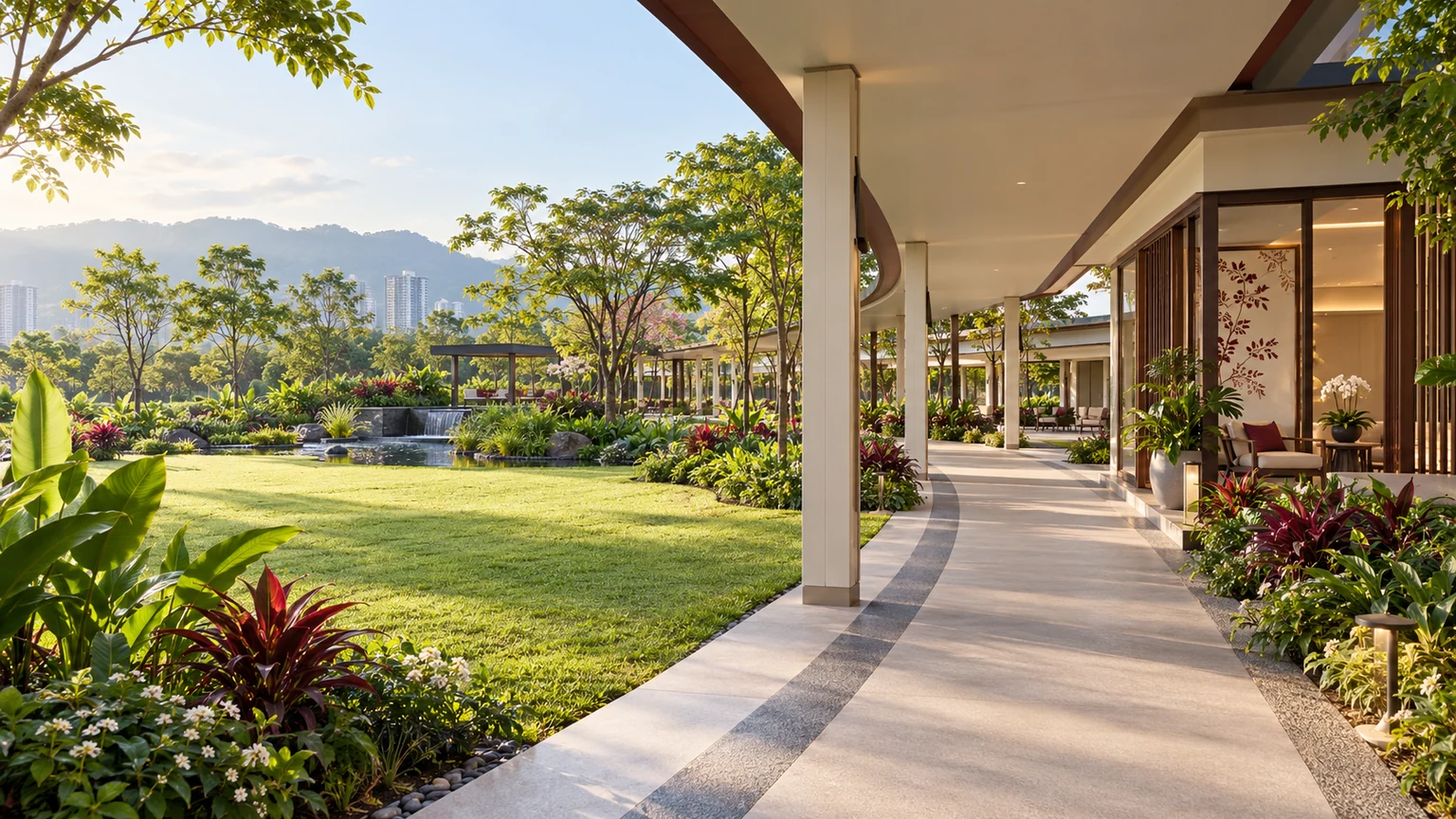
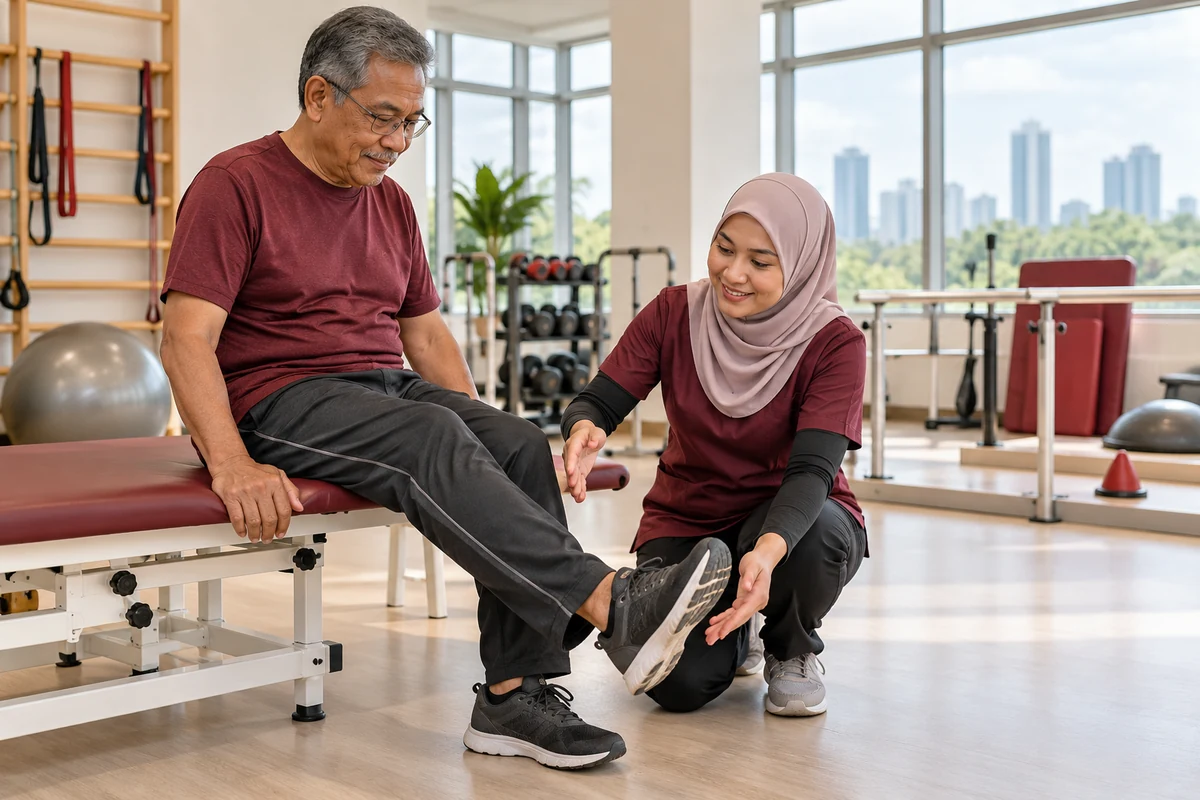
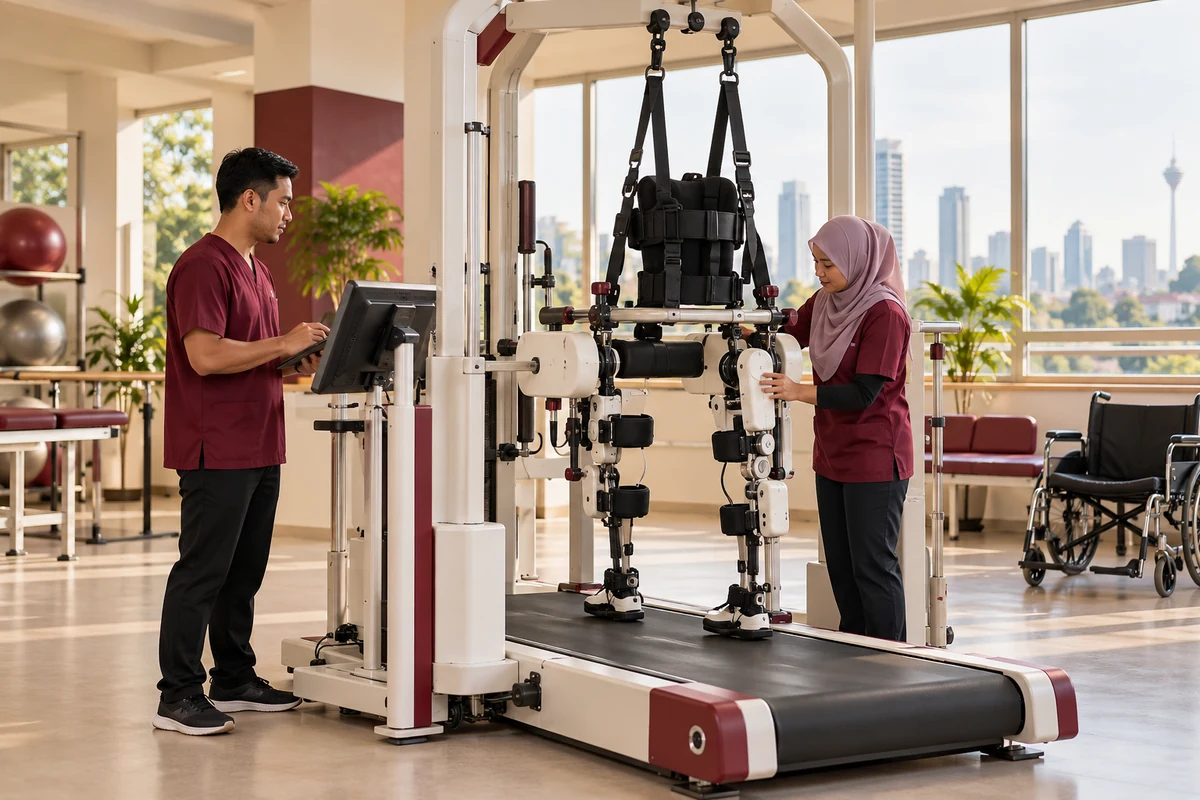
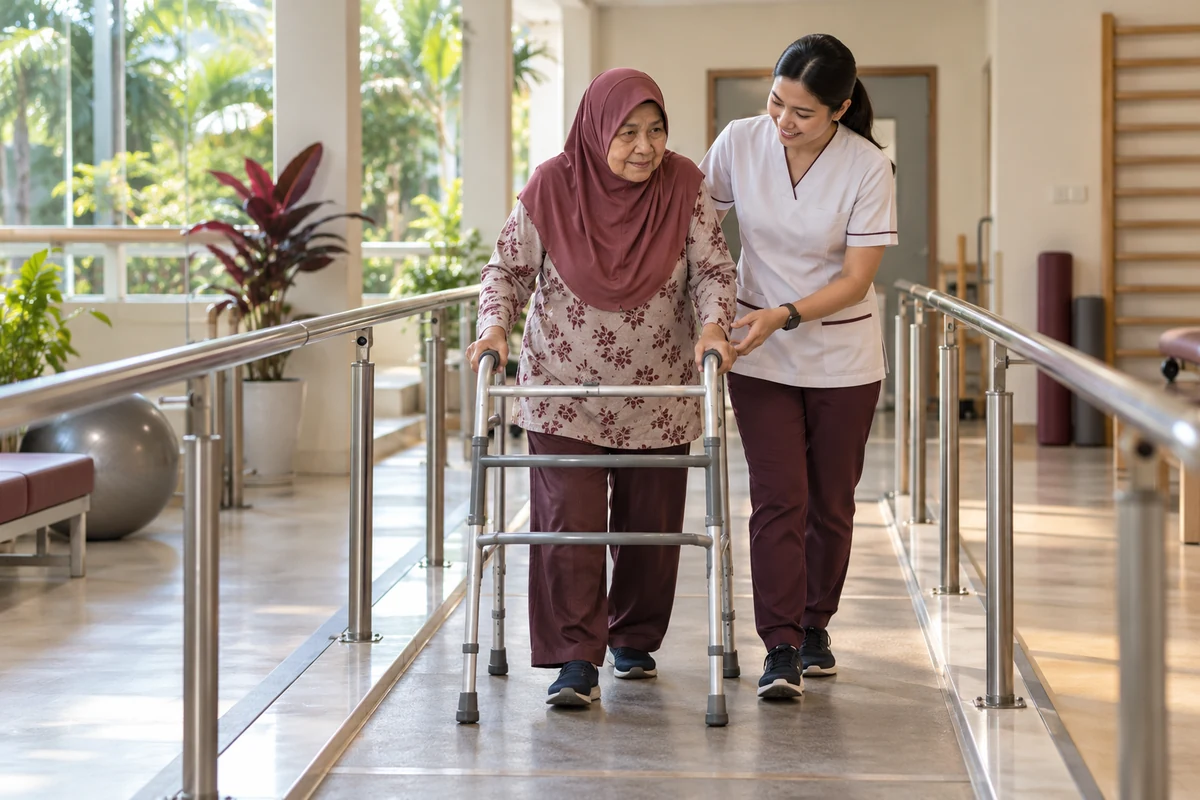
Every image on this page is a generated illustrative scene. None is a photograph of a listed provider, none shows a real patient or a named device, and none is evidence of a service, a credential or an outcome.
Overview
Three connected needs, three different kinds of service
Wellness experiences support everyday wellbeing. Clinical rehabilitation addresses functioning after injury, illness or another health condition. Ageing support helps people manage daily life, housing and care needs. A resort, a rehabilitation service and a nursing facility are not interchangeable, and treating them as one category is how families end up with the wrong thing booked.
Wellness experiences
Rest, nature, gentle recreation and everyday wellbeing. GWI distinguishes wellness travel from medical tourism, and that distinction matters: a peaceful place is not a treatment.
Clinical rehabilitation
Clinician-led services that address functioning and independence after injury, illness or another condition. WHO frames rehabilitation in exactly those terms — functioning, not cure.
Ageing support
Housing, daily living and care needs as they change, from independent living through assisted support to higher-dependency care. The care model matters more than the brand name.
Malaysia has provider examples across all three. The useful starting point is the individual's own goal and their assessed needs — then the relevant service, the qualified team and the practical arrangements, in that order.
Care pathways
Six ways into this page
Each card opens a section below. Clinical care, non-clinical wellness and ageing or housing support are kept deliberately distinct, because the questions you need to ask are different in each.
- Wellness & natureExplore restful environments and everyday wellbeing experiences.Read the section
- Rehabilitation & mobilityDiscover clinician-led services supporting function and independence.Read the section
- Ageing & assisted livingCompare independent living, assisted support and higher-care needs.Read the section
- Care at homeExplore professional support and family-care coordination.Read the section
- Technology & innovationUnderstand where robotics and digital tools fit in care.Read the section
- Recovery-ready staysCheck access, transport, family space and clinical support arrangements.Read the section




Market evidence
Three separate series, never one total
The figures below come from three different measurements with three different scopes, and they are shown separately on purpose. Adding them, or treating one as a proxy for another, produces a number that means nothing.
Healthcare travel — MHTC
Healthcare travellers
1.6 million reported travellers
- Period
- 2024
- Scope
- Healthcare travel. NOT wellness-only visitors, and not total tourist arrivals.
Healthcare-travel revenue
2.72 MYR billion
- Period
- 2024
- Scope
- Reported healthcare-travel revenue.
Healthcare-traveller revenue
3.35 MYR billion
- Period
- 2025
- Scope
- A distinct healthcare-travel series. Not wellness-tourism spending.
Healthcare travel is medical travel. These are not wellness-only visitors and not total tourist arrivals. MHTC's current industry page also shows 1.8 million travellers annually with no explicit period beside it, so that count is not placed against any year here.
Broad wellness economy — GWI
Broad wellness economy
31.8 USD billion
- Period
- 2024 dataset, 2025 report, announced January 2026
- Scope
- GWI's eleven-sector estimate. Not tourism revenue, not healthcare spending and not a rehabilitation market size.
GWI's estimate spans eleven sectors and is denominated in USD. It is not tourism revenue, not healthcare spending and not a rehabilitation market size. It is never added to the MYR healthcare-travel figures above.
Population age structure — DOSM
Population aged 65 and over
8.4 percent
- Period
- 2026 estimate
- Scope
- National age structure. Not a forecast of care-home or rehabilitation demand.
Population aged 65 and over
8.0 percent
- Period
- 2025 estimate
- Scope
- The comparator inside the same 2026 release.
An age-structure estimate using a 65-and-over threshold, not a forecast of care-home or rehabilitation demand. Other Malaysian older-person programmes may use different age thresholds — check a programme's own definition rather than inferring eligibility from this figure.
How many visitors come to Malaysia specifically for wellness?
Data gapWe do not know, and this page will not pretend otherwise. No independently verified Malaysian inbound wellness-only visitor count was obtained: the GWI country report download was not completed during this research. Healthcare travellers, total tourist arrivals, spa visits and repeat trips are each a different measurement and none is a substitute. GWI's trip counts may include domestic and international activity, and trips are not unique visitors.
No wellness or rehabilitation success rate is established by any economic indicator. These figures describe markets and populations, not results for any individual.
Wellness experiences
Rest and recreation, described honestly
The Banjaran Hotsprings Retreat publishes programme resources that serve as a Malaysian resort-wellness example. Check current availability and guest conditions with the operator directly, including pricing, what a programme actually contains and whether the site is accessible for the person travelling.
Nature, gentle recreation and relaxation may matter a great deal to someone's preferences and mood. They are not treatment. A hot spring or a spa is not therapy for stroke, injury or any other medical condition, and nothing on this page suggests it is.
Malaysia's multicultural wellbeing traditions can be explored respectfully. Where an activity falls inside regulated traditional or complementary practice, check the practitioner's registration status with the responsible MOH division. Detoxification, anti-ageing, cure and longevity promises are not supported here in any form.
Do not infer medical suitability from a peaceful destination or an attractive illustration. Anyone recovering from treatment should confirm permitted activities and travel readiness with their own care team before booking.
P06 — The Banjaran Hotsprings Retreat (opens in a new tab)W02 — GWI (opens in a new tab)W12 — MOH Traditional & Complementary Medicine Division (opens in a new tab)
Rehabilitation services
Clinician-led, goal-led, measured
Service categories include physiotherapy, occupational therapy, gait and balance work, everyday-function training, rehabilitation medicine and vocational rehabilitation. What any particular facility actually provides varies, so the category name is a starting point and not an answer.
Sunway Medical Centre's rehabilitation page lists robotic gait and upper-limb rehabilitation devices. SOCSO Tun Razak Rehabilitation Centre describes a multidisciplinary clinical and vocational model. These are provider examples — not a national treatment recommendation, not a ranking and not a promise of benefit to any individual.
Hydrotherapy, assistive equipment and robotic therapy all require appropriate assessment and supervision. The illustrations on this page show equipment and settings; they are not treatment instructions, and no programme duration or dosage is prescribed anywhere here.
W01 — WHO (opens in a new tab)P01 — Sunway Medical Centre (opens in a new tab)P02 — SOCSO Tun Razak Rehabilitation Centre (opens in a new tab)

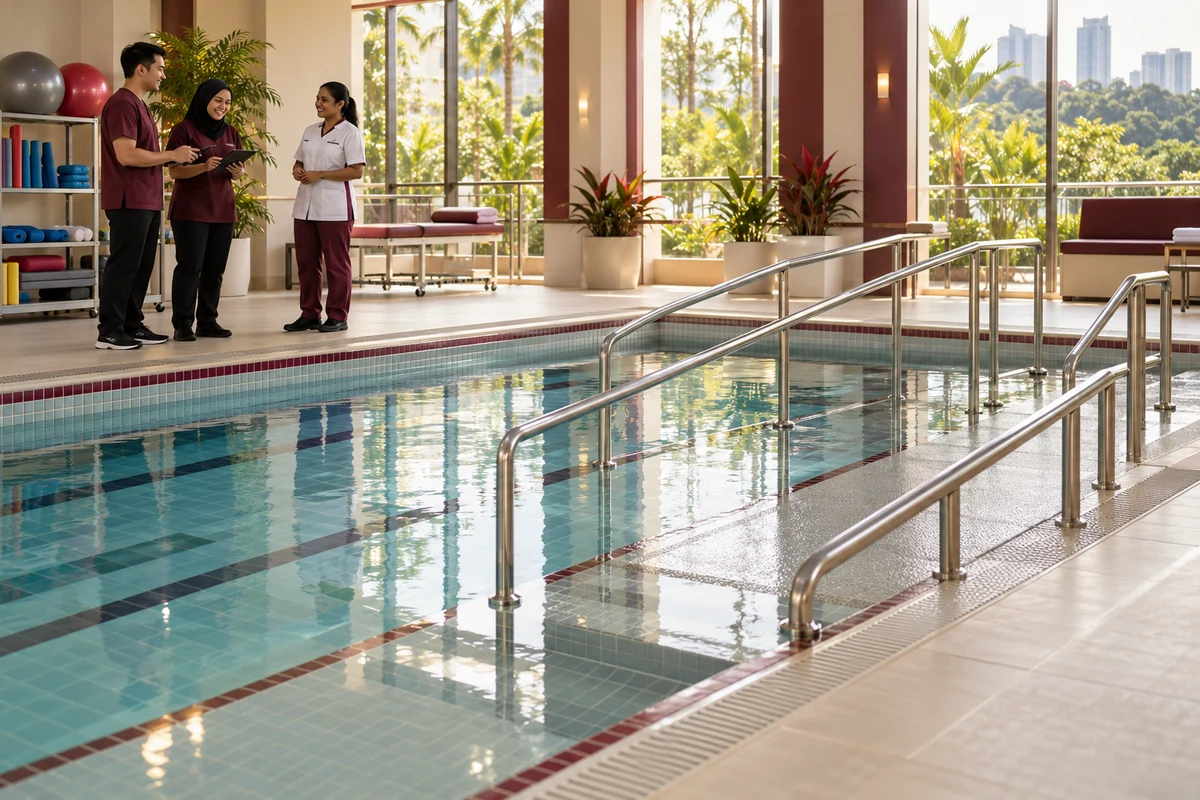
What to ask a rehabilitation provider
- How is the initial assessment done, and by which professional?
- What are the professional credentials, and are they currently authorised?
- What goals are being set, in the person's own terms?
- How is a session structured, and who is present?
- How is progress measured, and how often is it reviewed?
- What happens at discharge, and what onward support exists?
Ageing support
Compare the care model, not the brand
Five models, five different sets of questions. The label on the door tells you less than the answers to these.
| Care model | What to compare |
|---|---|
| Independent retirement living | Housing access, community facilities, tenancy terms and what happens when needs escalate. |
| Assisted living | Personal-care scope, staffing, night support, family communication and how changing needs are handled. |
| Day support and respite | Hours, transport, activities, how needs are assessed and how handover works. |
| Nursing or higher-dependency care | Clinical capabilities, the responsible professionals, staffing levels and emergency escalation. |
| Home support | Service boundaries, caregiver and nurse roles, scheduling and who supervises. |
GreenAcres in Ipoh describes independent-living villas with stepless design and an emergency-call system — a published design example, and explicitly not proof of hospital-level care. ReU Living lists recovery, assisted-living and retirement services. Sunway Sanctuary is a further senior-living discovery resource whose current service scope needs verifying directly.
Compare exact facility scope and written terms rather than brand labels. Ask what happens when needs escalate, because that is the question most families discover too late.
P03 — ReU Living (opens in a new tab)P04 — GreenAcres Retirement Village (opens in a new tab)P05 — Sunway Sanctuary (opens in a new tab)W07 — DOSM (opens in a new tab)
The indicator on this page uses a 65-and-over threshold, because that is what the national statistics use. Other Malaysian older-person programmes may define older persons differently — verify a programme's own definition rather than assuming eligibility from a population figure.
Care at home
Support at home, and the questions that protect it
Care Concierge describes home support, assisted-living services, care coordination and training resources, and its public FAQ distinguishes household assistance, caregiving and nursing roles. That distinction is worth holding onto: a caregiver is not automatically a registered nurse, and the tasks each is authorised to perform are not the same.
Training subjects worth discussing with a qualified provider include safe handling, communication, daily routines, home access and recognising when professional help is needed. This page does not teach lifting, transfers or any clinical procedure — those need hands-on instruction from someone qualified, not a diagram on a website.
Questions for a home-support provider
- Who assesses the needs, and what qualification do they hold?
- What exactly is included, and what is not?
- Who supervises the person doing the work?
- What happens overnight, and in an emergency?
- How are medicines handled, and by whom?
- How are care notes recorded and shared?
- What are the cancellation, replacement and complaint arrangements?
- How are the older person's privacy and preferences protected?
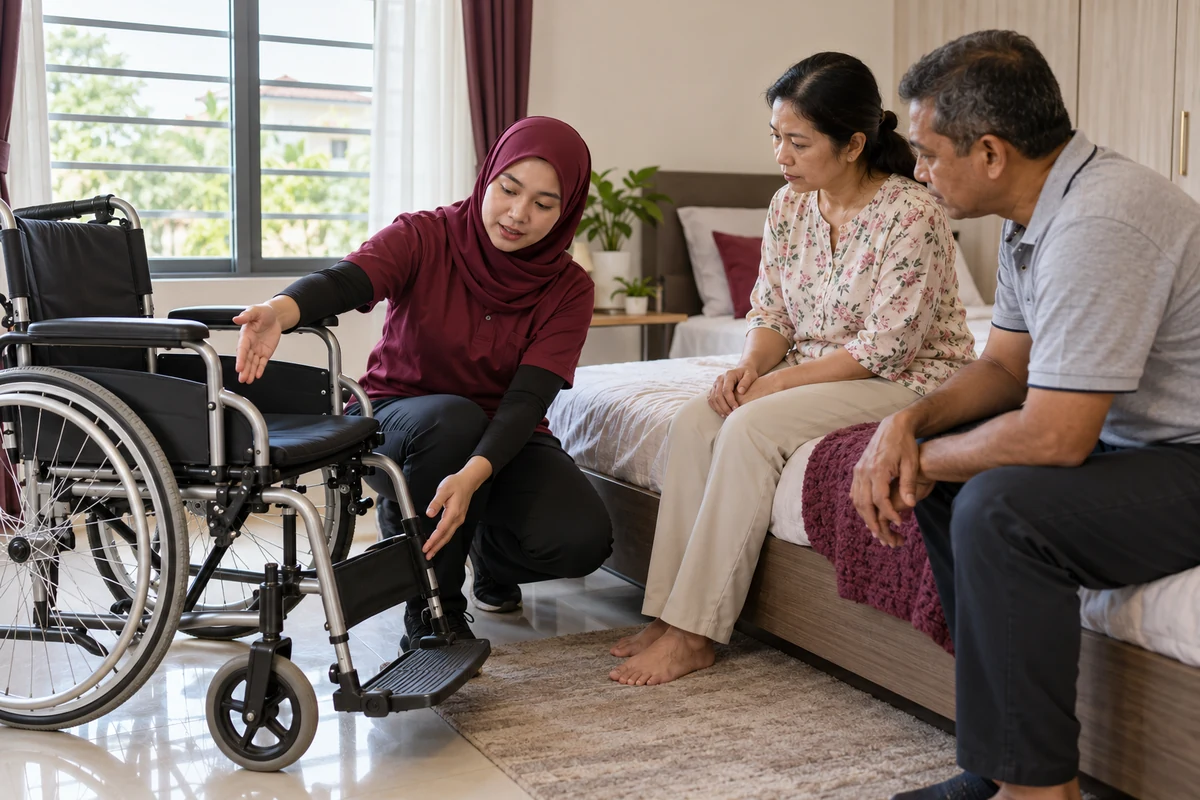
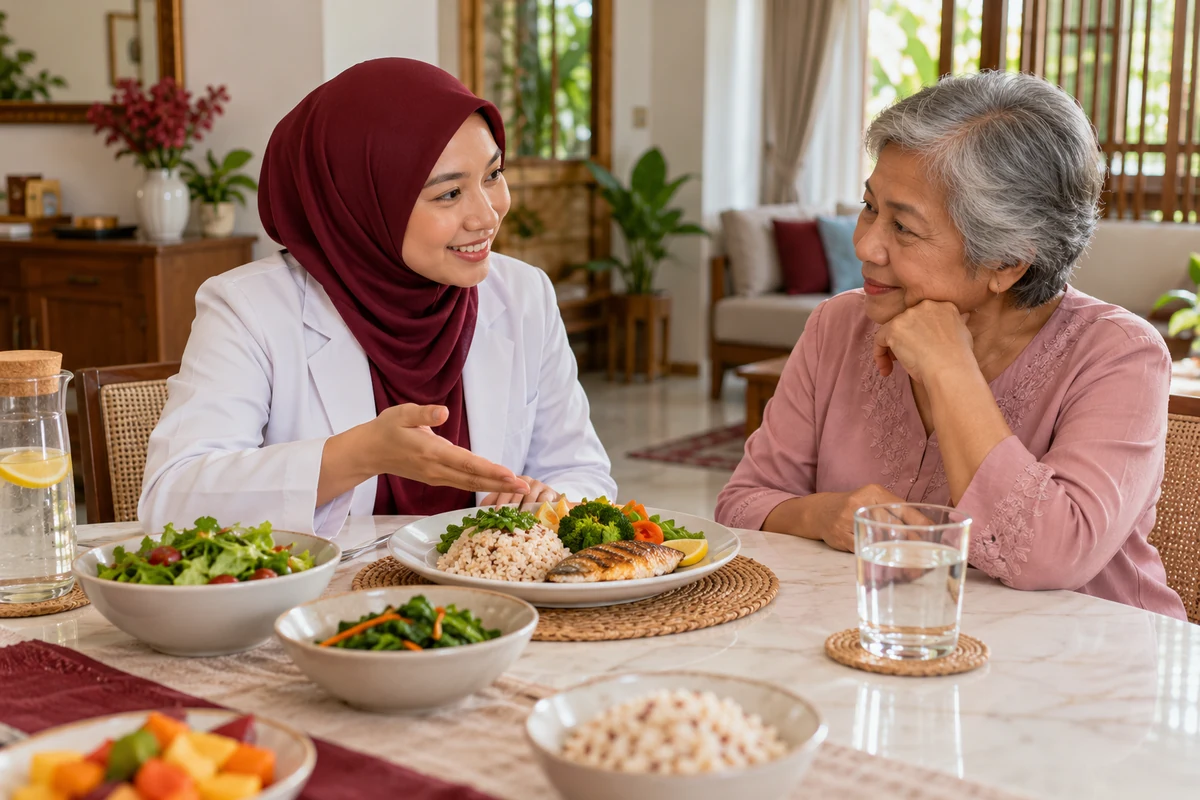
Support should protect the older person's privacy and preferences, not only their safety. Someone being cared for is still the person deciding how they want to live.
Technology
Where robotics and digital tools actually fit
Each row below names what a provider or institution publishes about itself, and the questions a buyer or family should ask about it. A published device name is not evidence of a better outcome.
| Technology | Published example and its scope | Buyer and family questions |
|---|---|---|
| Robotic gait training | Sunway Medical Centre's rehabilitation page lists Lokomat. A facility-specific published capability. | Who assesses suitability, and who supervises use? |
| Upper-limb robotic therapy | The same page lists EMU. | Which functional goals are set, and how is progress measured? |
| Wearable robotic assistance | SOCSO's centre describes Cyberdyne HAL technology on its own cybernics page, which retains 2019 launch wording. | What is currently available, how is suitability assessed, what is the regulatory status and what is the service pathway? |
| Care coordination | Care Concierge describes care-manager support. | Privacy, access controls, escalation and continuity of care? |
| Emergency-call systems | GreenAcres describes a residential call system. | Who responds, with what staffing, and what is the actual emergency pathway? |
| Tele-support and remote monitoringBusiness proposal, not a deployment | A business opportunity, not a deployment. No universal availability is claimed and no Malaysian service is named. | What evidence, what consent, what cybersecurity and what clinician oversight? |
Technology complements professional care; it does not replace assessment or supervision. An impressive machine establishes nothing about results for a particular person. SOCSO's cybernics page retains historical 2019 launch wording and an equipment count that this page does not reproduce as a current inventory, and no world-first or largest ranking is repeated anywhere.
Milestones
Documented milestones and published recovery stories
Institutional milestones and patient outcomes are two different things, and this section keeps them apart. Nothing below is a success rate.
- Institutional milestone
A decade of rehabilitation infrastructure
SOCSO's official centre history records operations beginning 1 October 2014 in Melaka, with a combined medical and vocational rehabilitation model. A dated institutional milestone — not a measured success rate.
- Capability adoption
Technology in Malaysian rehabilitation
Sunway's published service page identifies robotic gait and upper-limb tools. Capability adoption as the provider publishes it, with no invented launch date, no comparative efficacy and no recovery percentage.
- Published design example
Accessible retirement design
GreenAcres' operator page describes stepless villas and an emergency-call system. A published design example, not an independently audited safety outcome.
- Provider-published accounts
Patient-story discovery
Keeogo Malaysia publishes patient-story resources. They are linked as provider-published accounts that need their own context. No patient identity, photograph or before/after material is reproduced here, and no named patient's clinical outcome was independently verified.
What a future story entry would have to carry
If a specific story is ever added to this page, it has to meet all four of these first. Fabricated testimonials and synthetic patient portraits presented as real people are never acceptable.
- A dated primary source, published by an identifiable organisation
- Permission where the account identifies a person
- Factual outcome wording, attributed, with no implication of a typical result
- No patient photograph, no before/after material and no synthetic portrait presented as a real person
No named patient, no patient photograph, no before/after material and no success rate appears anywhere on this page. Provider-published stories are linked as exactly that — individual accounts, published by the provider, to be read with their own context. They are not clinical trial evidence and they do not indicate typical results.
Provider discovery
Eight resources, filterable by service type
Eight editorial discovery resources spanning clinical services, care at home, independent living, resort wellness and equipment-linked services. They are not ranked, not exhaustive and not platform partners, and there is no booking engine behind any of them. Two Sunway-linked entries are different service resources within a related group.
Showing 8 of 8 resources
Sunway Medical Centre
Clinical rehabilitation
Publishes a rehabilitation service page that names robotic gait and upper-limb devices. Confirm suitability and the exact facility scope.
- Location:
- Selangor
- Research status:
- Primary page read
- Before you enquire:
- Editorial discovery, not a rank or an endorsement. Verify the exact facility, current registration, suitability, availability and price.
SOCSO Tun Razak Rehabilitation Centre
Clinical and vocational rehabilitation
Describes a multidisciplinary medical and vocational rehabilitation model, with operations from 1 October 2014. No success rate is stated anywhere.
- Location:
- Melaka
- Research status:
- Primary page read
- Before you enquire:
- Editorial discovery, not a rank or an endorsement. Verify the exact facility, current registration, suitability, availability and price.
ReU Living
Recovery and assisted living
Lists recovery, assisted-living and retirement services, including a Kuala Lumpur resource. Exact care terms require a direct enquiry.
- Location:
- Kuala Lumpur
- Research status:
- Primary page read
- Before you enquire:
- Editorial discovery, not a rank or an endorsement. Verify the exact facility, current registration, suitability, availability and price.
GreenAcres Retirement Village
Independent senior living
Describes stepless villas and an emergency-call system. Independent living, explicitly not hospital care.
- Location:
- Ipoh, Perak
- Research status:
- Primary page read
- Before you enquire:
- Editorial discovery, not a rank or an endorsement. Verify the exact facility, current registration, suitability, availability and price.
Sunway Sanctuary
Senior living
A senior-living discovery resource. Current service and care scope must be verified directly.
- Location:
- Selangor
- Research status:
- Primary homepage read; limited substantive detail
- Before you enquire:
- Editorial discovery, not a rank or an endorsement. Verify the exact facility, current registration, suitability, availability and price.
The Banjaran Hotsprings Retreat
Resort wellness
Publishes wellness programme resources. A resort-wellness example with no clinical efficacy claim.
- Location:
- Ipoh, Perak
- Research status:
- Primary page read
- Before you enquire:
- Editorial discovery, not a rank or an endorsement. Verify the exact facility, current registration, suitability, availability and price.
Care Concierge
Home care and assisted living
Describes care-manager support and distinguishes household assistance, caregiving and nursing roles. Its site links resources including Penang and Sarawak.
- Location:
- Multiple; confirm the supplying entity
- Research status:
- Primary FAQ read
- Before you enquire:
- Editorial discovery, not a rank or an endorsement. Verify the exact facility, current registration, suitability, availability and price.
Keeogo Malaysia
Equipment-linked rehabilitation resource
Publishes patient-story resources. Provider-published accounts only; no outcome was independently verified.
- Location:
- Confirm with the supplier
- Research status:
- Primary page read
- Before you enquire:
- Editorial discovery, not a rank or an endorsement. Verify the exact facility, current registration, suitability, availability and price.
Accreditation must be checked for the exact facility and its current validity — there is no accreditation badge or logo strip on this page because none was verified. Prices, staffing ratios, availability and eligibility are not stated anywhere, because none was obtained.
Planning a stay
Verified locations, and a checklist worth working through
Only locations a provider publishes about itself appear below. Further coverage, particularly in East Malaysia, needs independently checked providers before it is listed here.
Melaka
- Basis
- SOCSO's centre describes its operations here.
Ipoh, Perak
- Basis
- GreenAcres describes its villas here; The Banjaran's retreat is also in Perak.
Kuala Lumpur
- Basis
- ReU Living lists a Kuala Lumpur (MiCasa) resource.
Penang and Sarawak
- Basis
- Care Concierge's own site links service resources in these states. Confirm the specific supplying entity and facility rather than assuming uniform service.
Travel and stay checklist
Work down this list before anything is booked. Most of the expensive surprises in care travel come from the items near the bottom.
- Clinical assessment first, where the trip is for care
- A written care or service proposal, before travel is booked
- A realistic stay length, set by the service rather than the flight
- Accessible transport and accommodation, confirmed with the operator
- Arrangements for an accompanying person
- Dietary and language preferences
- Itemised costs, in writing
- Insurance and payment conditions, including what is excluded
- Emergency escalation — who to call, and who responds
- A fit-to-travel discussion with the treating team
- Follow-up arrangements at home
A tourist stay does not automatically permit long-term residence. Current entry and visa conditions need official verification before any specific claim is made — see the research-gap list below.
This platform is not a booking agent and does not collect medical histories. An initial enquiry should ask only for a broad service interest and a way to reply; medical records belong in the provider's own secure process, sent directly to them.
Institutions & quality
Who to ask, and what each body does not settle
Six published referrals. Each one is a resource, not an authority on everything adjacent to it, and listing an institution establishes neither endorsement nor partnership.
MHTC
- Role
- Healthcare-travel orientation
- What it does not settle
- Healthcare travel, which is a different category from wellness travel. A referral, not a partnership.
JKM
- Role
- Care-centre registration framework
- What it does not settle
- Orientation to the Care Centres Act 1993 registration framework. It is NOT blanket authority for every nursing, clinical or resort service: the exact classification, professional authorisations and premises requirements must be confirmed with the responsible bodies.
MOH Traditional & Complementary Medicine Division
- Role
- Practitioner registration for regulated traditional and complementary practice
- What it does not settle
- The direct page returned a 500 error during the check, so its contents are not claimed to have been read in full. Practitioner status must be checked with the division itself.
WHO
- Role
- Rehabilitation knowledge resource
- What it does not settle
- An international knowledge resource, NOT a Malaysian licensing or accrediting body.
GWI
- Role
- Wellness-economy research
- What it does not settle
- A research body, NOT an accreditor. Its wellness-economy estimates are not tourism, healthcare or rehabilitation market figures.
DOSM
- Role
- Population statistics
- What it does not settle
- Age-structure estimates. Not a care-demand forecast, and other programmes may define older persons differently.
Six records held back as unpublished research leads
Candidate — not publishedThese six were identified as relevant but remained candidates after checking, so they are named here with the reason and deliberately not linked as public resource cards. A clickable card would imply a verification that has not happened.
- MOH Malaysia — CANDIDATE referral. A substantive current check is required before this appears as a public resource card.
- MSQH — CANDIDATE referral. Exact accreditation and its validity must be verified for the specific facility first.
- Malaysian Medical Council — CANDIDATE referral. A current practitioner check is required first.
- MDA — CANDIDATE referral. Current device and service status must be checked first.
- MIDA — CANDIDATE for this service model. NO incentive eligibility was verified.
- APHM — CANDIDATE referral. No current event dates were verified.
An investment or operational enquiry has to define the precise service model, the intended clients, the premises, staffing, professional credentials, equipment, environmental and building requirements, data handling and emergency arrangements — and then take that definition to the competent authorities. No licensing outcome or incentive eligibility is claimed here, and Thailand's BOI schemes do not apply in Malaysia.
Business & workforce
Nine opportunity themes, stated as hypotheses
These are commercial hypotheses worth examining, not guaranteed demand, guaranteed returns or any indication of approval. A market-size estimate for a whole wellness economy says nothing about one operator's revenue.
Accessible accommodation
Step-free stays with genuine circulation space, grab bars that are properly mounted and transport that works for a wheelchair.
Clinician-led rehabilitation services
Services built around assessment, measurable goals and a discharge plan, staffed by appropriately authorised professionals.
Assistive technology and maintenance
Supply, fitting, training and the unglamorous part — servicing equipment so it still works in year three.
Care coordination
Someone whose job is to hold the plan together across family, clinicians and providers.
Caregiver training
Structured training for family and professional caregivers, delivered by qualified providers.
Senior-friendly design
Housing, fit-out and public-space design that accounts for mobility, vision and hearing rather than adding ramps afterwards.
Home support
Clear service boundaries, supervised staff and scheduling that families can actually rely on.
Nutrition services
Dietetic support for recovery and for ageing well, within the scope of qualified practitioners.
Responsible wellness hospitality
Wellness experiences described honestly, without treatment, cure or longevity claims.
Roles this sector runs on
Professional roles require appropriate qualifications and current authorisation. No sector-wide employment count or forecast appears here, because none was verified.
- Nursing
- Physiotherapy and occupational therapy
- Caregiving
- Rehabilitation medicine
- Hospitality and guest services
- Equipment maintenance and fitting
- Care management and coordination
- Accessible design and project work
Questions
Six questions worth settling first
Is wellness travel the same as medical travel?
No. Their purposes and their measurements differ, although some activities overlap. Read each source's own definition rather than assuming the two are interchangeable — the figures behind them are not.
Read the sectionDoes this page have a verified wellness-only visitor total for Malaysia?
No. The available MHTC figures concern healthcare travel, which is a different thing. The wellness-only inbound count remains a research gap and is listed as one rather than filled in with the nearest available number.
Read the sectionAre the listed providers recommended for everyone?
No. They are discovery examples. Suitability depends on the person's needs, a professional assessment, the facility's actual scope and current availability — none of which this page can establish for you.
Read the sectionCan robotics guarantee recovery?
No guarantee is established, by any source on this page. Confirm the assessment, the goals and the evidence with the treating team. A device appearing on a provider's page tells you the provider has it, not that it will help a particular person.
Read the sectionDoes retirement accommodation include nursing?
Not necessarily, and the difference is substantial. Ask for the explicit care scope, the staffing, who the responsible professionals are and what the emergency escalation arrangement is — in writing.
Read the sectionAre provider stories proof of typical results?
No. They are individual accounts, published by the provider, and they should be read with their own context. They are not clinical trial evidence and they say nothing about what is typical.
Read the section
Next step
Start with the right care question
Define the goals and support needs, compare the service model, then confirm the details directly with the qualified provider or the responsible authority.
Sources & methodology
Every source, with its period, its scope and its limits
Eighteen published records — ten institutional or statistical, eight provider resources — each with the publisher, the reference period, the units, the scope and what it does and does not support. Six further candidate records are listed above as unpublished research leads and appear here without being treated as published resources.
The sources on this page have mixed reference periods, and they are shown separately rather than merged into one current-sounding picture.
- W01Institutional / statistical
WHO
- What it supports
- Rehabilitation defined in terms of functioning and disability.
- Reference period
- 22 April 2024
- Units
- n/a
- Scope
- International, not Malaysia-specific
- Research status
- Primary source read. International scope — WHO is a knowledge resource, not a Malaysian licensing body.
- Checked
- 2026-10-12
- W02Institutional / statistical
GWI
- What it supports
- Wellness tourism differs from medical tourism. Its trip counts may include domestic and international, primary and secondary trips — trips are not unique visitors.
- Reference period
- Resource current at the check date
- Units
- n/a
- Scope
- International definitions
- Research status
- Primary page read.
- Checked
- 2026-10-12
- W03Institutional / statistical
MHTC
- What it supports
- 1.6 million reported healthcare travellers and RM2.72 billion healthcare-travel revenue in 2024.
- Reference period
- 2024 data; release 24 July 2025
- Units
- reported travellers; MYR billion
- Scope
- Healthcare travel — NOT wellness-only visitors
- Research status
- Primary release read.
- Checked
- 2026-10-12
- W04Institutional / statistical
MHTC
- What it supports
- RM3.35 billion healthcare-traveller revenue in 2025. The same page shows 1.8 million travellers annually with no explicit period, so that count is not assigned to any year here.
- Reference period
- 2025 revenue; the annual traveller count on the same page is undated
- Units
- MYR billion
- Scope
- Healthcare travel
- Research status
- Primary page read. The undated 1.8m count is deliberately excluded from every year-specific comparison.
- Checked
- 2026-10-12
- W05Institutional / statistical
GWI
- What it supports
- Malaysia's broad wellness economy estimated at USD 31.8 billion across eleven sectors.
- Reference period
- 2024 dataset in the 2025 report; release 13 January 2026
- Units
- USD billion
- Scope
- Broad eleven-sector wellness economy — not tourism, not healthcare spending, not a rehabilitation market
- Research status
- Primary release read. Never added to, or compared with, the MYR healthcare-travel series.
- Checked
- 2026-10-12
- W06Institutional / statistical
GWI
- What it supports
- Report coverage and country-report availability.
- Reference period
- Report coverage 2019–2024
- Units
- n/a
- Scope
- Malaysia country report
- Research status
- Primary page read; the report download was NOT completed, so no inbound wellness-only trip count was extracted. That gap is stated on the page.
- Checked
- 2026-10-12
- W07Institutional / statistical
DOSM
- What it supports
- Population aged 65 and over: 8.4% of the estimated population in 2026, against 8.0% in 2025.
- Reference period
- 2025–2026 estimates; release 31 July 2026
- Units
- percent of population
- Scope
- National age structure — not a forecast of care demand
- Research status
- Primary PDF read; the portal page timed out during the check.
- Checked
- 2026-10-12
- W08Institutional / statistical
SOCSO Rehabilitation Centre
- What it supports
- That the centre publishes a cybernics / HAL technology resource.
- Reference period
- Page retains 2019 launch wording; checked 2026
- Units
- n/a
- Scope
- One centre's own technology page
- Research status
- Primary page read. The page's equipment count is stale and is NOT reproduced as a current inventory, and no first/largest ranking is repeated.
- Checked
- 2026-10-12
- W09Institutional / statistical
JKM
- What it supports
- The Care Centres Act 1993 registration framework exists and where the official resource is.
- Reference period
- Page updated 22 September 2026
- Units
- n/a
- Scope
- Care-centre registration orientation
- Research status
- Primary page read. This is orientation, not a project-specific legal determination: individual service classification must be checked with the responsible authorities.
- Checked
- 2026-10-12
- W12Institutional / statistical
MOH Traditional & Complementary Medicine Division
- What it supports
- That an official practitioner-registration resource exists for regulated traditional and complementary practice.
- Reference period
- Resource current at the check date
- Units
- n/a
- Scope
- Practitioner registration
- Research status
- Verified by official search; the direct page returned a 500 error during the check, so the resource is listed without claiming its contents were read in full.
- Checked
- 2026-10-12
- P01Provider resource
Sunway Medical Centre
- What it supports
- Its rehabilitation page lists robotic gait and upper-limb devices by name (Lokomat, EMU).
- Reference period
- Resource current at the check date
- Units
- n/a
- Scope
- That provider's own service page
- Research status
- Primary page read. Capability adoption as the provider publishes it — not a launch date, not comparative efficacy and not a recovery rate. Suitability and facility scope must be confirmed with the provider.
- Checked
- 2026-10-12
- P02Provider resource
SOCSO Tun Razak Rehabilitation Centre
- What it supports
- Operations beginning 1 October 2014 in Melaka, and a combined medical and vocational rehabilitation model.
- Reference period
- Operations from 1 October 2014; page current at the check date
- Units
- n/a
- Scope
- That centre's own about page
- Research status
- Primary page read. A dated institutional milestone, with no success-rate claim of any kind.
- Checked
- 2026-10-12
- P03Provider resource
ReU Living
- What it supports
- It lists recovery, assisted-living and retirement services, including a Kuala Lumpur (MiCasa) resource.
- Reference period
- Resource current at the check date
- Units
- n/a
- Scope
- That operator's own site
- Research status
- Primary page read. Exact care terms require a direct enquiry.
- Checked
- 2026-10-12
- P04Provider resource
GreenAcres Retirement Village
- What it supports
- Stepless villas in Ipoh and a residential emergency-call system, as the operator describes them.
- Reference period
- Resource current at the check date
- Units
- n/a
- Scope
- That operator's own site
- Research status
- Primary page read. A published design example — independent living, explicitly not hospital-level care, and not an audited safety outcome.
- Checked
- 2026-10-12
- P05Provider resource
Sunway Sanctuary
- What it supports
- That a senior-living resource exists.
- Reference period
- Resource current at the check date
- Units
- n/a
- Scope
- That operator's own site
- Research status
- Primary homepage read, with limited substantive detail. Current service and care scope must be verified directly.
- Checked
- 2026-10-12
- P06Provider resource
The Banjaran Hotsprings Retreat
- What it supports
- That the operator publishes wellness programme resources.
- Reference period
- Resource current at the check date
- Units
- n/a
- Scope
- That operator's own programme page
- Research status
- Primary page read. No clinical efficacy claim: a hot spring or spa is not presented as treatment for any medical condition.
- Checked
- 2026-10-12
- P07Provider resource
Care Concierge
- What it supports
- Care-manager support, and the distinction it draws between household assistance, caregiving and nursing roles. Its site links service resources including Penang and Sarawak.
- Reference period
- Resource current at the check date
- Units
- n/a
- Scope
- That operator's own FAQ
- Research status
- Primary FAQ read. Linked locations are that operator's own resources; the supplying entity and facility must be confirmed rather than assuming uniform nationwide service.
- Checked
- 2026-10-12
- P08Provider resource
Keeogo Malaysia
- What it supports
- That provider-published patient-story resources exist.
- Reference period
- Resource current at the check date
- Units
- n/a
- Scope
- Provider-published stories
- Research status
- Primary page read. NO patient outcome was independently verified. No patient identity, photograph, before/after material or typical-result implication is reproduced here.
- Checked
- 2026-10-12
- C01Candidate — not published
MOH Malaysia
- What it supports
- Nothing published on this page.
- Reference period
- Resource current at the check date
- Units
- n/a
- Scope
- Clinical services and oversight
- Research status
- CANDIDATE referral. A substantive current check is required before this appears as a public resource card.
- Checked
- 2026-10-12
- C02Candidate — not published
MSQH
- What it supports
- Nothing published on this page.
- Reference period
- Resource current at the check date
- Units
- n/a
- Scope
- Facility accreditation
- Research status
- CANDIDATE referral. Exact accreditation and its validity must be verified for the specific facility first.
- Checked
- 2026-10-12
- C03Candidate — not published
Malaysian Medical Council
- What it supports
- Nothing published on this page.
- Reference period
- Resource current at the check date
- Units
- n/a
- Scope
- Doctor registration
- Research status
- CANDIDATE referral. A current practitioner check is required first.
- Checked
- 2026-10-12
- C04Candidate — not published
MDA
- What it supports
- Nothing published on this page.
- Reference period
- Resource current at the check date
- Units
- n/a
- Scope
- Medical-device oversight
- Research status
- CANDIDATE referral. Current device and service status must be checked first.
- Checked
- 2026-10-12
- C05Candidate — not published
MIDA
- What it supports
- Nothing published on this page.
- Reference period
- Resource current at the check date
- Units
- n/a
- Scope
- Investment entry orientation
- Research status
- CANDIDATE for this service model. NO incentive eligibility was verified.
- Checked
- 2026-10-12
- C06Candidate — not published
APHM
- What it supports
- Nothing published on this page.
- Reference period
- Resource current at the check date
- Units
- n/a
- Scope
- Private-hospital industry body
- Research status
- CANDIDATE referral. No current event dates were verified.
- Checked
- 2026-10-12
18 / 24 — Candidate — not published
What is not on this page yet
The outstanding checks, published rather than hidden. Each one has to be closed before anything resting on it appears here.
- A verified Malaysian inbound wellness-only visitor count. The GWI country report download was not completed, and healthcare travellers, total tourists, spa visits and repeat trips are not substitutes for it.
- The reference period for MHTC's undated annual traveller count of 1.8 million, which is why that figure is not shown beside a year anywhere on this page.
- Substantive current checks on the six candidate institution records — MOH, MSQH, the Malaysian Medical Council, MDA, MIDA and APHM — before any of them appears as a public resource card.
- Current accreditation, registration and practitioner status for any named facility, which must be checked for the exact facility and its current validity.
- A current sector-wide employment count or forecast. None was verified, so none is shown.
- Incentive eligibility for any service model in this sector. None was verified, and Thailand's BOI schemes do not apply.
- Current entry and visa conditions for a care-related visit, which need official verification before anything specific is published.
- Any dated event edition, confirmed with its organiser.
Method
Records were transcribed from the owner's handover pack into a single data module, so every figure, citation and caveat on this page has one place it comes from. Where the pack recorded a limit — a blocked page, a stale inventory, a candidate-only status, an undated figure — that limit is carried onto the page beside the record rather than resolved by assumption. Nothing was added from memory, and no figure was converted, combined or restated into a different scope.
Publication status
This page is complete as researched but is not yet released for indexing. It carries noindex, it is absent from the sitemap, and its card on the Business page stays Coming soon until the production build runs on a networked machine and the outstanding checks above are closed.
Every image on this page is a generated illustrative scene. None is a photograph of a listed provider, none shows a real patient or a named device, and none is evidence of a service, a credential or an outcome.
Nothing here is personalised medical advice. Decisions about assessment, treatment, suitability and travel readiness belong with a qualified clinician who knows the person's situation.