
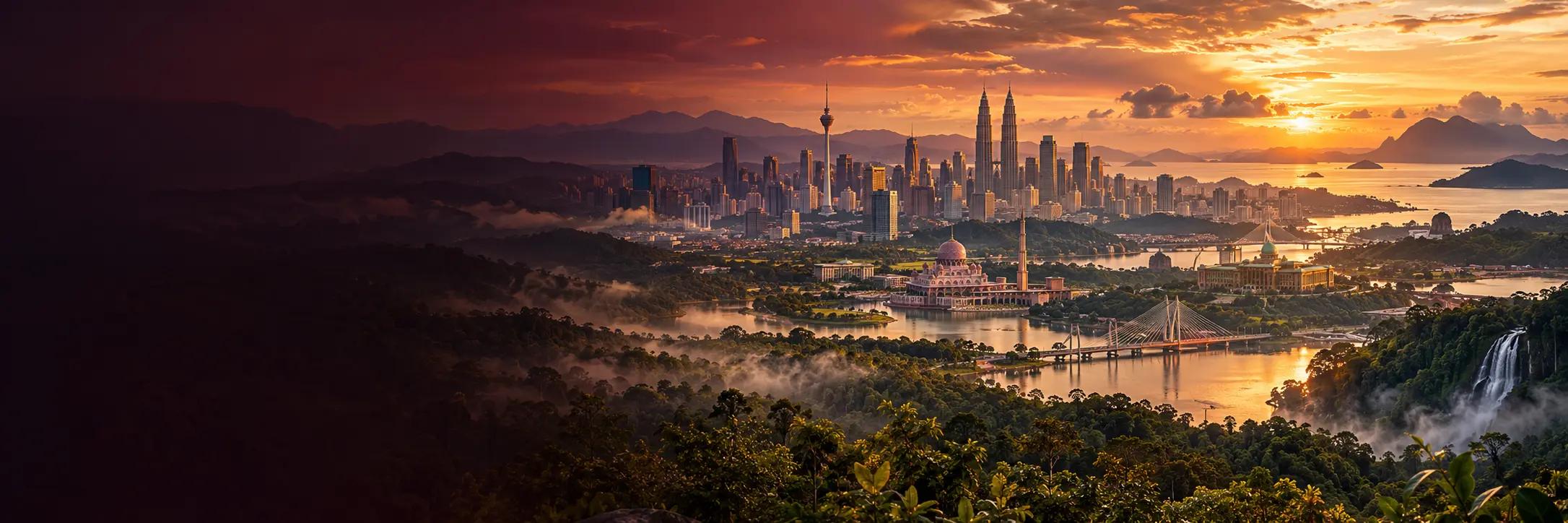
ABOUT MALAYSIA
Discover Malaysia
Explore its regions, people, heritage and everyday life.
A federal constitutional monarchy of 13 states and three federal territories, across Peninsular Malaysia and northern Borneo.
Understand Malaysia's history, constitutional system, states and federal territories, people, cities, natural regions and national connections — each fact carrying the official source it came from and the date it was checked.
13
States
3
Federal territories
66
Official sources cited
2026-10-10
Last reviewed
The True Malaysia is an independent information platform. It is not a government service, not an agency of any Malaysian authority, and not a partner of any body named on this page.
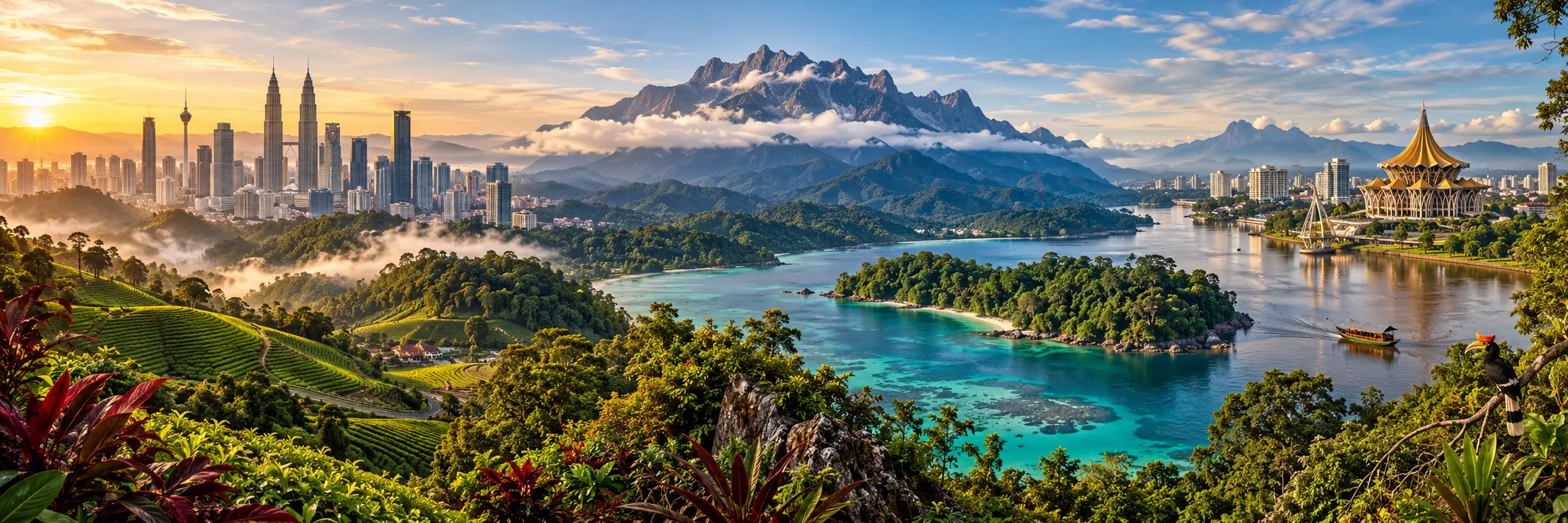
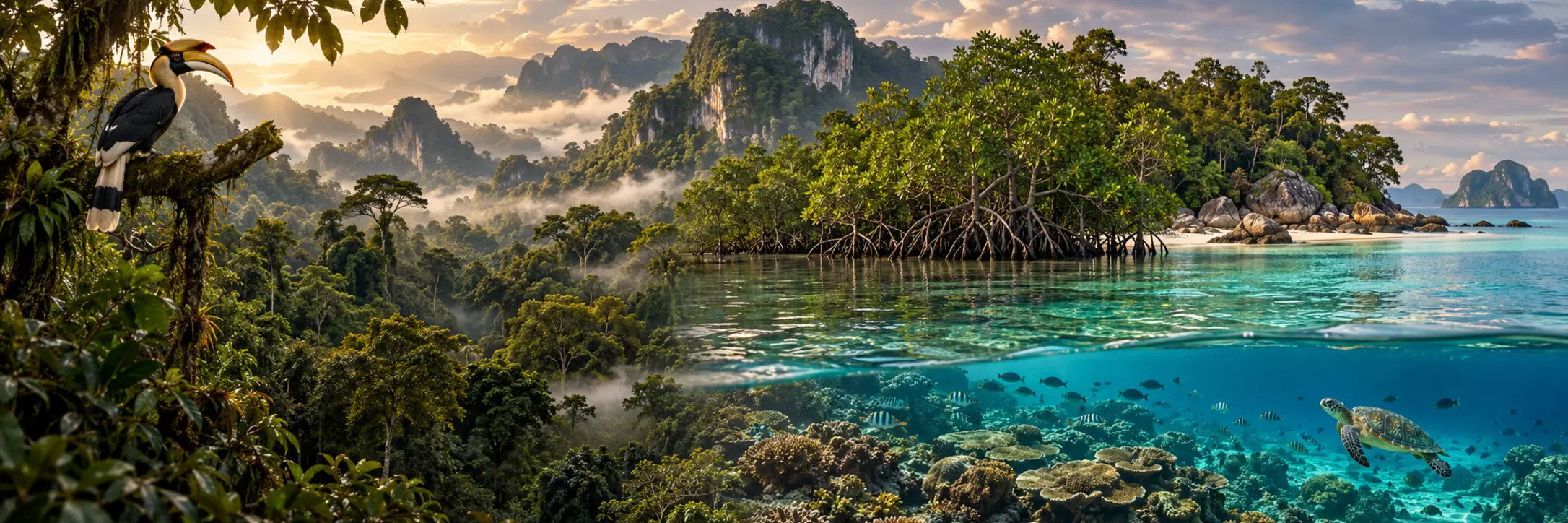
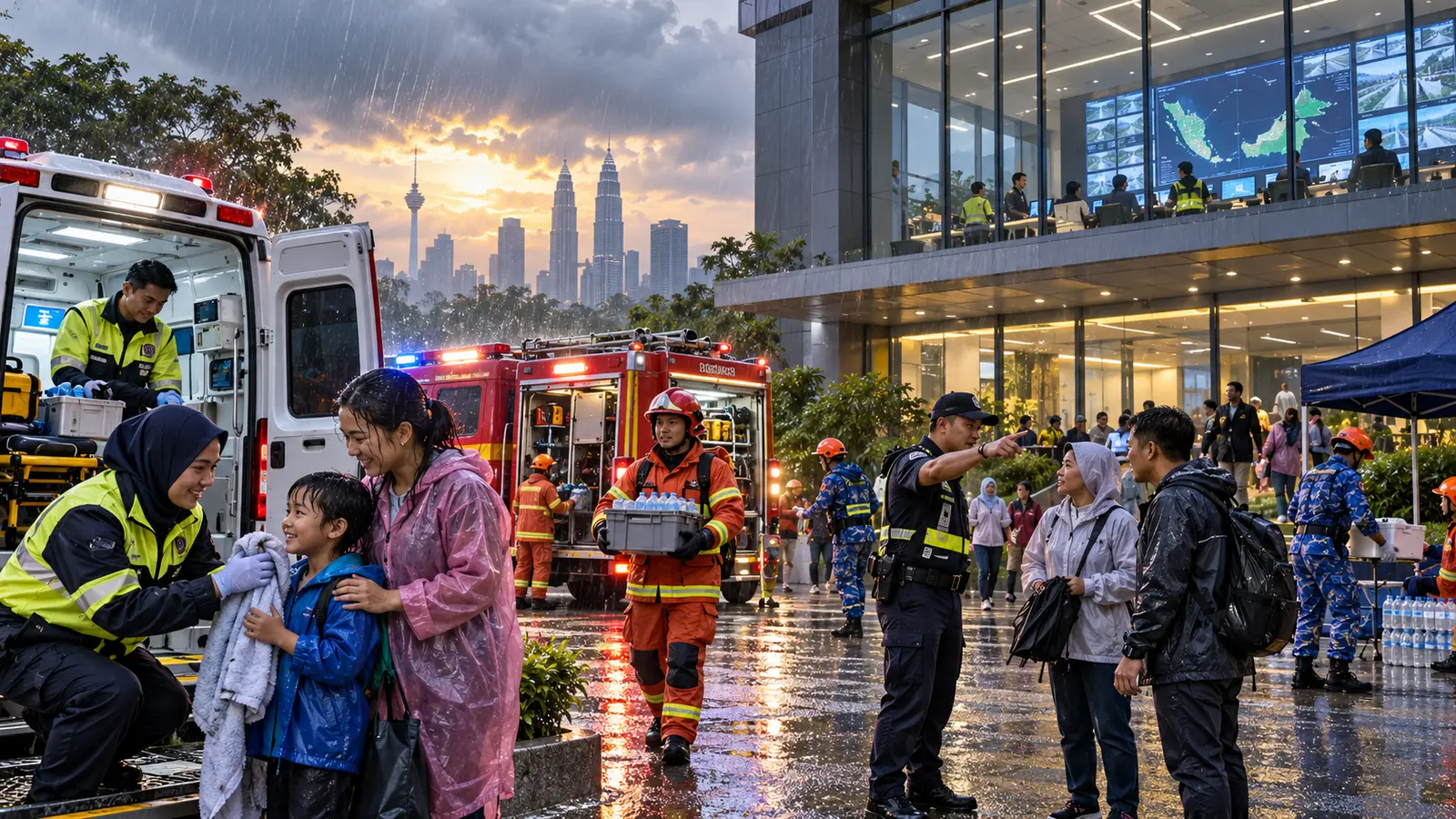
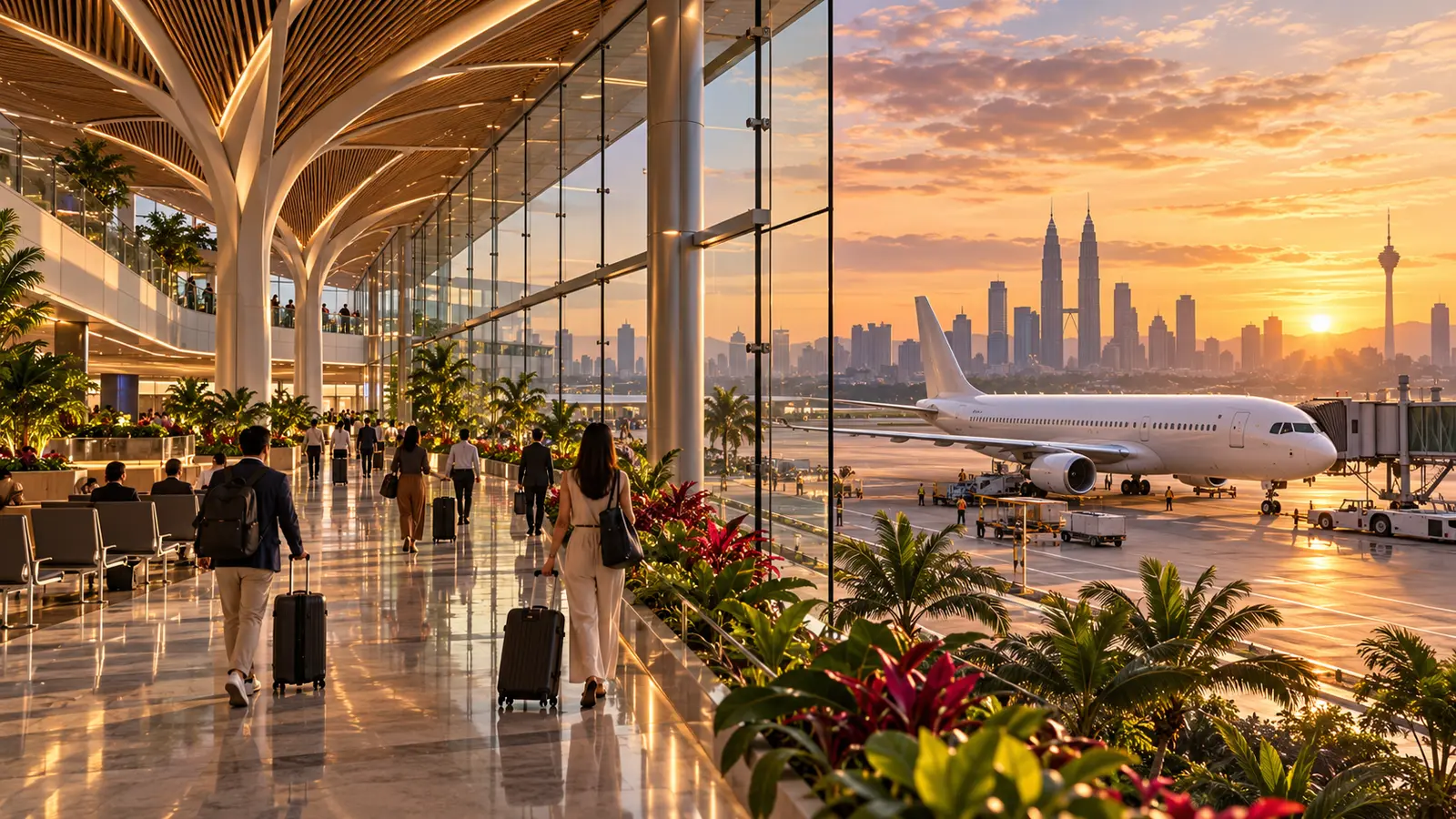
Every image on this page is a commissioned editorial illustration. None is a photograph of a specific building, map, airport, train, road, port or emergency operation, and no fact on this page is drawn from one.
12 items on this page could not be confirmed from a primary Malaysian source during the research pass. Each is marked where a reader would look for it, and all are listed together in the sources section at the foot of the page.
Malaysia at a glance
The facts, and where each one comes from
Every row carries the official page it was read from and the date it was checked. Where no official source states something, the row says so instead of guessing.
Country
Malaysia
Named by the Malaysia Act 1963, which brought the federation into being on 16 September 1963.
Malaysia Act 1963 (Act No. 26 of 1963), section 4(1) (opens in a new tab) · Verified 2026-10-10Hosted by the Sabah State Attorney-General's Chambers.
System of government
Federal constitutional monarchy and parliamentary democracy
MyGovernment — Parliamentary Democracy System (opens in a new tab) · Verified 2026-10-10
Head of state
The Yang di-Pertuan Agong
Elected by the Conference of Rulers for a five-year term. Not a public election, and not a single automatic national succession.
National capital
Kuala Lumpur
A federal territory in its own right, and distinct from Putrajaya.
Federal administrative centre
Putrajaya
The seat of federal administration. Kuala Lumpur remains the national capital.
States and federal territories
13 states and three federal territories
The federal territories are Kuala Lumpur, Labuan and Putrajaya. The official source names all three; it does not state the count, which is ours.
MyGovernment — Flag of Malaysia (opens in a new tab) · Verified 2026-10-10The page states that the flag's stripes signify "13 states and a Federal government" and names the three federal territories.
National regions
Peninsular Malaysia, and Sabah and Sarawak in northern Borneo
The two parts are separated by the South China Sea.
National and official language
Malay (Bahasa Melayu)
Its role as the national language is set by Article 152 and strengthened by the National Language Act 1967. English is widely used in trade and industry but is not a federal official language.
MyGovernment — Official Language (opens in a new tab) · Verified 2026-10-10The same page says only that "English still dominates the language of trade and industry in the country" — it does not give English official status.
Currency
Malaysian ringgit (MYR, commonly RM)
The "$" symbol was used until it was changed to RM in 1993.
MyGovernment — Currency (opens in a new tab) · Verified 2026-10-10This page does not name the issuing authority, so none is stated here.
Land area
330,534 km²
No reference year is given on the official page; it was last updated in June 2026.
MyGovernment — Location (opens in a new tab) · Verified 2026-10-10
Population
An estimated 34.4 million
A Department of Statistics Malaysia estimate for the second quarter of 2026, released 13 August 2026, against 34.2 million a year earlier. An estimate, not a census count.
Department of Statistics Malaysia — Demographic Statistics, Q2 2026 (opens in a new tab) · Verified 2026-10-10
Time zone
UTC+8 (Malaysian Standard Time)
Based on the time zone of longitude 120° East.
SIRIM National Metrology Institute — Malaysian Standard Time (opens in a new tab) · Verified 2026-10-10
Calling code
+60
MCMC — Numbering and Electronic Addressing Plan (opens in a new tab) · Verified 2026-10-10
Country-code domain
.my
Under MCMC's purview by section 179(1) of the Communications and Multimedia Act 1998, and managed by MYNIC Berhad.
MCMC — Electronic Addressing (opens in a new tab) · Verified 2026-10-10
Driving side
Verification required
No official Malaysian page found during research states the driving side outright. The closest is the Ministry of Transport's cycling guide, which tells road users to keep as near as practicable to the left of the roadway. That implies left-hand traffic but does not state it, so this page does not either.
Ministry of Transport — Safe Cycling Guide (opens in a new tab) · Verified 2026-10-10
A national story
How the federation came to exist
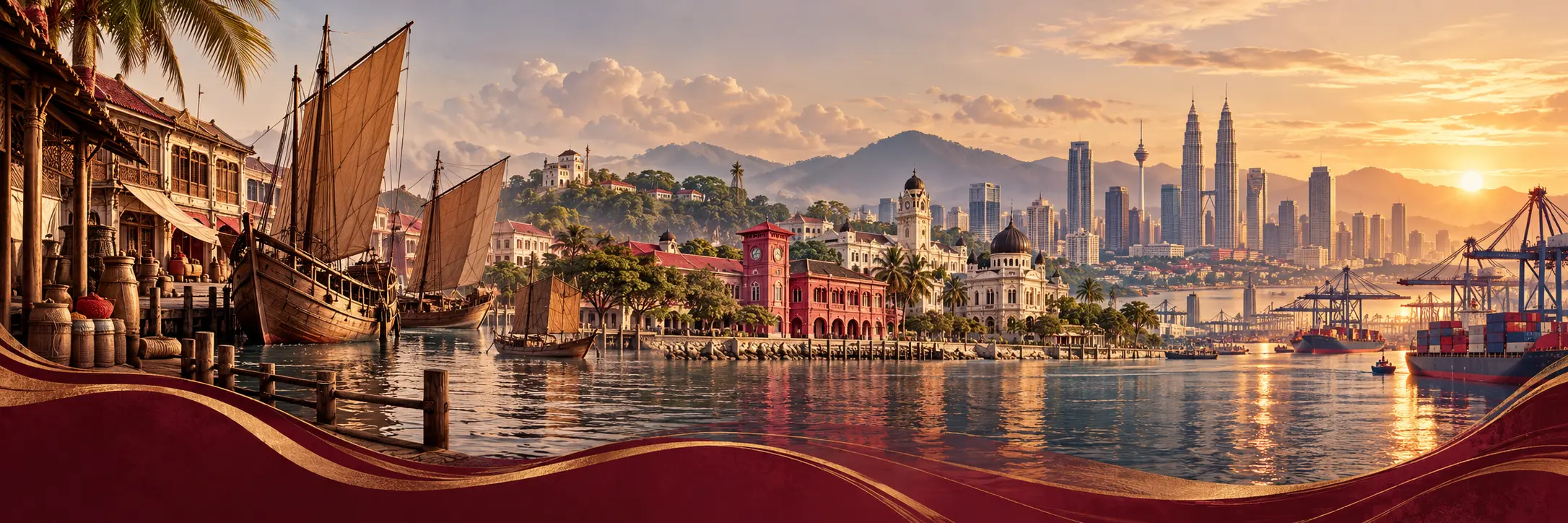
A neutral outline of how the federation came to exist, with each entry carrying its own source. Malaysia's constitutional history is a story of states federating, not of a single dynasty, and this timeline is built that way.
Before 1400
Early communities and maritime networks
Communities along the peninsula's coasts and rivers, and in northern Borneo, sat on the sea routes between the Indian Ocean and the South China Sea. Regional polities grew around those routes long before the states that federated in the twentieth century existed.
MyGovernment — Malaysian History (opens in a new tab) · Verified 2026-10-10The official page frames the Melaka era as the start of its narrative; this entry summarises the setting it describes rather than adding dates of its own.
Around 1400
The Melaka Sultanate
The official history dates the era of the Malay Sultanate of Malacca to around 1400 AD. No single founding year is given on that page, so none is stated here.
MyGovernment — Malaysian History (opens in a new tab) · Verified 2026-10-10
1511 – 1824
Portuguese, Dutch and British periods
Melaka fell to the Portuguese in 1511, and from that year the official history describes Malaya entering the colonial era. The Dutch followed in 1641, and the Anglo-Dutch Treaty of 1824 divided the region's spheres of influence. These periods did not touch every state equally, and the Borneo territories followed a different course again.
MyGovernment — Malaysian History (opens in a new tab) · Verified 2026-10-10
1948 – 1957
Constitutional development and the Federation of Malaya
The Conference of Rulers records that from 1948 to 1957 the Council of Rulers was composed of nine Malay rulers — the institutional continuity that carried into the federation and still elects the Yang di-Pertuan Agong today.
Conference of Rulers — Background and History (opens in a new tab) · Verified 2026-10-10
31 August 1957
Independence of the Federation of Malaya
The national anthem was played for the first time after midnight on the eve of 31 August 1957 at the Selangor Club Ground, at the independence declaration ceremony set for that day.
MyGovernment — National Anthem (opens in a new tab) · Verified 2026-10-10The MyGovernment history page's own independence section is a heading with no body text, so the date is cited from the national anthem page instead.
16 September 1963
The formation of Malaysia
Proclamation L.N. 214/63 appointed the sixteenth day of September 1963 as Malaysia Day, the day the Malaysia Act 1963 came into force. Section 4 named the federation Malaysia and federated the eleven states of Malaya, the Borneo States of Sabah and Sarawak, and the State of Singapore. The Act had originally set 31 August 1963, which the proclamation displaced.
Malaysia Act 1963 (Act No. 26 of 1963) (opens in a new tab) · Verified 2026-10-10
9 August 1965
Singapore leaves the federation
The Conference of Rulers records Singapore's membership of the Conference as lasting until 9 August 1965.
Conference of Rulers — Background and History (opens in a new tab) · Verified 2026-10-10
31 August 1970
Rukun Negara proclaimed
The national principles were proclaimed on 31 August 1970, the thirteenth anniversary of independence. Its five principles are set out in full below.
MyGovernment — Rukun Negara (opens in a new tab) · Verified 2026-10-10
1970 onward
Industrial, urban and regional development
The decades since have reshaped where Malaysians live and work, across manufacturing corridors on both coasts of the peninsula and distinct development paths in Sabah and Sarawak. Sector-level figures and dates belong with their own sources, so this page does not summarise them.
Department of Statistics Malaysia (opens in a new tab) · Verified 2026-10-10Given as the place to go for the figures rather than as the source of a claim made here.
Rukun Negara — the five principles
Proclaimed on 31 August 1970, in the official English wording.
1
Belief in God
2
Loyalty to King and Country
3
Supremacy of the Constitution
4
Rule of Law
5
Courtesy and Morality
MyGovernment — Rukun Negara (opens in a new tab) · Verified 2026-10-10
Government
A federal constitutional monarchy and parliamentary democracy
Malaysia is a federal constitutional monarchy with a parliamentary democracy. The explanation below is evergreen: it describes the institutions, not who currently holds office. Current office-holders are listed separately, dated, because they change.
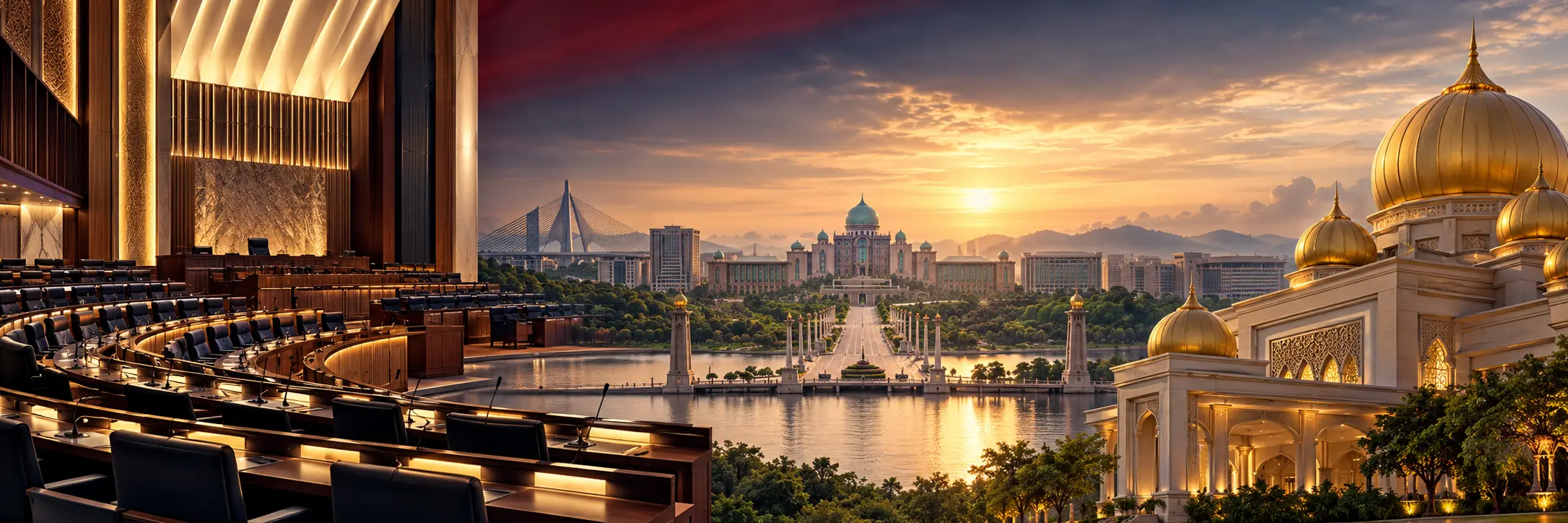
The Yang di-Pertuan Agong is the federal head of state
Malaysia is described officially as a constitutional monarchy with His Majesty the Yang di-Pertuan Agong as head of state.
MyGovernment — Parliamentary Democracy System (opens in a new tab) · Verified 2026-10-10
The Conference of Rulers elects him for a five-year term
His Majesty reigns for a term of five years and is elected by the Conference of Rulers. Only a ruler may be elected, and only if he consents; only the rulers may vote; the ballot is secret and a nominee must obtain a majority of five votes. The order of selection normally follows the seniority of each ruler by length of reign, now set out in a restructured list under the Third Schedule of the Federal Constitution. The four Yang di-Pertua Negeri are members of the Conference but are not present for the election.
Conference of Rulers — Election of His Majesty the Yang di-Pertuan Agong (opens in a new tab) · Verified 2026-10-10This is not a public election and not an automatic hereditary national succession.
Parliament
Verification requiredThe readable official page describes the Parliament of Malaysia as consisting of the Senate (Dewan Negara) and the House of Representatives (Dewan Rakyat), which first met on 11 September 1959. The familiar constitutional formulation that Parliament comprises the Yang di-Pertuan Agong together with both Houses rests on Article 44 of the Federal Constitution, which could not be read during this research pass — so it is marked for verification rather than asserted here.
Parliament of Malaysia — General Information (opens in a new tab) · Verified 2026-10-10Most of parlimen.gov.my blocks automated access, so only this page could be read.
Federal constituencies
The Election Commission states that the number of federal electoral constituencies in force is 222, alongside 600 state assembly constituencies. Note that this is a count of constituencies, not a statement of the number of members sitting at any moment.
Election Commission of Malaysia — Frequently Asked Questions (opens in a new tab) · Verified 2026-10-10
Head of government and the division of powers
The Prime Minister is head of government and leads the Cabinet within the constitutional framework. Powers and responsibilities are divided between federal and state levels, with local authorities operating under the frameworks that apply to them. Several matters sit differently in Sabah and Sarawak than in the peninsula, which is why a question about a licence or a service often has a different answer depending on the state.
Prime Minister's Office of Malaysia (opens in a new tab) · Verified 2026-10-10
Nine rulers and four Yang di-Pertua Negeri
Nine states have hereditary rulers: Sultans in Johor, Kedah, Kelantan, Pahang, Perak, Selangor and Terengganu; the Raja of Perlis; and the Yang di-Pertuan Besar of Negeri Sembilan. Melaka, Pulau Pinang, Sabah and Sarawak each have a Yang di-Pertua Negeri.
Conference of Rulers — Info Raja (the listing of all heads of state with their exact titles) (opens in a new tab) · Verified 2026-10-10Deliberately not cited to MyGovernment's state-government page, which lists only eleven states — it omits Perlis and Negeri Sembilan from both its monarchical and non-monarchical lists, in English and in Malay. The Conference of Rulers' own listing is complete.
Current office-holders
Office-holders change. These three records are dated, and each carries the official page it came from. Everything above this point is evergreen institutional description and does not go out of date with them.
Yang di-Pertuan Agong
Sultan Ibrahim
As at 2026-10-10
MyGovernment — List of the Yang di-Pertuan Agong (opens in a new tab) · Verified 2026-10-10The Conference of Rulers names him as Yang di-Pertuan Agong Malaysia XVII.
Prime Minister
YAB Dato' Seri Anwar bin Ibrahim
As at 2026-10-10
Prime Minister's Office — Profile of the Prime Minister (opens in a new tab) · Verified 2026-10-10Described there as the Tenth Prime Minister of Malaysia.
Regent of Johor
Tunku Ismail Ibni Sultan Ibrahim
As at 2026-10-10
Conference of Rulers — Info Raja (opens in a new tab) · Verified 2026-10-10Listed as Pemangku Sultan Johor while the Sultan of Johor serves as Yang di-Pertuan Agong.
States and federal territories
13 states and 3 federal territories
Thirteen states and three federal territories. The head-of-state system for every state is confirmed from the Conference of Rulers' own listing. Capitals are a different matter: several state portals block automated access, so six capitals could not be confirmed from an official source and say so below rather than being filled in from common knowledge.
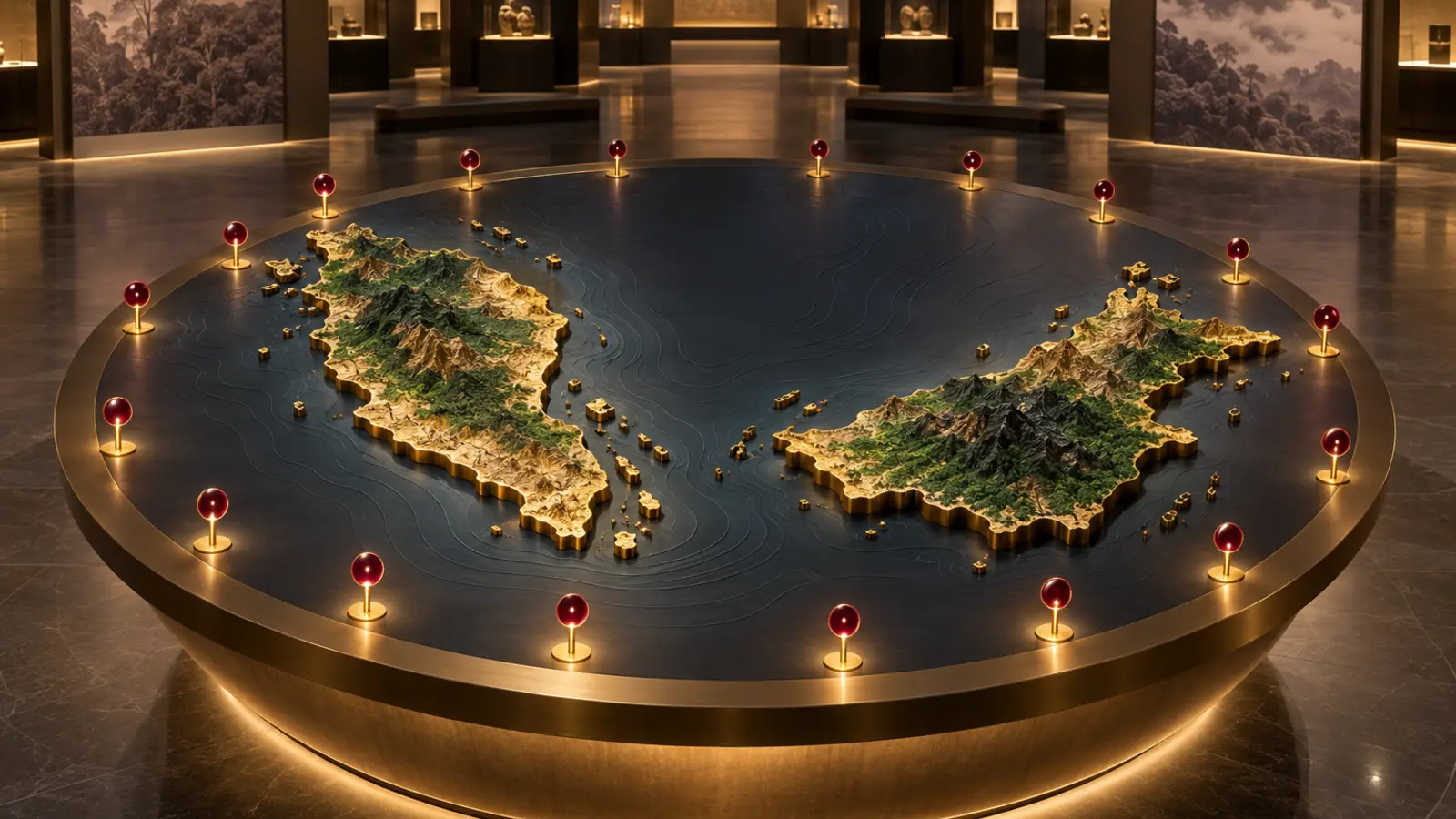
Head-of-state systems for all 13 states are confirmed from one complete official listing. 8 of 13 capitals are confirmed from an official portal; 5 could not be and say so below.
Conference of Rulers — Info Raja (opens in a new tab) · Verified 2026-10-10
| State or territory | Capital | Region | Head of state | Official portal |
|---|---|---|---|---|
| Johor | Johor BahruThe seat of government moved from Teluk Belanga, Singapore, in 1889. | Peninsular Malaysia | Sultan | Portal (opens in a new tab) |
| Kedah | Alor SetarDescribed by its city council as the oldest state capital in Malaysia. | Peninsular Malaysia | Sultan | Portal (opens in a new tab) |
| Kelantan | Kota BharuThe official page calls Kota Bharu the seat of government of Kelantan, declared in 1844 — it uses "pusat pemerintahan" rather than the word for state capital. | Peninsular Malaysia | Sultan | Portal (opens in a new tab) |
| Melaka | Verification requiredNo official page that could be read states Melaka's capital or settles its official name. The state portal blocks automated access, and the Melaka Historic City Council's own profile pages do not say that Melaka is the state capital. Rather than publish an unsourced answer, this record holds. | Peninsular Malaysia | Yang di-Pertua Negeri | Portal (opens in a new tab)Melaka Historic City Council. The state portal melaka.gov.my blocks automated access. |
| Negeri Sembilan | Seremban | Peninsular Malaysia | Yang di-Pertuan Besar | Portal (opens in a new tab) |
| PahangRoyal town: Pekan | Verification requiredThe Pahang state portal lists Kuantan's city council but never states that Kuantan is the state capital. Pekan is confirmed as a royal town by the portal's own listing of the Royal Town of Pekan Municipal Council. | Peninsular Malaysia | Sultan | Portal (opens in a new tab) |
| Pulau Pinang (Penang) | Verification requiredThe Penang state portal's history page mentions George Town only in an account of how the name arose; it never calls it the state capital. Widely reported, but not confirmable from the official portal during this pass. | Peninsular Malaysia | Yang di-Pertua Negeri | Portal (opens in a new tab) |
| PerakRoyal town: Kuala Kangsar (verification required) | IpohThe Sultan of Perak declared Ipoh a city and the capital of Perak Darul Ridzuan on 27 May 1988. | Peninsular Malaysia | Sultan | Portal (opens in a new tab)Ipoh City Council. The Perak state portal and the Sultan's office site both block automated access, which is why Kuala Kangsar's status as the royal town could not be confirmed in official wording. |
| Perlis | Verification requiredKangar is widely reported as the capital, but the royal office's state introduction mentions it only in passing and no official page read during this pass states it. Arau is not mentioned at all. | Peninsular Malaysia | Raja | Portal (opens in a new tab) |
| Sabah | Kota KinabaluJesselton remained the capital and was renamed Kota Kinabalu in 1968; city status followed on 2 February 2000. | East Malaysia | Yang di-Pertua Negeri | Portal (opens in a new tab) |
| Sarawak | KuchingRecorded by the city's official history as remaining the state capital through the formation of Malaysia in 1963. | East Malaysia | Yang di-Pertua Negeri | Portal (opens in a new tab) |
| Selangor | Verification requiredShah Alam is widely reported as the capital, but the Shah Alam city council site and the state assembly site both block automated access and the state portal's homepage names neither the capital nor the Sultan. | Peninsular Malaysia | Sultan | Portal (opens in a new tab) |
| Terengganu | Kuala Terengganu | Peninsular Malaysia | Sultan | Portal (opens in a new tab) |
| Federal Territory of Kuala Lumpur | —The national capital, and a federal territory rather than a state. | Federal territory | — | Portal (opens in a new tab) |
| Federal Territory of Labuan | —"Federal Territory of Labuan" is the form used in Perbadanan Labuan's own statutory functions. The inverted "Labuan Federal Territory" does not appear there. | Federal territory | — | Portal (opens in a new tab) |
| Federal Territory of Putrajaya | —The federal administrative centre. Kuala Lumpur remains the national capital; the two are different places with different roles. | Federal territory | — | Portal (opens in a new tab) |
Johor
Malaysia's southern gateway, facing Singapore across the Strait of Johor, with the Iskandar Malaysia development region.
Business in MalaysiaKedah
A northern state of rice plains and coast, and the state in which Langkawi sits.
Islands and coastal MalaysiaKelantan
A north-eastern state on the South China Sea, with a strong craft and cultural tradition.
Melaka
A historic strait port on the west coast, the seat of the fifteenth-century sultanate and later of successive colonial administrations.
Negeri Sembilan
A west-coast state about sixty kilometres from Kuala Lumpur, with a distinctive Minangkabau architectural and customary inheritance.
Pahang
The largest state in Peninsular Malaysia, running from the Titiwangsa highlands to the east coast, and the state in which Tioman sits.
Islands and coastal MalaysiaPulau Pinang (Penang)
An island and a mainland strip on the north-west coast, combining a heritage port city with one of Malaysia's established manufacturing corridors.
Business in MalaysiaPerak
A west-coast state of limestone landscapes and former tin country, with Pangkor off its coast.
Perlis
Malaysia's smallest state, in the far north-west on the Thai border.
Sabah
Northern Borneo, from Mount Kinabalu to the Sulu and South China seas, with its own immigration controls and its own development corridor.
Islands and coastal MalaysiaSarawak
Malaysia's largest state by area, in north-western Borneo, with extensive rainforest, river systems and its own immigration controls.
Geography and natureSelangor
The state surrounding Kuala Lumpur and Putrajaya, and Malaysia's most heavily industrialised and urbanised.
Business in MalaysiaTerengganu
An east-coast state on the South China Sea, with the Perhentian, Redang and Kapas islands off its coast.
Islands and coastal MalaysiaFederal Territory of Kuala Lumpur
Malaysia's national capital and principal commercial centre.
Business in MalaysiaFederal Territory of Labuan
An island federal territory off the coast of Sabah, and the seat of Malaysia's offshore financial centre.
Business networks and associationsFederal Territory of Putrajaya
The planned seat of federal administration, south of Kuala Lumpur.
Cities and regional gateways
Eight places that explain the country
Eight places that explain how the country is organised — a capital and an administrative centre that are not the same thing, two heritage port cities, a southern border gateway, and the two Bornean state capitals. These are not Malaysia's only significant cities, and a fuller list of state capitals and regional centres follows the grid.
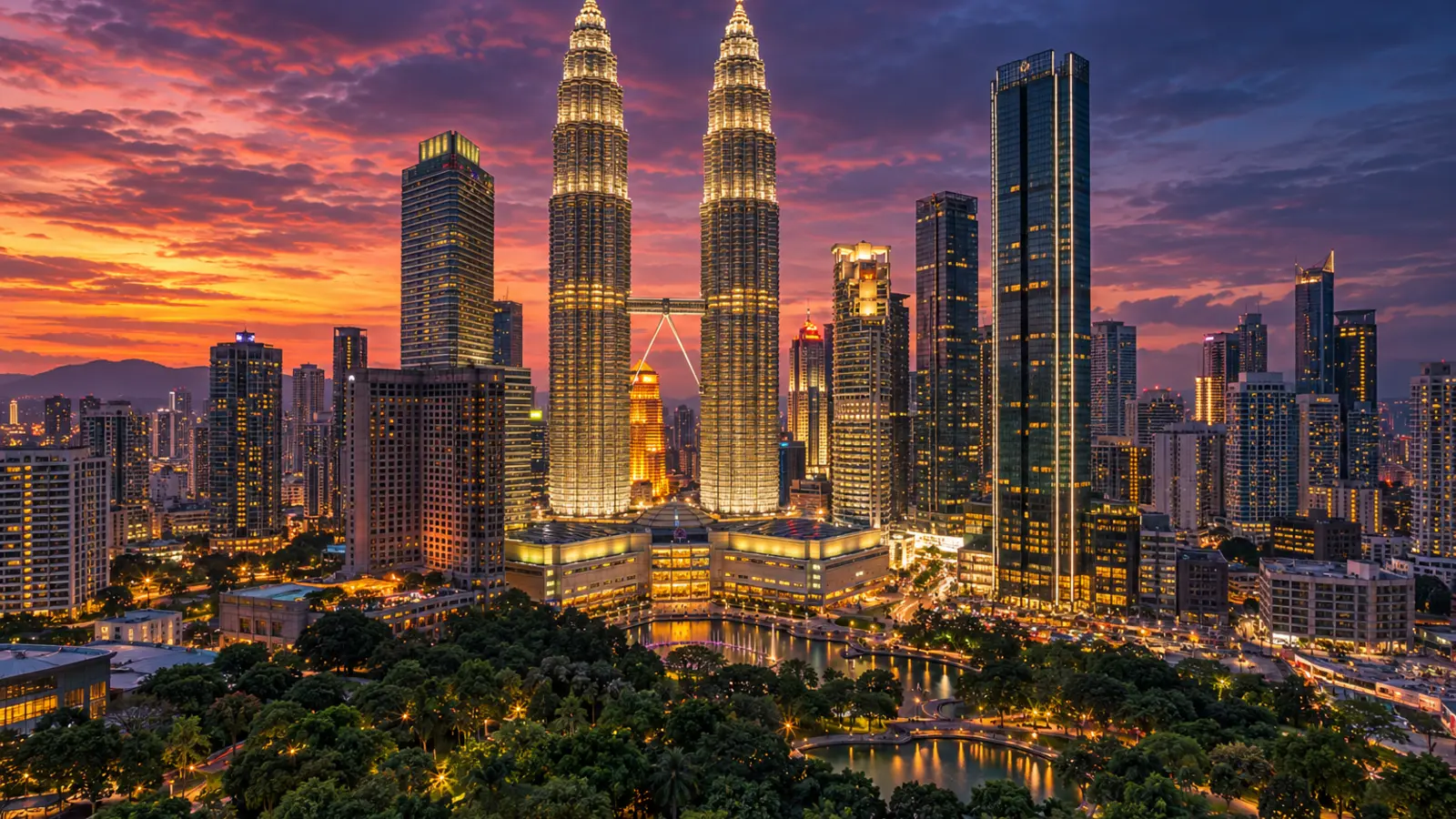
Federal Territory of Kuala Lumpur
Kuala Lumpur
The national capital and principal commercial centre. Most federal regulators, the central bank, the exchange and the apex business organisations are headquartered here or nearby.
Business in Malaysia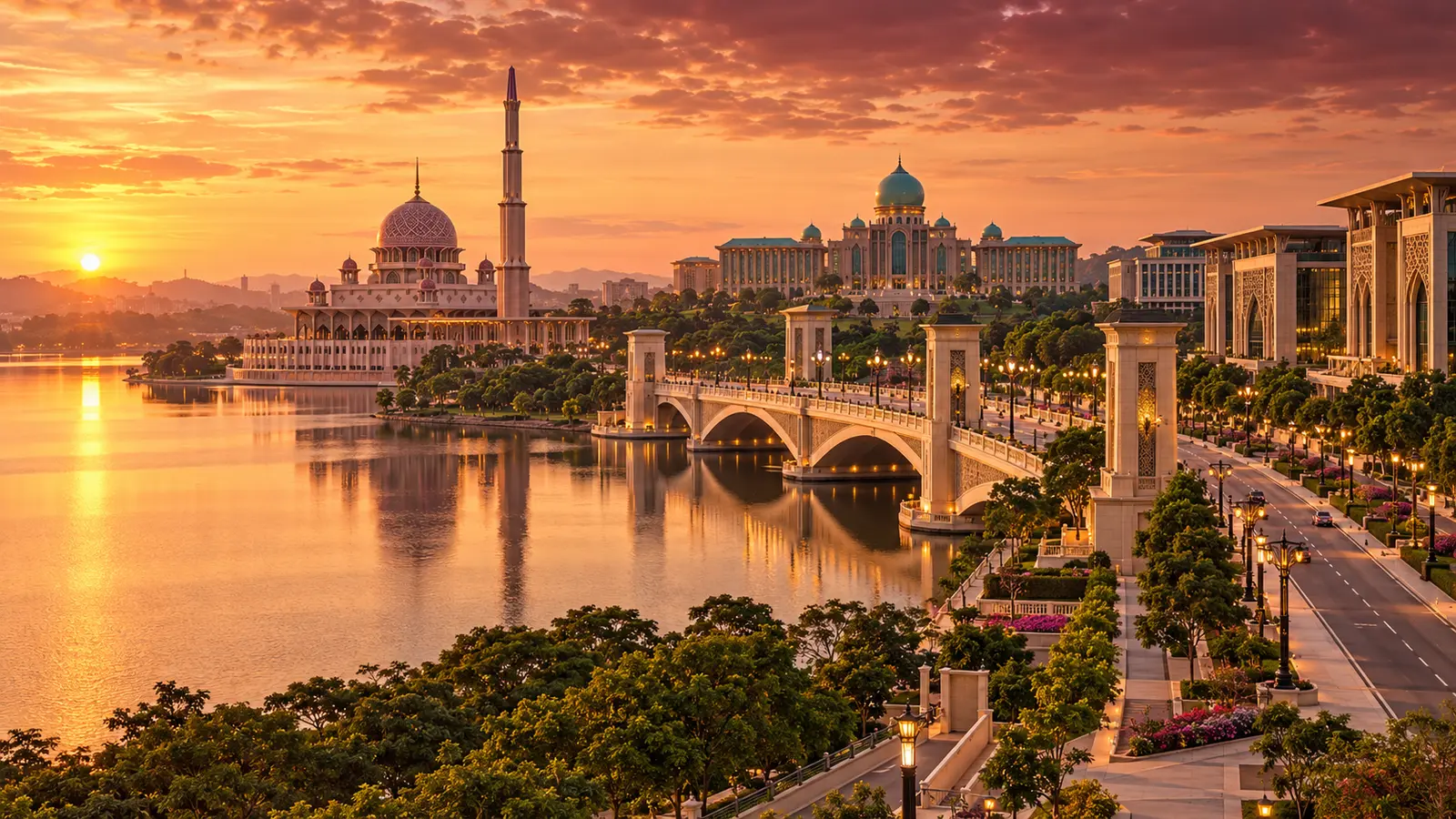
Federal Territory of Putrajaya
Putrajaya
The federal administrative centre, and a separate federal territory from Kuala Lumpur. Ministries and federal departments sit here, which is why an administrative appointment and a commercial meeting can be in two different territories on the same day.
Invest in Malaysia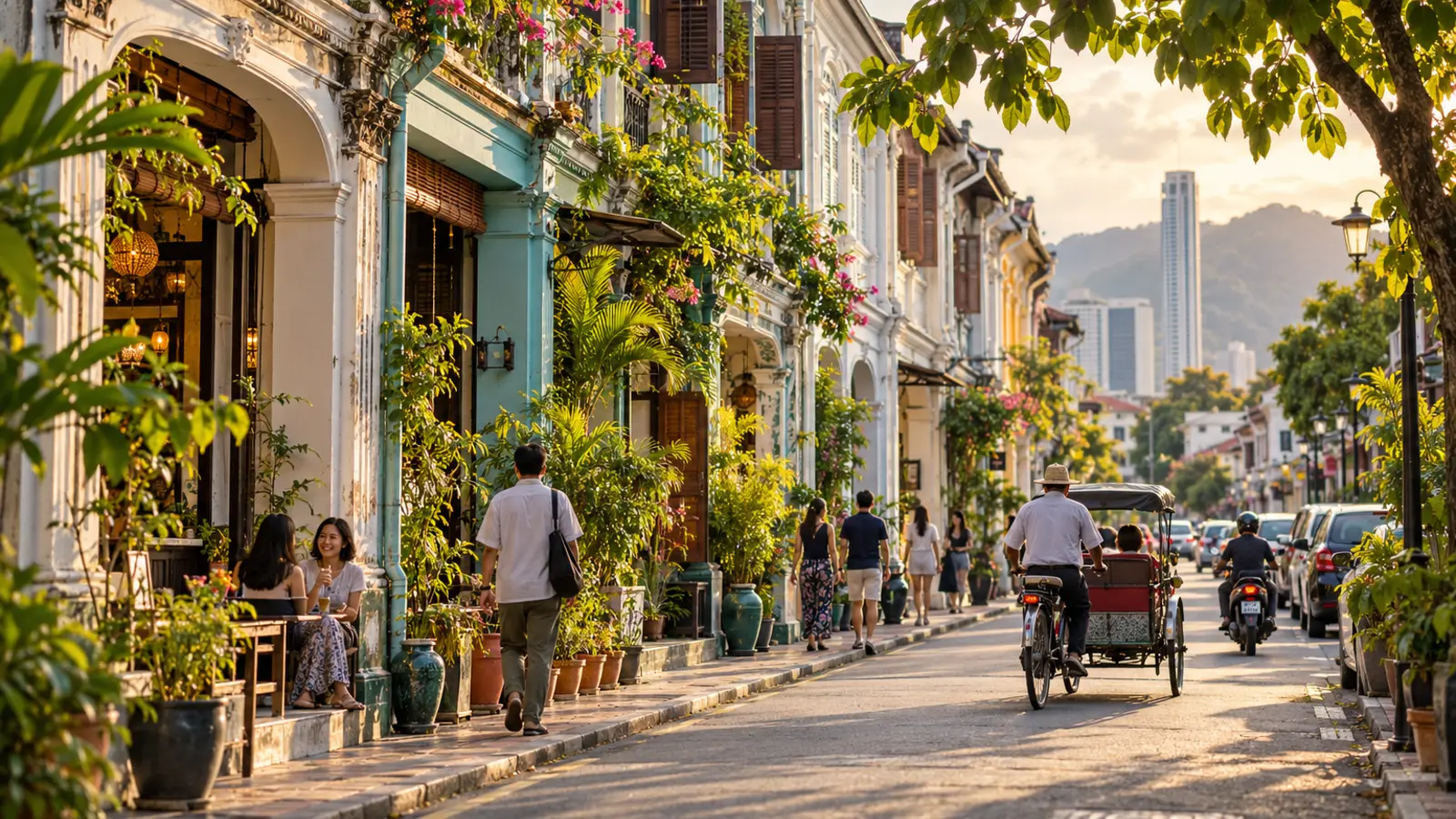
Pulau Pinang
George Town
A heritage port city on Penang island, paired with one of Malaysia's longest-established electronics and manufacturing corridors on the island and the mainland behind it.
Food and halal in Malaysia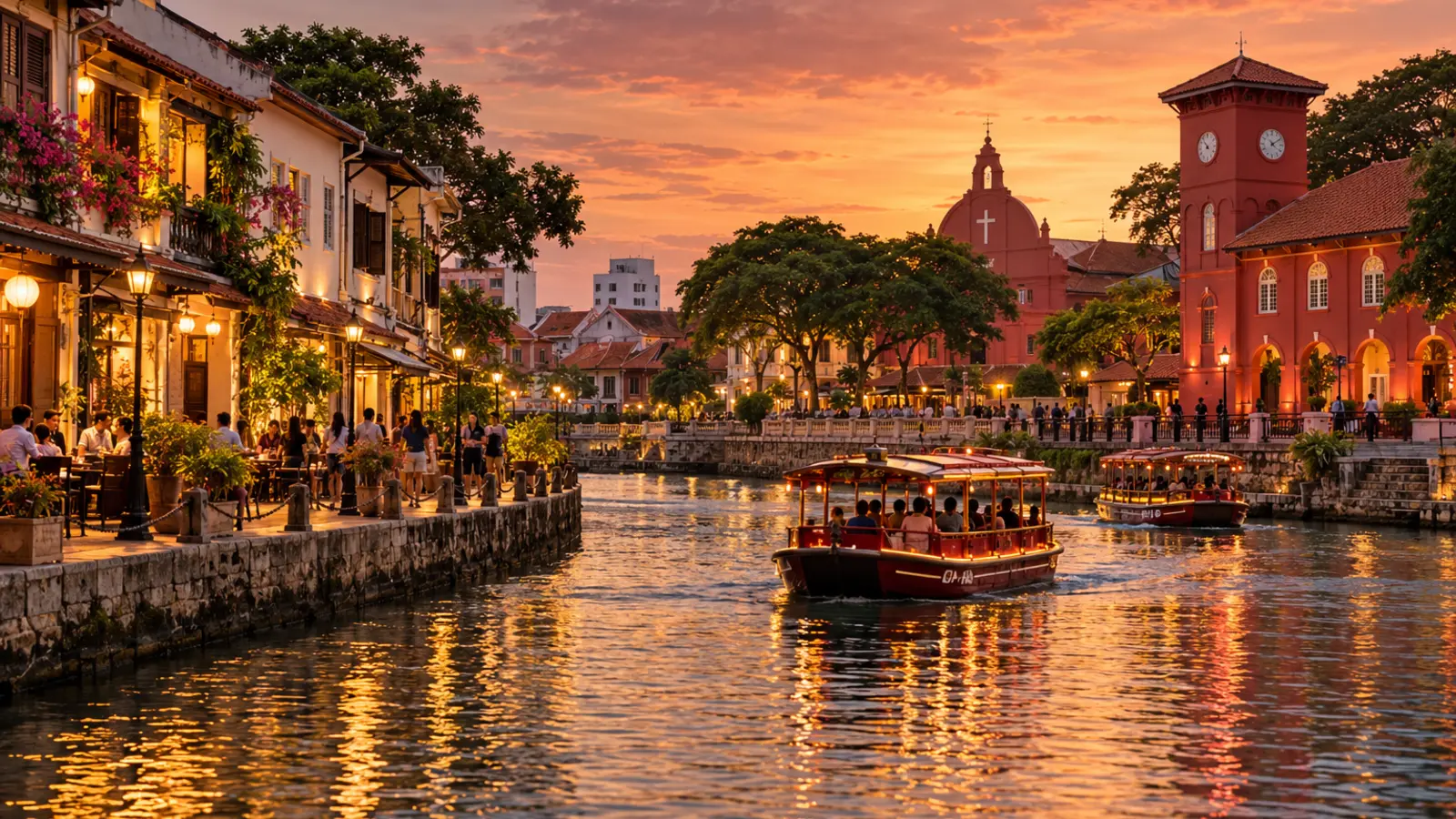
Melaka
Melaka
The seat of the fifteenth-century sultanate and then of successive colonial administrations, on the strait that carries much of the region's shipping.
A national story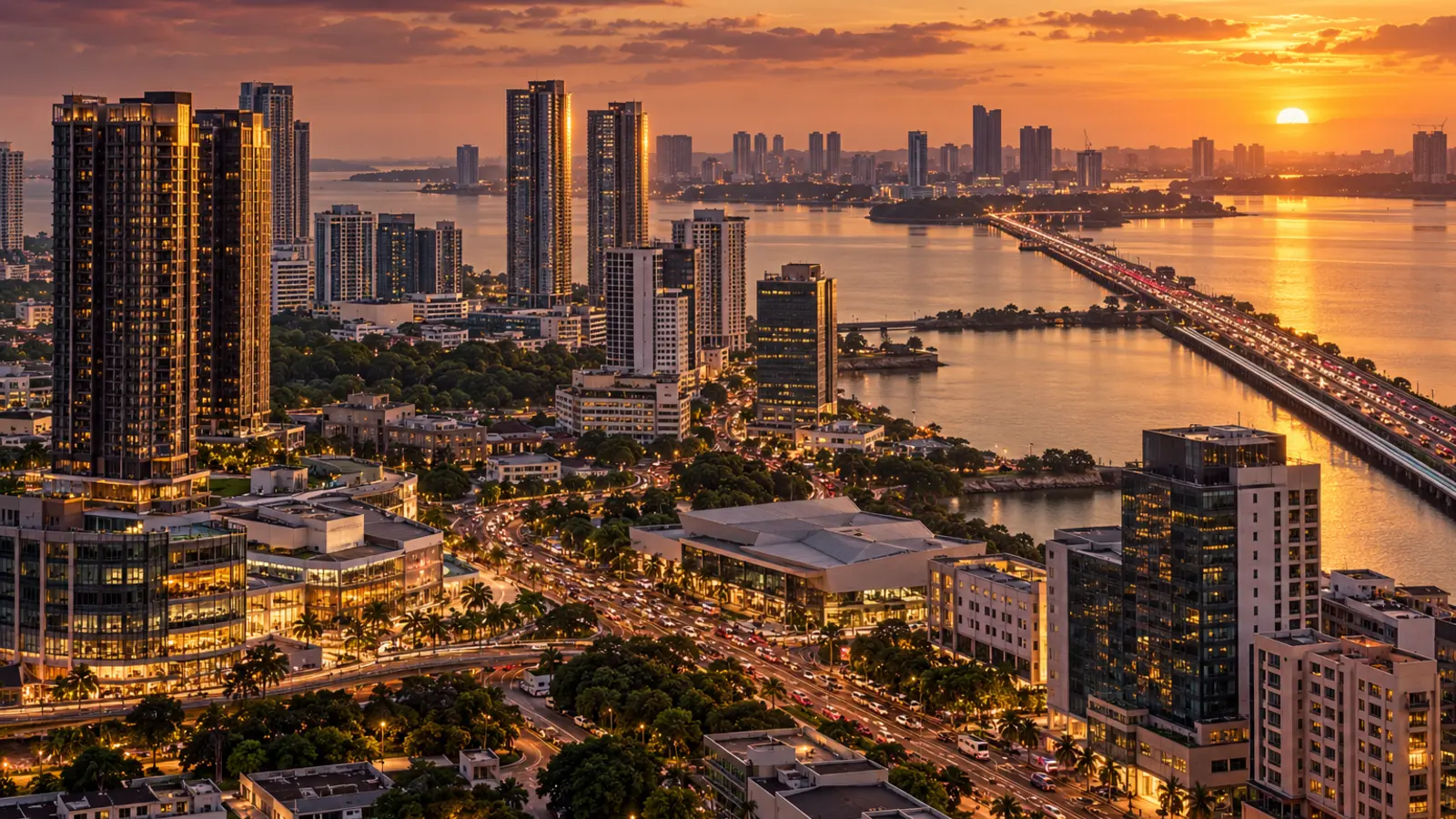
Johor
Johor Bahru
Malaysia's southern gateway, facing Singapore across the strait, and the urban centre of the Iskandar Malaysia development region.
Invest in Malaysia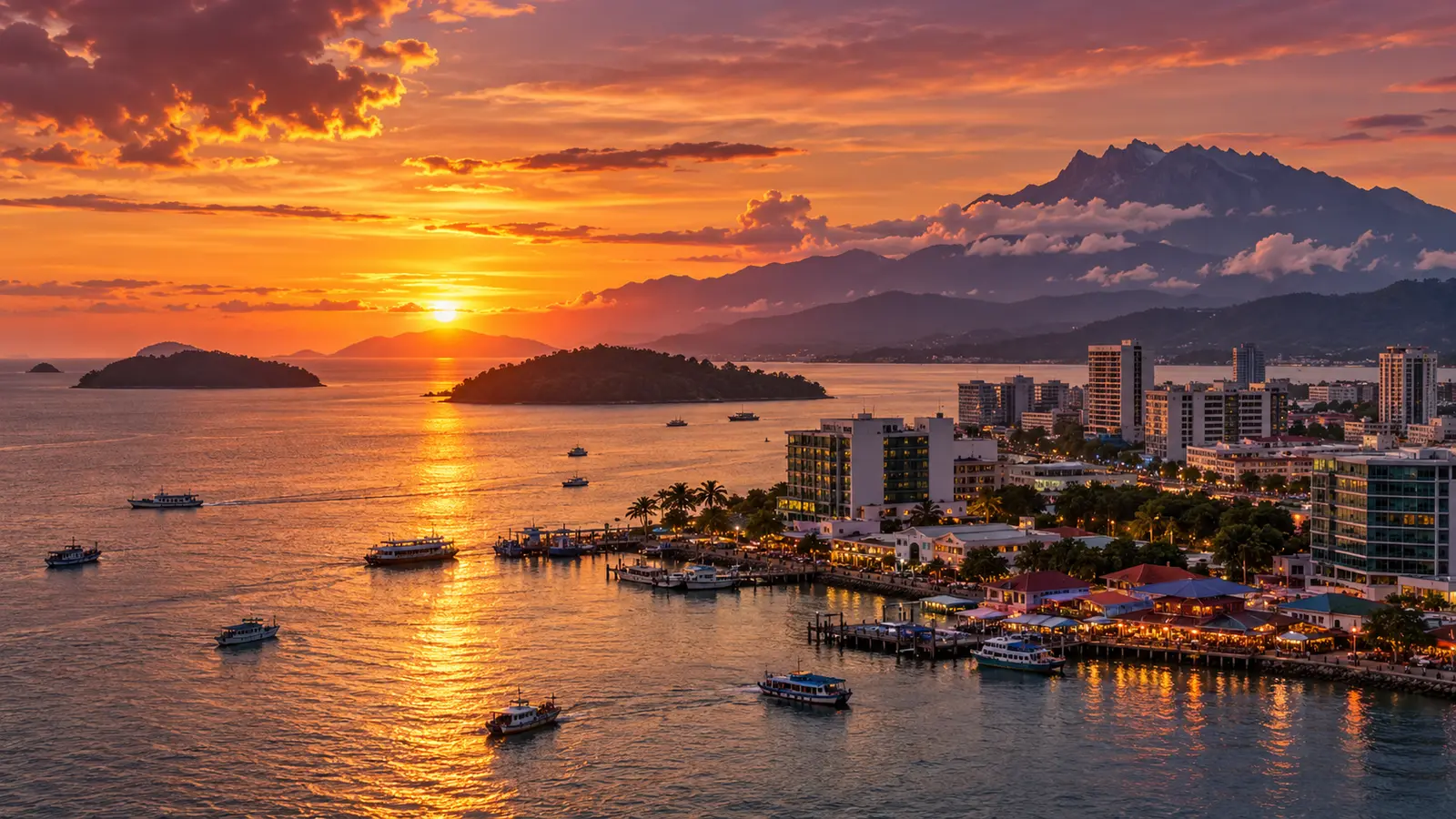
Sabah
Kota Kinabalu
Sabah's capital and the gateway to northern Borneo. Sabah operates its own immigration controls, so entry here is not identical to entry into the peninsula.
Visa and entry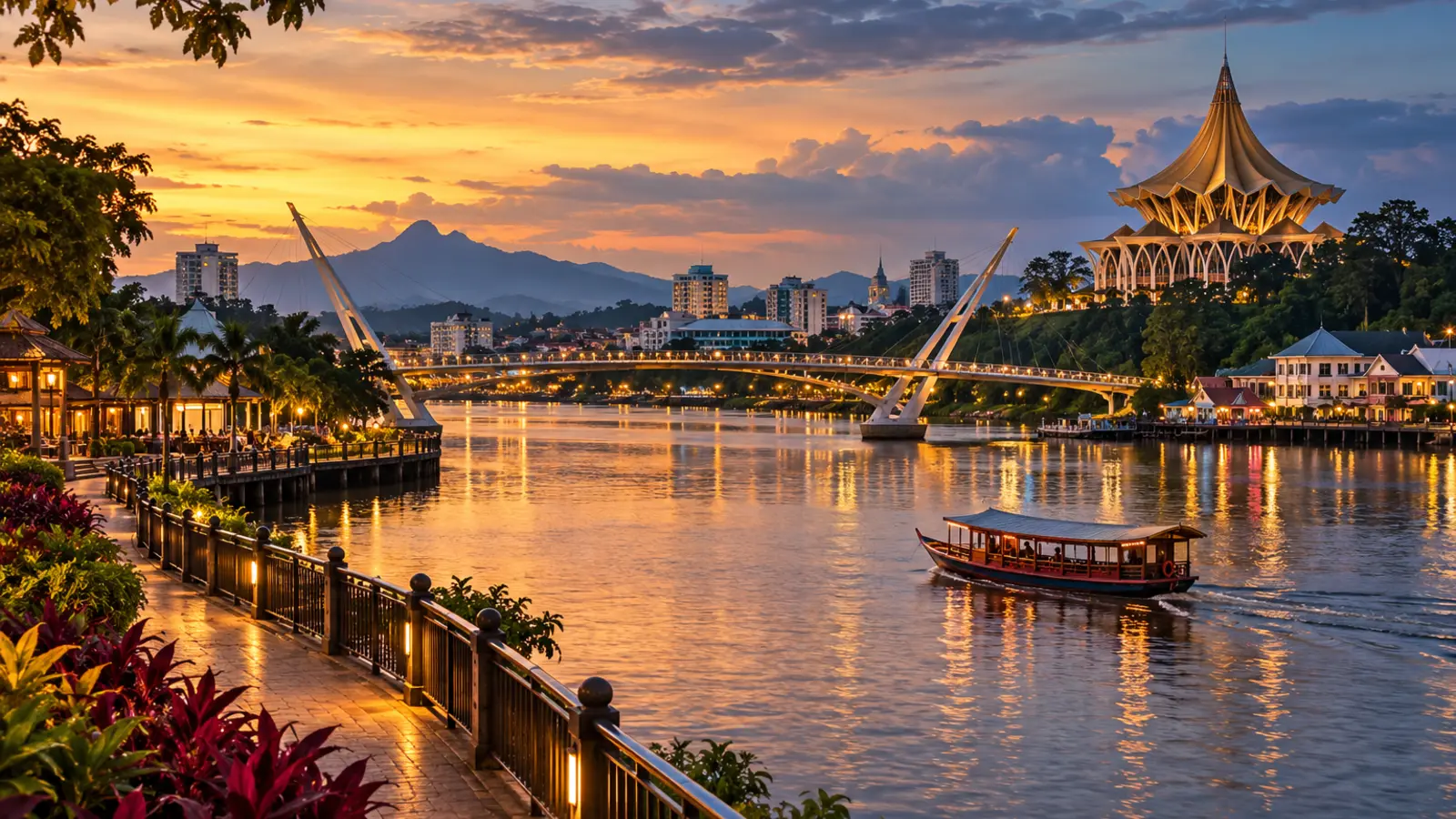
Sarawak
Kuching
Sarawak's capital, on the Sarawak River. Sarawak likewise operates its own immigration controls and has its own distinct administrative arrangements.
Visa and entry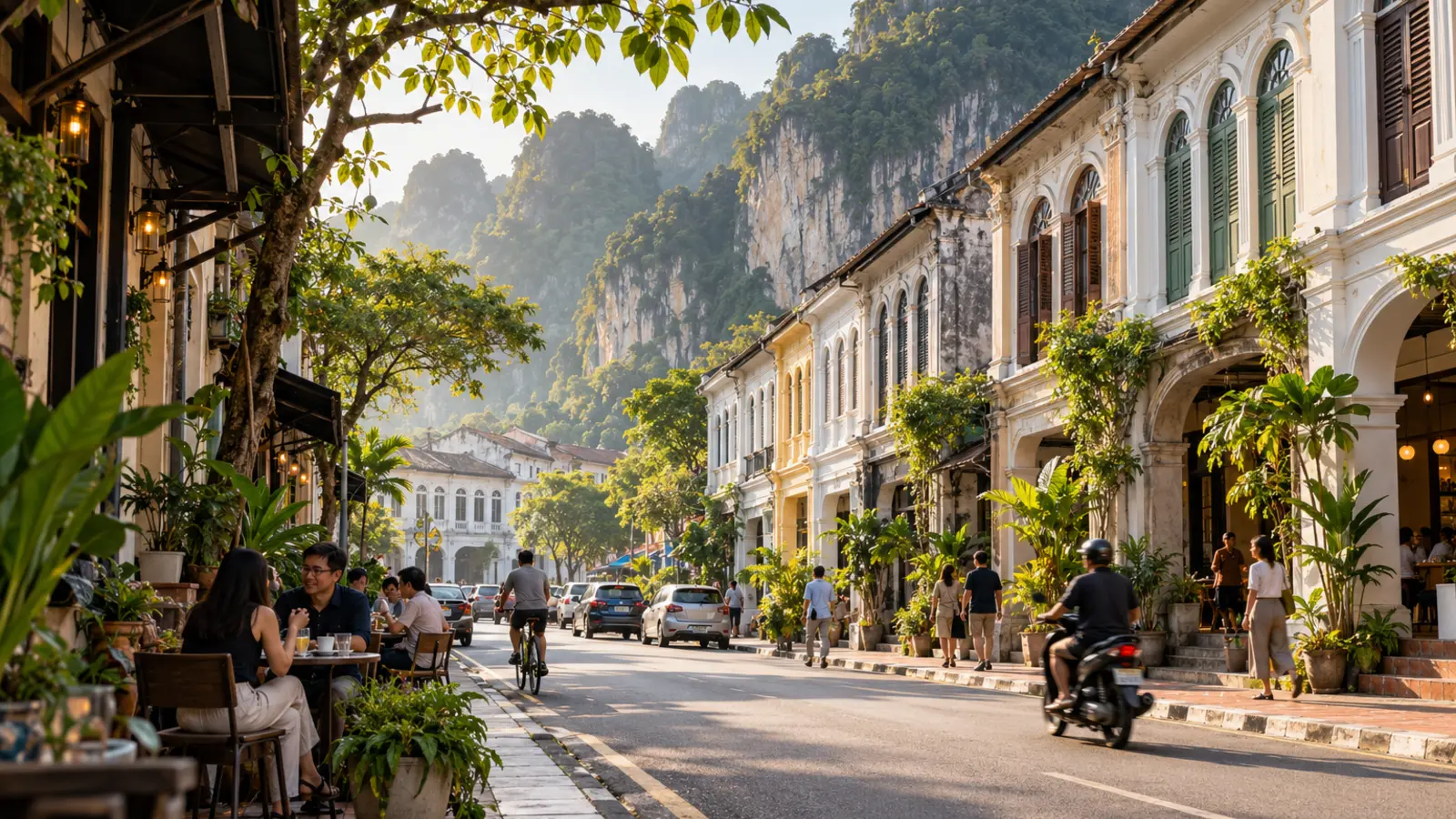
Perak
Ipoh
Perak's capital, declared a city by the Sultan in 1988, set among the limestone country of the former tin belt.
States and territories
Other state capitals and regional centres
- Alor Setar, Kedah
- Kangar, Perlis
- Kota Bharu, Kelantan
- Kuala Terengganu, Terengganu
- Kuantan, Pahang
- Seremban, Negeri Sembilan
- Shah Alam, Selangor
- Victoria, Federal Territory of Labuan
- Miri, Sarawak
- Sandakan and Tawau, Sabah
Listed for orientation. Where a capital in this list is marked verification required in the directory above, that caveat applies here too.
People, languages and living culture
A plural society, described in its own terms
Malaysia is a plural society, and the communities within it are not interchangeable. This section describes language, constitutional position and cultural life in the terms official sources use, and avoids reducing any community to food, festivals or costume.

Malay is the national and official language
Bahasa Melayu is an official language whose function and role as the national language, in the official wording, cannot be disputed. Article 152 of the Federal Constitution sets that position and the National Language Act 1967 strengthened it.
MyGovernment — Official Language (opens in a new tab) · Verified 2026-10-10
English has a practical role, not an official one
The same official page observes that English still dominates the language of trade and industry in the country. That is a description of practice. It is not a grant of official status, and this page does not describe English as a federal official language.
MyGovernment — Official Language (opens in a new tab) · Verified 2026-10-10
Chinese languages, Tamil and Indigenous languages
Mandarin and other Chinese languages, Tamil, and the Indigenous languages of the peninsula, Sabah and Sarawak are all spoken in daily life, in schooling and in community institutions. A single count of languages in use is not published on the official pages read for this page, so none is given.
Communities
Malay, Chinese and Indian communities, the Orang Asli of the peninsula, and the many Indigenous peoples of Sabah and Sarawak — who are distinct from one another and should be named specifically rather than grouped — together make up Malaysian society. Where this page needs a specific community's own account of itself, it links to that community's or the relevant authority's own source rather than paraphrasing.
Religion and the constitutional position
Verification requiredIslam's position in the Federal Constitution, and the constitutional provision for the practice of other religions, are matters of precise legal wording. This page points to the primary sources rather than paraphrasing them, because a loose summary of Article 3 and Article 11 would misrepresent both.
MyGovernment — Malaysia's ruling system (opens in a new tab) · Verified 2026-10-10The constitutional text itself sits with the Attorney-General's Chambers; its site blocked automated access during this research pass, so the articles are not quoted here.
Rukun Negara
The five national principles, proclaimed on 31 August 1970, are the shared civic statement most often cited in Malaysian public life. They are listed in full in the history section above, in their official English wording.
MyGovernment — Rukun Negara (opens in a new tab) · Verified 2026-10-10
Geography, climate and natural heritage
Two parts, separated by sea
Conditions vary more between Malaysia's regions than a single national description suggests, which is why this section gives no fixed monsoon dates, park openings or wildlife guarantees.
Two parts, separated by sea
Malaysia is in two parts: Peninsular Malaysia, and Sabah and Sarawak in northern Borneo. The South China Sea lies between them. The Malaysia Act 1963 federated the Borneo States alongside the eleven states of Malaya, and the two parts have kept distinct administrative arrangements since — including separate immigration controls in Sabah and Sarawak.
Highlands, coasts and rivers
A mountainous spine runs down the peninsula, separating a densely developed west coast from a quieter east coast. Borneo adds higher mountains, longer rivers and extensive interior forest. Coastal mangroves, river systems and offshore reefs connect the two.
Equatorial, with real regional variation
Conditions are equatorial, and the variation between regions matters more than a single national description suggests. Monsoon effects differ by coast: the east coast of the peninsula and parts of Borneo experience a markedly different season from the west coast at the same time of year. This page gives no fixed monsoon dates, because conditions shift year to year and the forecast, not a calendar, is what should drive a plan.
Biodiversity and protected areas
Rainforest, mangrove, limestone karst and marine habitats are managed under a mix of federal and state authority, and in Sabah and Sarawak largely under state authority. Access to a national or marine park, a trail or an island is decided by the managing authority, and can change. This page does not state park openings, access rules, ferry schedules or the likelihood of seeing any species.
For current conditions and warnings, go to the Malaysian Meteorological Department; for disaster information, the National Disaster Management Agency's portal. Both are linked in the official resources below.
Practical national information
Orientation, with the source for each line
Orientation only. Entry requirements and anything that changes with policy live on their own pages, with their own sources and dates.
Electricity supply
230 V single phase, 400 V three phase, 50 Hz
From Tenaga Nasional's own supply handbook, which gives declared low voltage as 400/230 V and the supply frequency as 50 Hz. The figures 240 V and 415 V are widely repeated but do not match that source, so they are not published here.
Tenaga Nasional — Electricity Supply Application Handbook v3.1 (opens in a new tab) · Verified 2026-10-10
Plugs and socket-outlets
13 A three-pin, to Malaysian Standard MS 589
The MS 589 series covers 13 A plugs, socket-outlets, adaptors and connection units for household, commercial and light industrial use. "Type G" and "BS 1363" are international and British shorthand that do not appear in the Malaysian standard, so they are not used here.
Department of Standards Malaysia — MS 589 series (opens in a new tab) · Verified 2026-10-10
Working language
Malay is the national and official language; English is widely used in trade and industry
MyGovernment — Official Language (opens in a new tab) · Verified 2026-10-10
Roads
Verification requiredRoad users are told to keep as near as practicable to the left of the roadway
Quoted from the Ministry of Transport's safe cycling guide. No official page found during research states Malaysia's driving side outright, so this page reports the official instruction rather than asserting the rule behind it.
Ministry of Transport — Safe Cycling Guide (opens in a new tab) · Verified 2026-10-10
- Visa and entry
Entry requirements change, and Sabah and Sarawak operate their own immigration controls. The current position belongs on its own page.
- Immigration Department of Malaysia (opens in a new tab)
The authority on passes, permits and entry.
- Royal Malaysian Customs Department (opens in a new tab)
Customs, import and export processes and prohibited goods.
- Malaysian Meteorological Department (opens in a new tab)
Current forecasts and weather warnings.
- MyGovernment (opens in a new tab)
The federal services portal, including the public-holiday calendar.
Emergency and safety
In an emergency in Malaysia, dial 999
The highest-risk information on this page, and the most carefully sourced. Read the caveats: they say exactly what the official pages do and do not state.
999
Malaysia Emergency Response Services (MERS) 999 — the current modernised system is named Next Generation Malaysian Emergency Response Services 999 (NG MERS 999)
The True Malaysia is not an emergency service and cannot pass on an emergency call. In an emergency in Malaysia, dial 999.
Verified 2026-10-10
The five agencies it connects
- Royal Malaysia Police
- Fire and Rescue Department of Malaysia
- Ministry of Health Malaysia
- Malaysia Civil Defence Force
- Malaysian Maritime Enforcement Agency
These are the five agencies the official page names. It does not use the word "ambulance"; the health agency named is the Ministry of Health.
What is not stated
No official page read during this research names a single operator of the service. The modernisation is described as a government initiative through the Ministry of Communications, and the Civil Defence Force describes its own call centres within the system. This page therefore names no operator.
No response time is stated anywhere on this page, and no operations-room or agency switchboard number is offered as a substitute for 999.
The older numbers
999 was introduced on 1 October 2007, combining the former emergency numbers 991, 994 and 999. 994 appears on the Civil Defence Force's page only in that historical sentence and is not published here as a current number.
The Fire and Rescue Department's own site blocked automated access during this research pass, so this page states that 994 was integrated in 2007 — not that it appears nowhere official today.
Sources
MyGovernment — MERS 999 Emergency Line (opens in a new tab) · Verified 2026-10-10The page carries a site-wide footer timestamp but no article-level updated date.
Malaysia Civil Defence Force — 999 Emergency Services (opens in a new tab) · Verified 2026-10-10
- MyGovernment — Public Safety (opens in a new tab)
The federal portal's public-safety category, including the MERS 999 page.
- NADMA Disaster Portal (opens in a new tab)
The National Disaster Management Agency's public disaster information portal.
- Malaysian Meteorological Department (opens in a new tab)
Weather warnings and forecasts.
Aviation and airports
Four different roles, often confused for one
Four different kinds of body are often spoken of as though they were one. Policy, regulation, airport operation and flying are separate functions in Malaysia, and knowing which one you need saves a great deal of time.
Ministry of Transport
Responsible for the formulation and implementation of policies, strategies and programmes for public transportation, across the land, aviation and maritime sectors.
Ministry of Transport — About (opens in a new tab) · Verified 2026-10-10
Civil Aviation Authority of Malaysia (CAAM)
A statutory body under the Ministry of Transport, established to oversee and regulate all aspects of civil aviation, with responsibility for technical, safety, security and economic regulation — including oversight of airport charges and consumer protection, air service licensing and route allocation — and providing air navigation services within the Kuala Lumpur and Kota Kinabalu Flight Information Regions.
CAAM — About Us (opens in a new tab) · Verified 2026-10-10CAAM's assumption of the former aviation commission's economic functions is not described on this page and is not stated here.
Malaysia Airports
Operates and manages airports. Its subsidiary Malaysia Airports (Sepang) Sdn Bhd focuses on the management and operations of KL International Airport including Terminal 2. The number of airports it operates is not stated on its own pages, so none is given here, and it should not be assumed that one operator runs every airport in the country.
Malaysia Airports — Corporate (opens in a new tab) · Verified 2026-10-10
Malaysia Airlines
Describes itself on its own site as the national carrier of Malaysia, and is described the same way by Malaysia Aviation Group. It is an airline, not a government department, and it is not Malaysia's only airline.
Malaysia Airlines — About Us (opens in a new tab) · Verified 2026-10-10Corroborated by Malaysia Aviation Group's Our Story page. Both use the phrase "national carrier".
International airports
The Ministry of Transport lists six international airports, alongside 16 domestic airports and 18 STOLports, which it gives as counts rather than naming.
- Kuala Lumpur International Airport (KLIA)
- Langkawi International Airport
- Kuching International Airport
- Penang International Airport
- Kota Kinabalu International Airport
- Senai International Airport
Attributed to the Ministry of Transport rather than stated as a bare fact: its page carries no last-updated date, and several airports described as international elsewhere are not in this list of six.
Ministry of Transport — List of Airports (opens in a new tab) · Verified 2026-10-10The official page renders the first entry as "Kuala Lumpur International Lumpur (KLIA)"; the name is given here in its correct form.
No fare, schedule, terminal assignment or route is published here. Those change daily and belong with the airline or the airport.
Rail, transit, roads, ports and ferries
Who is responsible for what
Routes, schedules, fares and closures change constantly. This is a directory of who is responsible for what, so you can go to the body that actually holds the current answer.
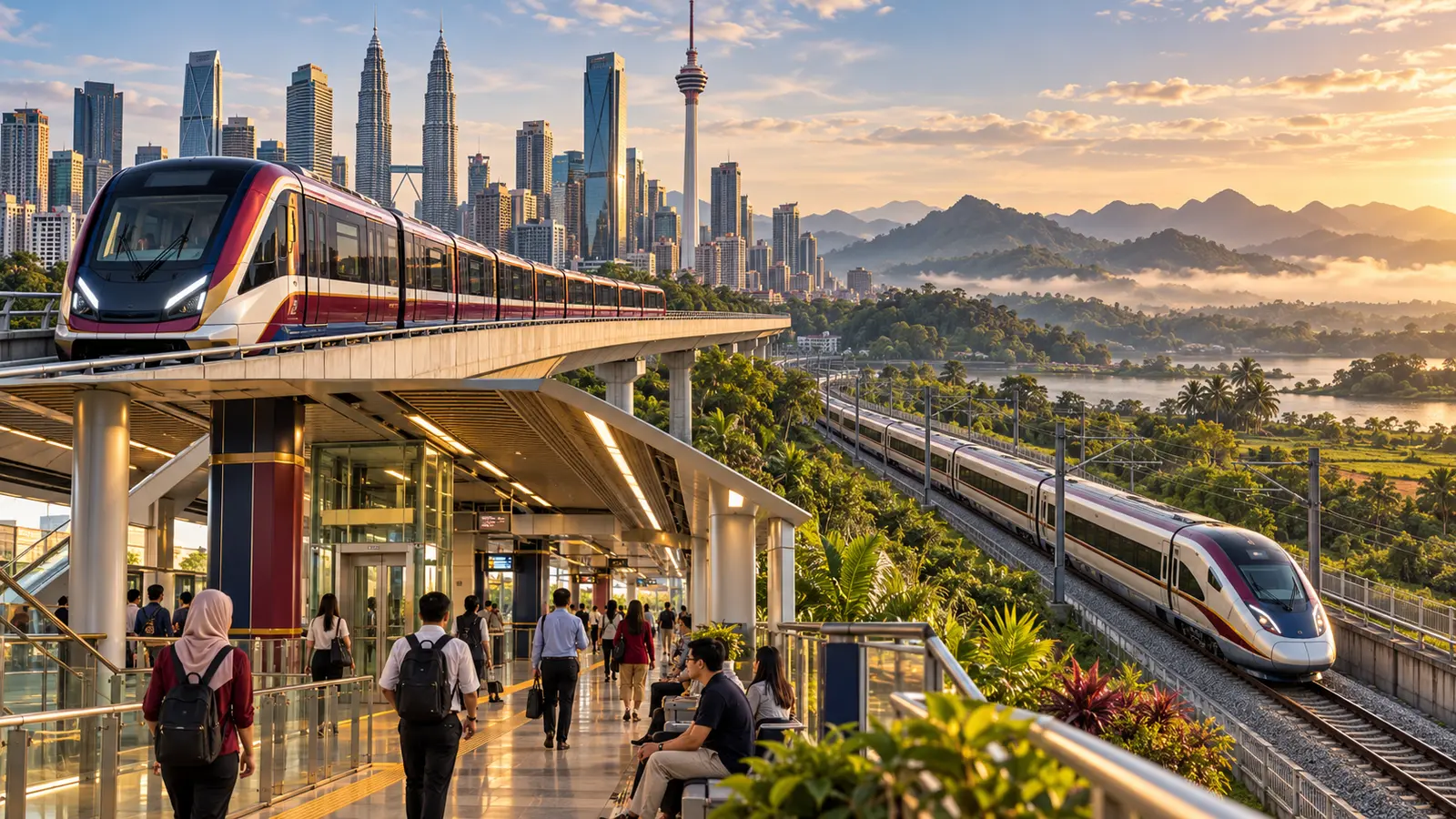
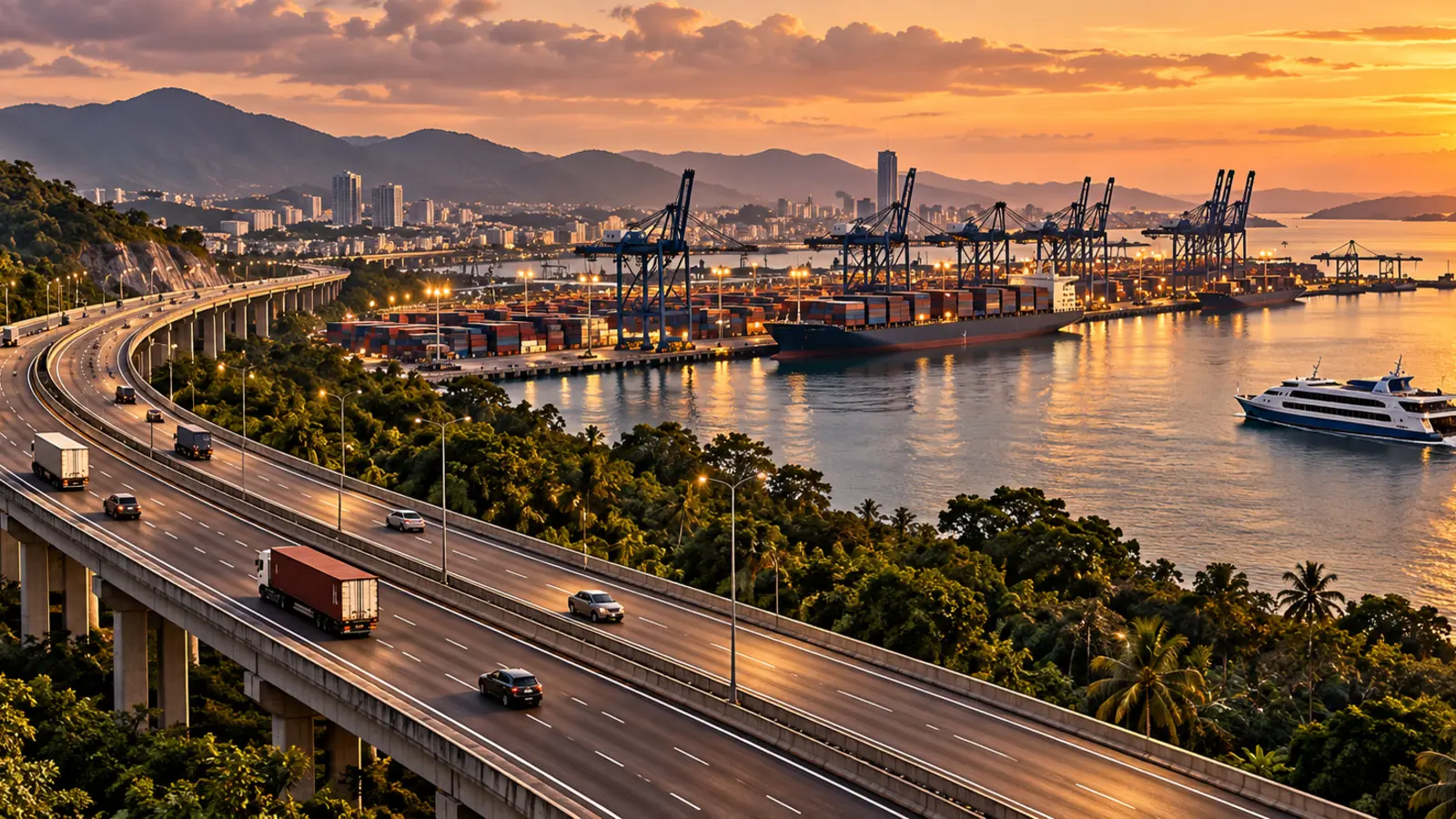
Prasarana Malaysia
Federal, in the areas it serves
A wholly government-owned entity established by the Ministry of Finance, and the owner-operator of the country's rail services including the LRT networks, KL Monorail and the MRT lines, as well as the stage bus services in Kuala Lumpur, Selangor, Penang and Pahang. Rapid Bus and Rapid Rail are named as its subsidiaries.
Prasarana — About Us (opens in a new tab) · Verified 2026-10-10MyRapid appears as the commuter-facing service and journey-planning app. Its corporate relationship to Prasarana and the Rapid subsidiaries is not defined on this page and is not stated here.
Keretapi Tanah Melayu Berhad (KTMB)
Verification requiredPeninsular Malaysia
Operates the ETS, Intercity and KTM Komuter services. KTMB's own corporate page states the company name and those services but no mandate, role or ownership, so none is stated here.
KTMB — Corporate (opens in a new tab) · Verified 2026-10-10
Agensi Pengangkutan Awam Darat (APAD)
Peninsular Malaysia
Responsible for planning and defining land-based public transport policies, programmes and strategies, covering rail, bus and taxi services and the carriage of goods by rail and road. It states that it has jurisdiction over Peninsular Malaysia.
APAD — Vision and Mission (opens in a new tab) · Verified 2026-10-10The page affirms Peninsular jurisdiction but does not state that Sabah and Sarawak are excluded, so this page does not either.
Lembaga Pelesenan Kenderaan Perdagangan (LPKP) Sarawak
Sarawak
Sarawak's commercial vehicle licensing board, based in Kuching, issuing Class A and Class C licences, rental car, taxi, stage, express, school and staff bus licences, e-hailing permits and timber-log transport permits.
LPKP Sarawak (opens in a new tab) · Verified 2026-10-10The English abbreviation "CVLB" appears in search listings but not in the page body read, so the Malay name is used here.
Lembaga Pelesenan Kenderaan Perdagangan (LPKP) Sabah
Verification requiredSabah
Sabah's commercial vehicle licensing board. Its site returned server errors throughout this research pass, so its stated role and governing law could not be read and are not described here. Sabah and Sarawak are separate bodies, not one joint board.
LPKP Sabah (opens in a new tab) · Verified 2026-10-10
Jabatan Pengangkutan Jalan (JPJ)
Federal
The road transport department. Its stated objectives are to create and regulate the registration and licensing of motor vehicles, to establish and administer driver training, testing and licensing, to enforce and administer road transport laws, and to regulate motor vehicle safety standards.
JPJ — Vision, Mission and Objectives (opens in a new tab) · Verified 2026-10-10
Ministry of Transport — land agencies
Federal
The ministry's own directory of the land transport agencies under it, and the right starting point when the responsible body for a particular question is unclear.
Ministry of Transport — Land Agencies (opens in a new tab) · Verified 2026-10-10
No route, timetable, fare or closure is reproduced here. Each operator publishes its own, and theirs is the one that is current.
Official resources
Go to the body that holds the current answer
Text links only — no logos, seals or coats of arms are reproduced anywhere on this site. Each entry carries the date the link was checked. A checked date records that the page was reachable and said what is described here; it is not an assurance that the information behind it is current today.
Government and constitution
The federal government services portal, and the starting point for most national information.
Federal · Checked 2026-10-10
- Parliament of Malaysia (Parlimen) (opens in a new tab)Verification required
The federal legislature.
Most of the portal blocks automated access, so only its general-information page could be read during this pass.
Federal · Checked 2026-10-10
Elects the Yang di-Pertuan Agong and publishes the complete listing of every state head of state with their exact title.
Federal · Checked 2026-10-10
The office of the head of government.
Federal · Checked 2026-10-10
Publishes the number of federal and state constituencies and administers elections.
Federal · Checked 2026-10-10
Publishes the electricity supply standards used in the practical information above.
Peninsular Malaysia · Checked 2026-10-10
The national standards body, and the publisher of the MS 589 plug and socket-outlet series.
Federal · Checked 2026-10-10
Numbering and electronic addressing, including the country code and the .my domain.
Federal · Checked 2026-10-10
Statistics
The national statistical authority, and the source of the population estimate used on this page.
Federal · Checked 2026-10-10
Safety and weather
Public disaster information and warnings.
Federal · Checked 2026-10-10
Forecasts and weather warnings, including marine conditions.
Federal · Checked 2026-10-10
One of the five agencies connected to the 999 emergency service, and the source for the history of the number's integration.
Federal · Checked 2026-10-10
Entry and customs
Passes, permits and entry. Sabah and Sarawak operate their own immigration controls.
Federal, with state controls in Sabah and Sarawak · Checked 2026-10-10
Customs, import and export processes and prohibited goods.
Federal · Checked 2026-10-10
Transport and aviation
Transport policy across land, aviation and maritime, and the publisher of the list of international airports.
Federal · Checked 2026-10-10
Civil aviation regulation and air navigation services.
Federal · Checked 2026-10-10
Airport operation and management.
Federal · Checked 2026-10-10
Describes itself as the national carrier of Malaysia.
National · Checked 2026-10-10
Owner-operator of the LRT, monorail and MRT networks and stage bus services in the areas it serves.
Federal, in the areas it serves · Checked 2026-10-10
- Keretapi Tanah Melayu Berhad (KTMB) (opens in a new tab)Verification required
ETS, Intercity and KTM Komuter rail services.
Its corporate page states no role, mandate or ownership.
Peninsular Malaysia · Checked 2026-10-10
Land public transport policy, with jurisdiction over Peninsular Malaysia.
Peninsular Malaysia · Checked 2026-10-10
Vehicle registration and licensing, driver licensing and road transport enforcement.
Federal · Checked 2026-10-10
Sarawak's commercial vehicle licensing board.
Sarawak · Checked 2026-10-10
- LPKP Sabah (opens in a new tab)Verification required
Sabah's commercial vehicle licensing board.
The site returned server errors throughout this research pass.
Sabah · Checked 2026-10-10
State and territory portals
- Johor (opens in a new tab)
- Kedah (opens in a new tab)
- Kelantan (opens in a new tab)
- Melaka (opens in a new tab)Melaka Historic City Council. The state portal melaka.gov.my blocks automated access.
- Negeri Sembilan (opens in a new tab)
- Pahang (opens in a new tab)
- Pulau Pinang (Penang) (opens in a new tab)
- Perak (opens in a new tab)Ipoh City Council. The Perak state portal and the Sultan's office site both block automated access, which is why Kuala Kangsar's status as the royal town could not be confirmed in official wording.
- Perlis (opens in a new tab)
- Sabah (opens in a new tab)
- Sarawak (opens in a new tab)
- Selangor (opens in a new tab)
- Terengganu (opens in a new tab)
- Federal Territory of Kuala Lumpur (opens in a new tab)
- Federal Territory of Labuan (opens in a new tab)
- Federal Territory of Putrajaya (opens in a new tab)
What this page could not confirm — 12 items
Written down so it cannot be quietly filled in later. Each of these is marked in place above as well.
- At a glance: Driving side — no official page states it outright.
- Government: Parliament's composition including the Yang di-Pertuan Agong — Article 44 could not be read.
- People and culture: The constitutional wording on religion — the Attorney-General's Chambers site blocked access.
- States: Melaka — capital not confirmed from an official portal.
- States: Pahang — capital not confirmed from an official portal.
- States: Pulau Pinang (Penang) — capital not confirmed from an official portal.
- States: Perlis — capital not confirmed from an official portal.
- States: Selangor — capital not confirmed from an official portal.
- States: Kuala Kangsar as Perak's royal town — Perak royal and state sites blocked access.
- Transport: KTMB's role, mandate and ownership — not stated on its own corporate page.
- Transport: LPKP Sabah's role and governing law — its site returned server errors.
- Transport: MyRapid's corporate relationship to Prasarana and the Rapid subsidiaries.
The True Malaysia is an independent information platform. It is not a government service, not an agency of any Malaysian authority, and not a partner of any body named on this page. Requirements, office-holders, agency responsibilities and contact details change. Confirm the current position directly with the responsible Malaysian authority before acting on anything here.
Page last reviewed 2026-10-10. Every image on this page is a commissioned editorial illustration. None is a photograph of a specific building, map, airport, train, road, port or emergency operation, and no fact on this page is drawn from one.