

Business in Malaysia · Textiles, Fashion & Apparel
From textile capability to distinctive design
Explore Malaysian fibres, fabrics, garment production and heritage craft. Compare manufacturers and design partners, prepare a sourcing brief, and understand the trade and quality checks that help products reach market.
This page is a sourcing and planning guide, not a market report. It carries no Malaysian textile ranking, no market size and no supplier rating, because the research behind it supports none of those. What it does carry is the question to ask at each stage, the official resource that answers it, and the date each source was read.
Every photograph on this page is an editorial illustration. None shows a named company's premises, a named forum or a documented production line, and none should be read as evidence of a facility, a certification or an environmental claim.
Agency names, association acronyms, programme codes, agreement names and certification scheme names are shown in their published form on both the English and Bahasa Melayu routes so they stay searchable.
Sources last read: 2026-10-13
Sector overview
Start from the product, then find the right kind of supplier
Malaysia's textile opportunities span industrial materials, fabric processing, apparel production and design. Start with the product and service you need: a yarn producer, a fabric mill, a garment factory, a craft studio and a fashion brand serve different buyers and sign different kinds of contract.
MIDA's lifestyle page describes textile activities from spinning and fabric formation through to wet processing, with automation and digital systems as development themes. Its wider lifestyle coverage also includes footwear, leather and jewellery, so the figures published there are not textile-only totals and none of them is repeated here.
Regional positioning, stated plainly
Compare supplier capability and buyer requirements across production locations rather than across national reputations. This page does not assign Malaysia an ASEAN or global textile ranking, because no source it relies on establishes one. Quote the actual specification, capacity, lead time and cost for your own order and judge from that.
T01 — MIDA (opens in a new tab)T34 — MATRADE (opens in a new tab)
Value chain
Four sourcing stages, and what to ask at each
These are sourcing stages, not a claim that any one Malaysian factory covers the whole chain. Open a stage to see what it involves and the questions worth settling before you commit.
1. Fibres and yarns
Select composition, yarn type, count or denier, strength and intended use. Confirm feedstock provenance and which processing steps the supplier performs in-house rather than subcontracts.
Ask before you commit
- What exactly is the composition, and is it stated as a verified percentage?
- Which yarn construction, count or denier, and with what tolerance?
- How is lot-to-lot consistency demonstrated?
- Which steps happen on the supplier's own site?
2. Fabrics and finishing
Weaving or knitting, dyeing, printing, coating and finishing. Define weight, width, construction, shade tolerance, shrinkage and the performance the end use actually requires.
Ask before you commit
- What weight, width and construction, measured by which method?
- What shade tolerance is agreed, and against which approved standard?
- What dimensional change after washing is acceptable?
- Which finishing processes are applied, and where?
3. Garment and product manufacture
Pattern development, sampling, cutting, sewing, decoration, inspection and packing. Distinguish cut-make-trim, full-package OEM and design-supported services by actual contractual scope, not by a website description.
Ask before you commit
- Is this cut-make-trim, full package, or design-supported work?
- Who sources and approves fabric and trims?
- What sample milestones and approvals exist before bulk?
- What inspection plan and acceptance level apply?
4. Design and route to market
Collection development, brand identity, merchandising, labelling and distribution. Design ownership, approvals and reproduction rights should be agreed in writing before production starts.
Ask before you commit
- Who owns the design, patterns and artwork?
- What reproduction or exclusivity rights are granted?
- Which labelling and care information does the destination require?
- How are repeat orders and modifications handled?
A supplier may genuinely perform several stages, and many perform one. Confirm the actual scope in the contract instead of inferring vertical integration from a company profile.
Product explorer
Nine product directions, filtered by what you are sourcing
Filter by the kind of product you need. Each card describes the product direction and what to establish with a supplier; none of them names or ranks a company.
Showing 9 of 9 product directions
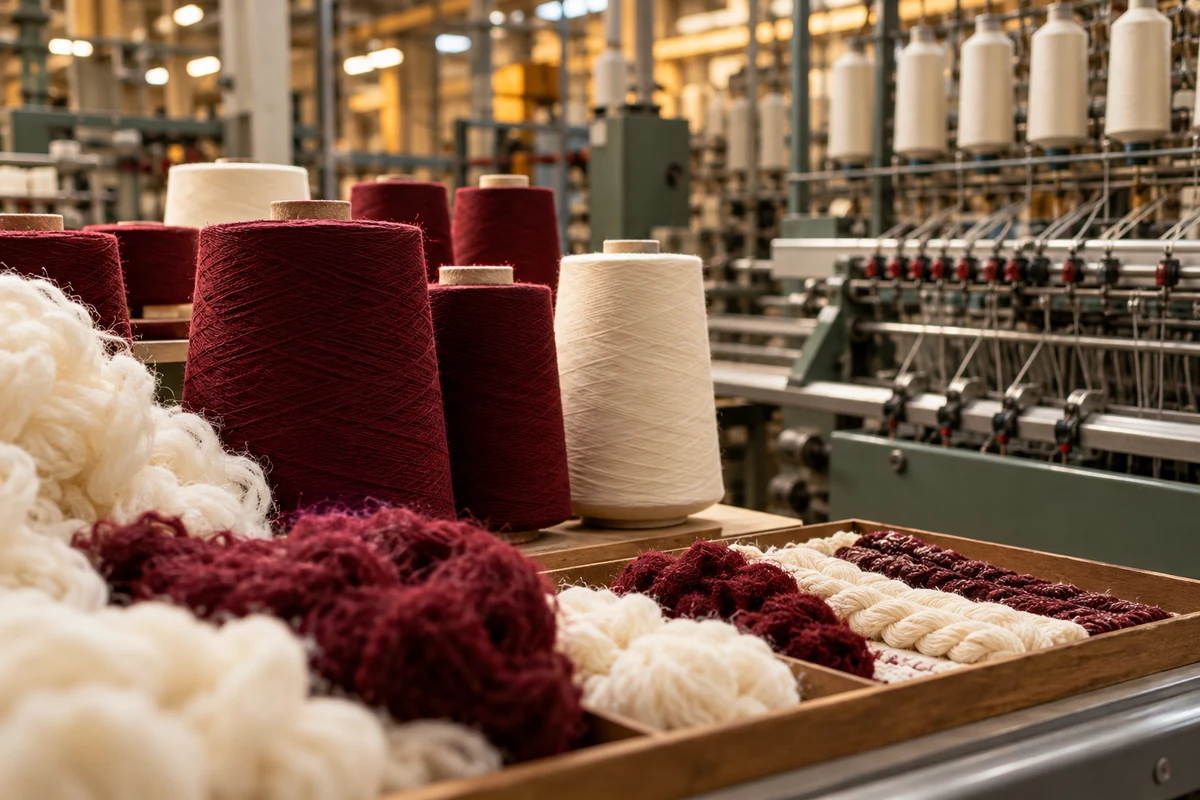
Materials
Fibres and yarns
Polyester and blended yarn options for weaving and knitting. Ask for composition, yarn construction, lot consistency and appropriate testing. Recron Malaysia's published product range illustrates Malaysian fibre and yarn capability; confirm the exact grade with the company.
T02 — Recron Malaysia (opens in a new tab)
Editorial illustration, not a named facility or a verified product sample.
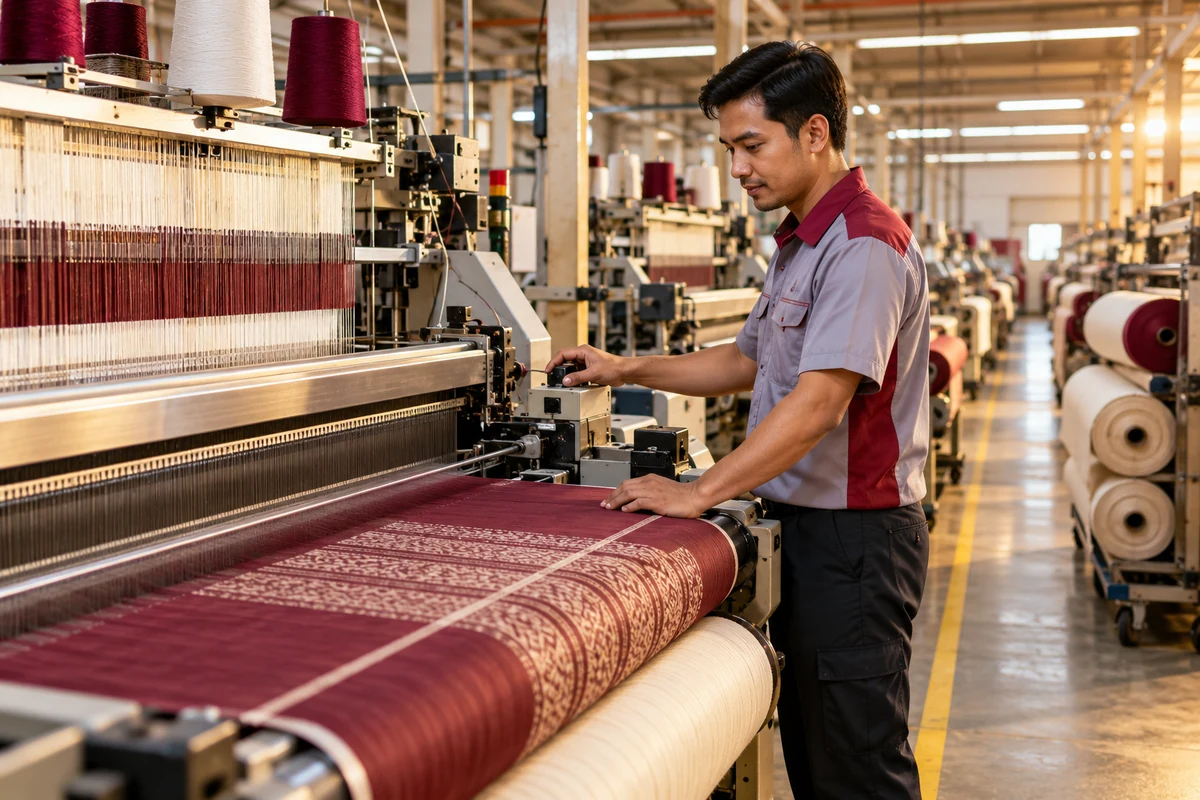
Fabric & processing
Woven and knitted fabrics
Compare construction, weight, width, stretch, shade and finishing. PENFABRIC's published processes include weaving, dyeing, prints and lamination. Treat a published process list as capability to verify, not as a quotation.
T03 — PENFABRIC (opens in a new tab)
Editorial illustration, not a named facility or a verified product sample.
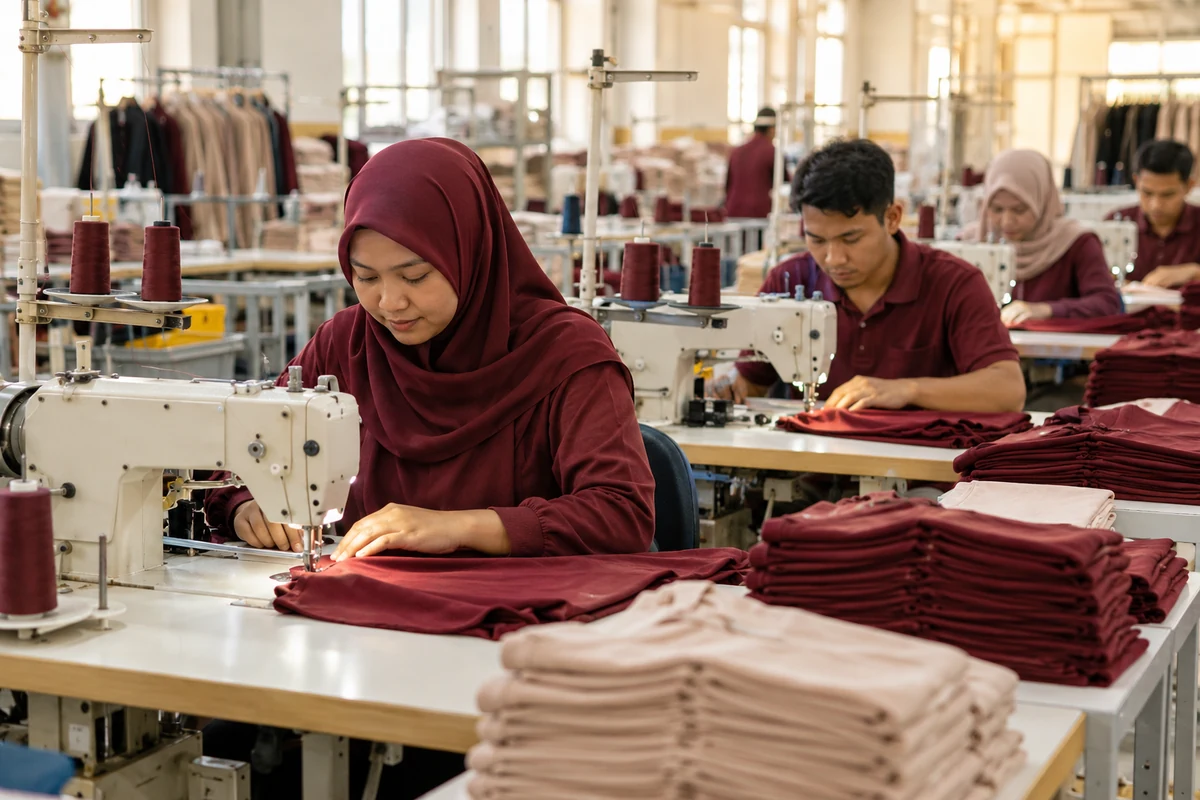
Apparel
Apparel and garment production
Uniforms, casual garments and other specified clothing orders should be scoped by style, size grading, sewing quality, quantity and packing needs. Factory capability is supplier-specific and has to be established order by order.
Editorial illustration, not a named facility or a verified product sample.
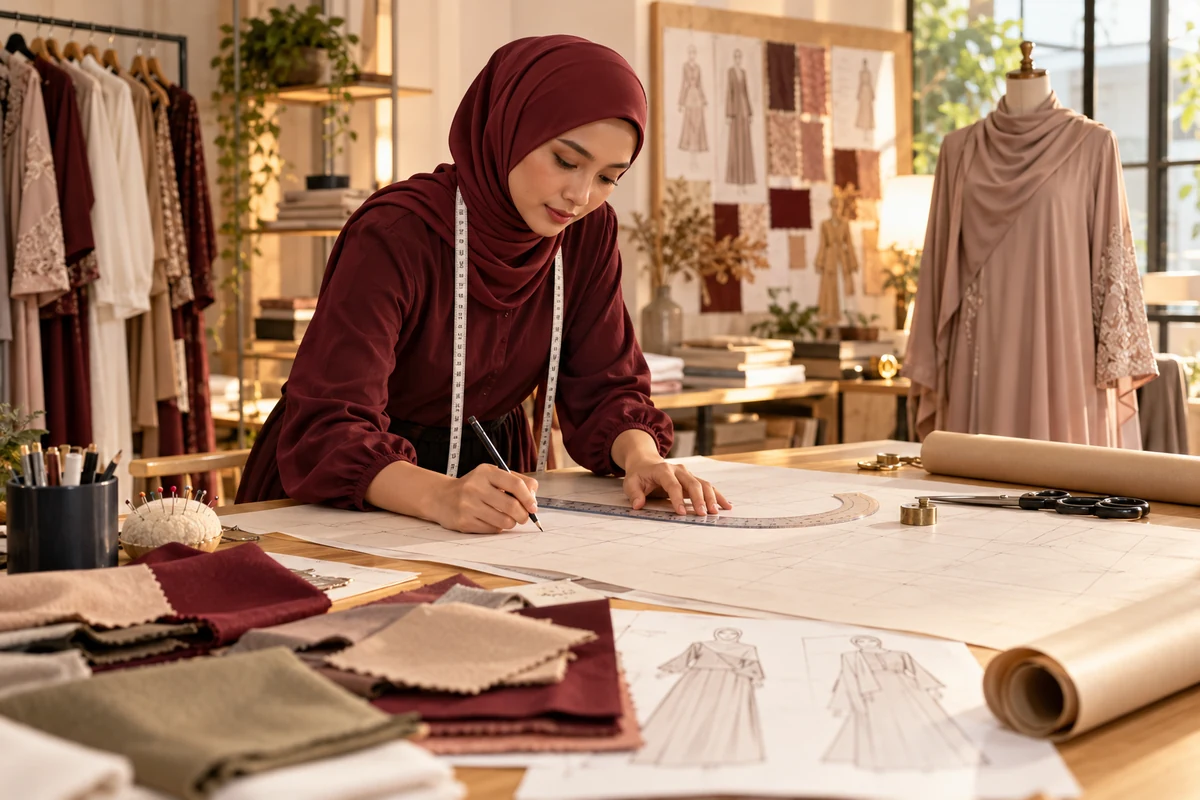
Apparel
Fashion and modestwear design
Explore design studios and brands through an agreed brief, sample approval and a production plan. Modest styling is a product category: it does not by itself establish halal certification, and the two should not be presented as the same thing.
Editorial illustration, not a named facility or a verified product sample.
Home & craft
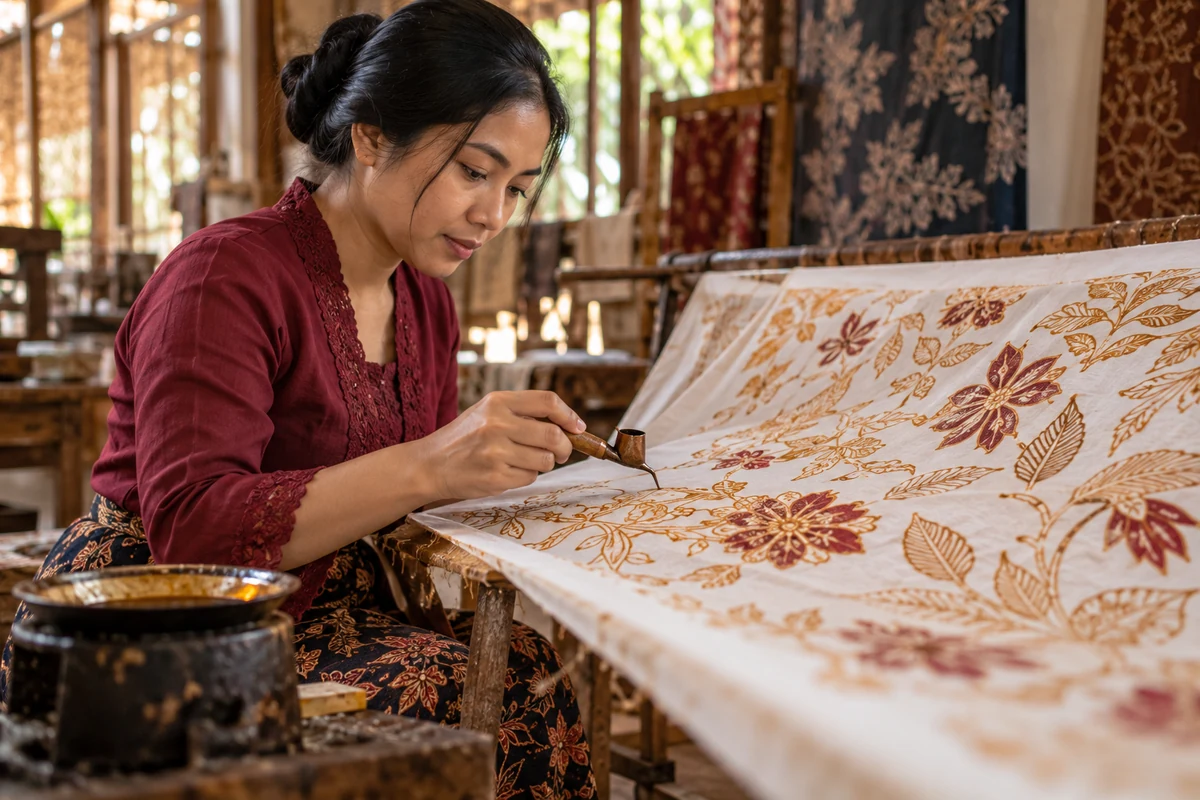
Heritage textiles and batik
Ask for process, maker, fibre composition, care instructions, motif rights and provenance. Wax-resist craft, digitally printed batik-inspired designs and woven textiles are different products and should be described accurately. Kraftangan Malaysia's batik publication and Institut Kraf Negara's programmes are useful reference points.
T04 — Kraftangan Malaysia (opens in a new tab)T05 — Institut Kraf Negara (opens in a new tab)T06 — Institut Kraf Negara (opens in a new tab)
Editorial illustration, not a named facility or a verified product sample.
Home & craft
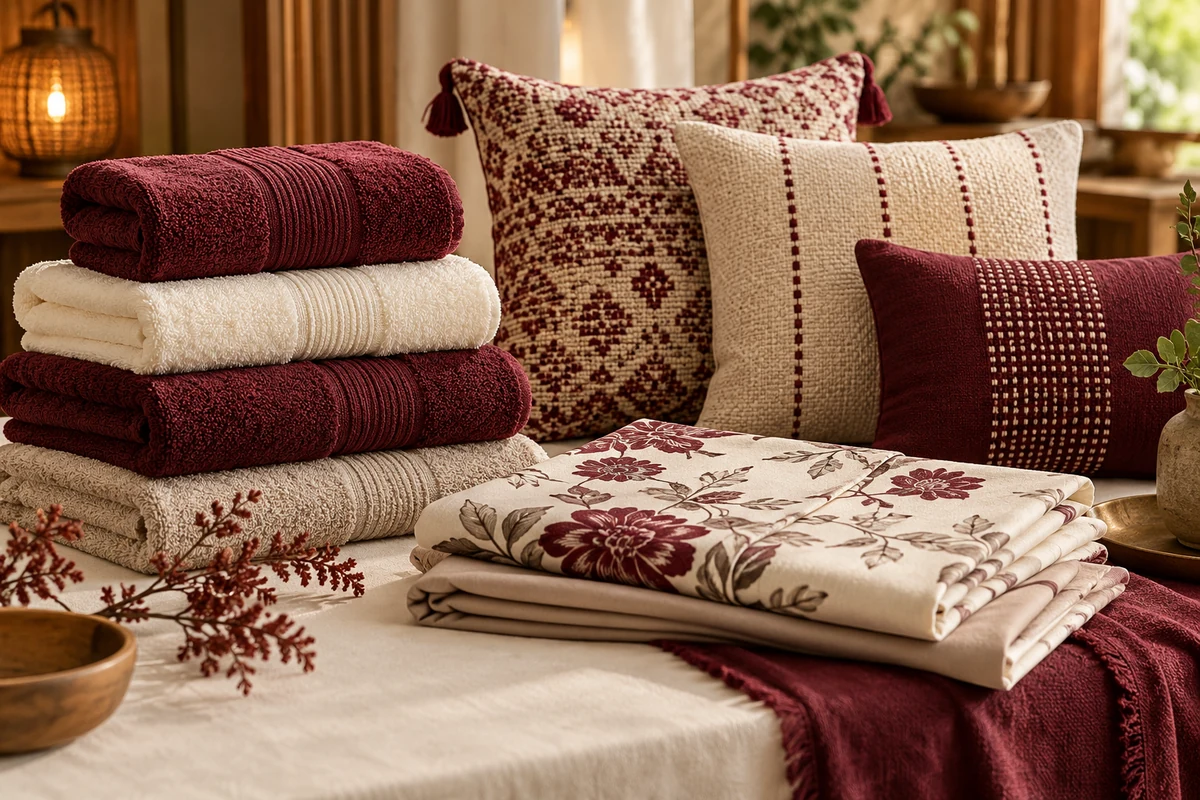
Home textiles
Prepare briefs for towels, bedding, cushion covers and furnishing fabrics. Specify absorbency, softness, finished dimensions, colourfastness, durability and the care the end user will actually give the product.
Editorial illustration, not a named facility or a verified product sample.
Technical & innovation
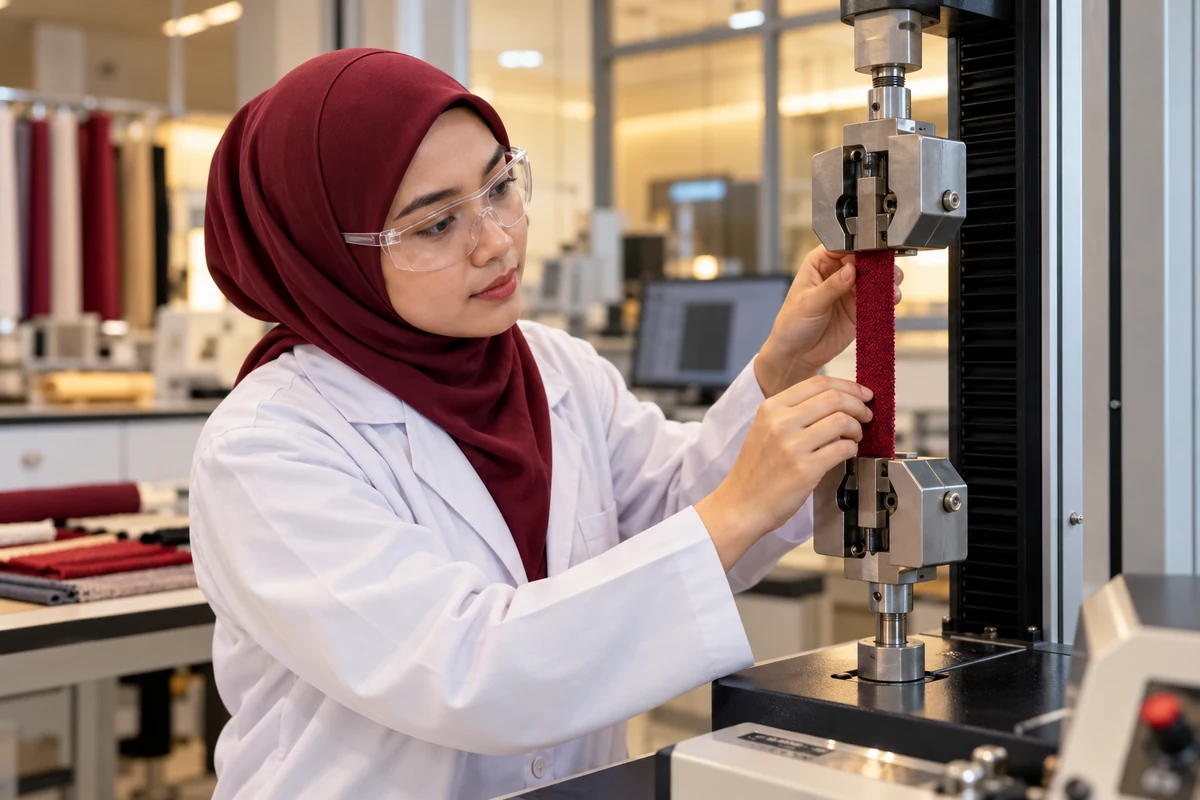
Technical and nonwoven materials
Establish the exact end use, the performance requirement and the testing scope first. Fibertex Personal Care documents Malaysian production of nonwovens for hygiene-related applications. It is a different company from Fibertex Nonwovens, and a material description is not a medical-device approval.
T07 — Fibertex Personal Care (opens in a new tab)
Editorial illustration, not a named facility or a verified product sample.
Technical & innovation
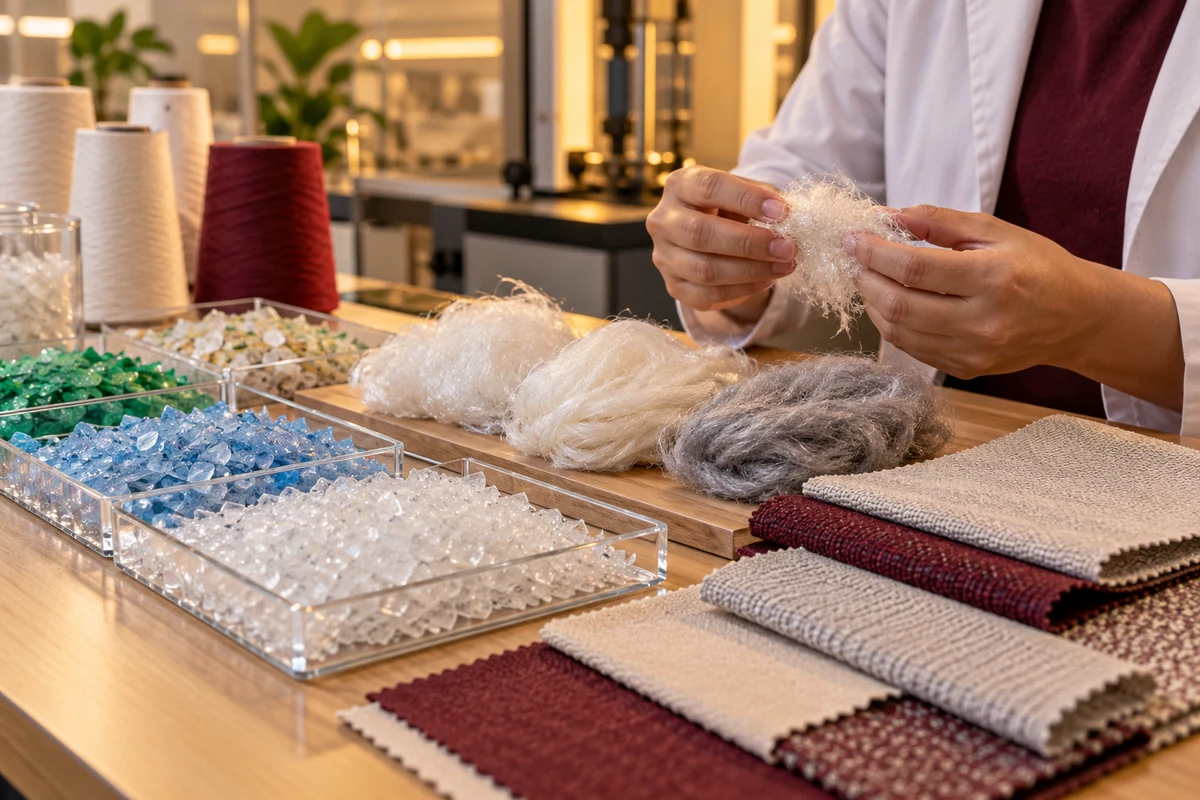
Recycled and traceable materials
Request evidence for recycled content, chain of custody, the processing site and the certification scope that actually applies. An image of recycled feedstock is an editorial illustration, not a verified environmental claim.
Editorial illustration, not a named facility or a verified product sample.

Apparel
Sampling and buyer services
Use a written technical pack, agreed samples, order milestones and a documented inspection plan. Where a supplier offers sampling as a service, confirm who owns the resulting patterns and sample garments.
Editorial illustration, not a named facility or a verified product sample.
Trade orientation
What businesses export, import and source
A product-orientation table, not a market-share ranking. It sets out where supply opportunities sit, which inputs are worth checking, and what a buyer will specify.
| Product group | Supply and export opportunities | Import and input needs to check | Buyer specification |
|---|---|---|---|
| Fibres and yarns | Polyester fibres, filament and textured yarns, and defined blends | Natural fibres, specialist yarns and feedstocks where relevant | Composition, denier or count, lot consistency |
| Fabrics | Woven, dyed, printed and finished fabric | Fabrics unavailable locally, or required for a buyer's approved supply chain | Weight, construction, width, colour and finish |
| Apparel | Contract-manufactured clothing and design-led collections | Finished garments, fabrics, trims and accessories, depending on the business model | Tech pack, sizing, workmanship, MOQ and labelling |
| Home textiles | Specified furnishing and household textile products | Specialised fabrics, yarns and finished products | Dimensions, durability and performance |
| Technical and nonwoven materials | Application-specific materials | Specialised inputs and performance fabrics | Intended use and verified tests |
| Craft textiles | Batik and woven craft with documented provenance | Chosen base cloth, dyes and related craft inputs | Process, authenticity, motif rights and care |
Textile machinery, dyes, chemicals and trims are relevant inputs, but they are classified under their own tariff headings. Do not fold them into a textile trade total.
Dated market context
MITI's 2023 sector plan reports 2022 trade partners as separate lists. They are historical orientation for where demand has sat, not a current ranking, and no annual total or share is attached to them here.
| Displayed list | Partners shown | Period |
|---|---|---|
| Textile export destinations | Türkiye, China, Japan, United States, Viet Nam | 2022 |
| Apparel export destinations | United States, Singapore, Japan, United Arab Emirates, Türkiye | 2022 |
| Textile and apparel import sources | China leads the displayed textile and apparel import-source lists | 2022 |
The plan's aggregate trade and employment tables cover a wider industry than this page and include jewellery, so none of those totals is used as a textile or apparel headline figure.
For a live opportunity review, select exact HS products and a complete reporting period in official MATRADE or DOSM data. Keep exports and re-exports, imports, product definitions, currency and partner countries explicit, and never label an all-products bilateral trade figure as textile trade.

Trade readiness
Eight steps before the first shipment
Work through these in order. Most disputes on a first order trace back to a step skipped here rather than to the factory floor.
- Define the product, composition, knit or woven construction, intended use and the parties to the transaction.
- Confirm its full HS classification using JKDM tools. A broad chapter label is not a final declaration.
- Check Malaysian and destination prohibitions, permits, labelling rules and product-specific controls.
- Agree Incoterms, payment, responsibility for customs charges and who inspects what.
- Prepare the invoice, packing list, transport document, permits and origin evidence that apply.
- Confirm duty, valuation and applicable SST through current JKDM and MySST guidance.
- Plan freight, packing, moisture protection, storage, insurance and destination delivery.
- Retain the required documents and reconcile product, shipment and certification records afterwards.
Official resources
Related: A dedicated Logistics & Ports page is in preparation and is not linked yet. Freight, port and warehousing questions should go to the official customs and port resources above in the meantime.
Coming soonPreferential trade
Choose an agreement, then verify the product
MITI's overview lists Malaysia's implemented regional and bilateral agreements. An agreement in force is where the work starts, not where it ends: eligibility is decided product by product.
Most recent addition
MITI's own announcement states that the Malaysia–United Arab Emirates CEPA enters into force for Malaysia on 1 October 2025. That page was read again on 13 October 2026 for this build.
T13 — MITI (opens in a new tab)T41 — MITI (opens in a new tab)
Regional agreements
- AFTA / ATIGA
- ACFTA
- AKFTA
- AJCEP
- AANZFTA
- AIFTA
- AHKFTA
- RCEP
- CPTPP
Each has its own schedule and its own origin rules.
Bilateral agreements
- Japan
- Pakistan
- New Zealand
- India
- Chile
- Australia
- Türkiye
- United Arab Emirates
Listed by partner, as MITI presents them.
Partial-scope arrangements
- TPS-OIC
- D-8 PTA
Preferential but limited in coverage. Keep these separate from full FTAs; a product covered by one is not automatically covered by another.
The order the checks have to happen in
- HS code for the actual product
- Destination country
- Applicable agreement and tariff line
- Product-specific rule of origin
- Production and input evidence
- Required certification or declaration
- Claim made in the importing country
Questions that decide origin
- Where did the yarn originate, and where did the fabric?
- Which operations actually took place in Malaysia?
- Does any cumulation rule apply, and with which partner?
- Are the production records adequate to support the claim?
- Does the origin proof match the product description and the invoice?
Textile rules of origin depend on processing stages and inputs, and they differ between agreements: a yarn-forward, fabric-forward or substantial-transformation rule cannot be applied across all of them. Repacking or relabelling imported garments in Malaysia does not create Malaysian origin, and no shipment is duty free worldwide.
Verify with the authority
Links and current origin protocols should be rechecked before any declaration is filed.
Quality and standards
An agreed specification, supported by suitable evidence
Quality is a written specification plus the evidence that the product meets it. A manufacturer's membership, website badge or logo is not a test result.
What to request
- Fibre composition, stated and verified
- Dimensional change after washing
- Colourfastness appropriate to the end use
- Pilling and abrasion resistance where relevant
- Tensile or bursting strength as the construction requires
- Any performance test the end use genuinely needs
Select methods appropriate to the product and its end use. Not every test is a legal requirement, and a longer test list is not automatically a better specification.
Testing and standards bodies
SIRIM QAS International offers textile testing within its consumer-product services. Confirm the laboratory's current accredited scope, the requested method, the turnaround and the sample quantity before contracting; this page does not state that scope, because it could not be read on the date shown. Standards Malaysia provides standards and accreditation resources and is a different kind of body from a testing provider.
T14 — SIRIM QAS International (opens in a new tab)T15 — Standards Malaysia (opens in a new tab)
OEKO-TEX STANDARD 100
This standard addresses testing for harmful substances. Check the exact label or certificate number in the scheme owner's official verification service. It does not establish any other environmental or performance claim.
Recycled-content claims
Textile Exchange's recycled standards address recycled material and chain of custody. Check current scheme rules, the supplier's scope certificate and transaction evidence through the scheme owner's own resources. An older version of a standard is not current policy.
T17 — Textile Exchange (opens in a new tab)T18 — Textile Exchange (opens in a new tab)T19 — Textile Exchange (opens in a new tab)
Where regulation, not procurement, decides
Keep three things apart: commercial or buyer certification, laboratory evidence, and mandatory product regulation. Protective clothing or a medical claim may trigger additional requirements, and DOSH guidance is relevant to applicable PPE. Check the actual end use and the responsible authority rather than treating ordinary clothing as regulated PPE.
No certification logo appears anywhere on this page. A scheme mark may only be displayed under a justified licensed use, which is the certificate holder's to establish.
Capability examples
What Malaysian suppliers publish about themselves
Informational examples drawn from each organisation's own published pages. These are not The True Malaysia's endorsements, not a ranking and not a shortlist: they show the kind of capability that exists and where to verify it.
Fibres and yarns
Recron Malaysia
Its published catalogue lists polyester staple fibre and several filament and yarn forms. Use the current product data and contact the company about the exact grade; older capacity or certification claims should not be repeated without verification.
Fabric processing
PENFABRIC
Company resources describe weaving, dyeing and finishing, yarn-dyed prints and lamination, and its published contact page gives a Perai location as a northern manufacturing reference. Self-described regional superlatives are not repeated here.
Nonwovens
Fibertex Personal Care
The company's own page describes Malaysian nonwoven production and a history of expansion. It is a separate company from Fibertex Nonwovens, and group locations elsewhere are not Malaysian operations.
Apparel and textile example
Ramatex
Listed by MIDA as an industry example. The MIDA source is linked until an exact current company resource and scope are checked. No customer-brand relationship is stated, because none is verified.
Supplier discovery
MATRADE Malaysia Products Directory
MATRADE's exporter directory covers manufacturers, contract manufacturers and traders, which are three different kinds of counterparty. Use it to build a shortlist, then verify each company's own capability directly.
Fashion brands and studios can be added to this directory as each brand's own site is verified. Until then no brand record appears: a name with no checked source would be worse than an empty list. No "top", export-share, membership or production-location claim will be published without evidence.
Locations and ecosystems
Where the capability sits, and what that does and does not mean
A location is a networking and logistics consideration, not a quality guarantee. Use these as entry points, then compare individual suppliers on service and delivery.
Johor / Batu Pahat
MKMA is based here and maintains a national membership directory, training resources and trade-fair information. That makes it a useful networking entry point. It does not make every member a Batu Pahat factory.
Penang / Perai
PENFABRIC's published contact location provides a concrete northern fabric-manufacturing reference point for buyers planning site visits in the north.
Nilai / Melaka
Verify the exact Recron site relevant to your proposed product using the company's own resources. Do not assume every grade is produced at every site.
Klang Valley / Shah Alam
UiTM's textile and apparel programme is a skills and research entry point here. Design and retail opportunities in the Klang Valley should be tied to verified individual organisations rather than to the region in general.
Craft networks nationwide
Institut Kraf Negara and Kraftangan Malaysia resources support textile craft across the country, including Sabah and Sarawak where the maker, technique and organisation can be identified accurately and provenance documented.
T05 — Institut Kraf Negara (opens in a new tab)T06 — Institut Kraf Negara (opens in a new tab)T38 — Kraftangan Malaysia (opens in a new tab)
No cluster employment total or precision map appears here. Location tools should help compare supplier service and delivery, not manufacture false precision about an area.
Institutes and skills
Education, skills and career orientation
Search or filter the verified education, skills, testing and standards resources. Where a current intake, campus or accredited scope could not be confirmed, the record says so instead of guessing.
Showing 7 of 7 records
UiTM Faculty of Applied Sciences
University
The faculty's current page lists Bachelor of Technology in Textile and Apparel with Honours (AS260) at Shah Alam, covering textile manufacturing, apparel technology, design and CAD, and quality and product development. The programme code was corroborated against the School of Industrial Technology's own programme listing. Confirm current admissions directly with UiTM; older programme titles are not interchangeable with this one.
- Verification required:
- Current intake and admissions to confirm with the institution
UiTM Faculty of Art & Design
University
Official programmes here provide fashion and textile design pathways. Verify the current course and campus with the faculty before relying on specific intake details.
- Verification required:
- Current intake and admissions to confirm with the institution
Institut Kraf Negara — batik
Craft institute
Institut Kraf Negara's published batik programme is a craft-skills resource. Confirm admissions through IKN itself rather than through a tourism listing.
- Verification required:
- Current intake and admissions to confirm with the institution
Institut Kraf Negara — weaving
Craft institute
IKN also publishes a weaving (tenunan) programme. The deep link held in the research pack returned an error and its canonical domain could not be confirmed on the date shown, so this record links Kraftangan Malaysia's craft industry development resource instead and the weaving programme page should be located through IKN directly.
- Verification required:
- Canonical programme page to confirm with the institution
HRD Corp industry skills framework
Skills body
HRD Corp's industry skills framework covers textile, apparel and footwear manufacturing and was developed with MTMA and MKMA. Use it for skills planning. It is not a guarantee of a training grant or of a job.
SIRIM QAS International
Testing
Textile testing sits within SIRIM QAS International's consumer-product services. The exact accredited scope is not stated here because the service page could not be fully read on the date shown; confirm scope, method and turnaround with the laboratory.
- Verification required:
- Exact accredited scope to confirm with the laboratory
Standards Malaysia
Standards
Standards Malaysia provides standards and accreditation resources, including the national standards committee covering textiles and apparel. It is a standards and accreditation body, not a testing provider.
Capabilities and roles worth exploring
- Pattern making
- CAD and digital design
- Sewing technology
- Merchandising
- Quality control
- Dyeing and finishing
- Laboratory testing
- Production planning
- Sourcing
- Traceability and compliance
Supplier-specific training and recruitment opportunities need fresh verification with the employer. No vacancy count appears here, because none was verified.
Government and public bodies
Who helps with what (12)
Each card carries a verified official link and a clear scope. Public bodies, universities, associations, private laboratories and operators have different roles, and this list is comprehensive about entry points rather than exhaustive about legal approvals.
Showing 12 of 12 records
MITI
Trade and policy
Industrial and trade policy, NIMP sector direction, trade agreements and preferential-origin guidance.
MIDA
Investment and licensing
Manufacturing investment facilitation, approvals and licensing guidance, and current incentive application resources.
MATRADE
Trade and policy
Exporter development, market intelligence, trade promotion and exporter discovery.
JKDM / RMCD (Royal Malaysian Customs)
Customs
Import and export customs procedures, tariff classification, relevant warehouse arrangements and SST.
Standards Malaysia
Standards
Standards and accreditation resources covering textiles and apparel.
Kraftangan Malaysia
Craft
Craft sector development and textile heritage business resources.
HRD Corp
Skills
Industry skills framework and current training resources.
DOE / JAS (Department of Environment)
Environment
Environmental controls relevant to the actual process, including textile and apparel industry guidance. Check effluent, chemical and waste obligations for your own process.
DOSH / JKKP
Safety
Workplace safety and applicable personal protective equipment requirements.
SSM (Companies Commission of Malaysia)
Registration and IP
Company and business registration, and company information. Local authorities and BOMBA handle applicable site, business-premises and fire-safety checks.
MyIPO
Registration and IP
Industrial design, trademark and intellectual-property entry point. Verify service details before relying on them.
SME Corp Malaysia
Business support
SME development entry point. Programme eligibility and current funding availability must be verified with SME Corp.
- Verification required:
- Programme eligibility and current funding to confirm
A candidate body without a checked official link is not displayed. Nothing here is a claim of partnership, agency or approval between The True Malaysia and any authority.
Associations and events
Associations, major forums and exhibitions
Every record shows its type, organiser, location, date status, purpose and official link. No attendance, visitor count or scale claim appears anywhere, and The True Malaysia is not an organiser, institutional partner or approved agent of any of them.

Dates shown were read on the date given in the source panel. Recheck any date with the organiser before committing travel, freight or stand costs.
Showing 9 of 9 records
MKMA — Malaysian Knitting Manufacturers Association
Association
A national textile and apparel trade association based in Batu Pahat, with member, training and event resources. Its live calendar is the place to check current seminars, trade missions and fairs.
- Status:
- Ongoing resource
MTMA — Malaysian Textile Manufacturers Association
Association
A national textile manufacturing association, identified through HRD Corp's framework and association resources. The member page held in research could not be fully retrieved, so no member directory is described here and no membership call to action is offered; confirm the current association contact before relying on it.
- Status:
- Verification required
FMFTA — Federation of Malaysian Fashion, Textiles and Apparel
Association
MIDA records the federation's 2019 launch with an industry-technology focus. That establishment context is verified; an active contact is not, so no membership route is offered here.
- Status:
- Verification required
ATEX Malaysia 2026
Trade exhibition
An apparel, textile and accessory trade exhibition. This edition has already taken place and is shown as historical context, not as an upcoming event.
- Status:
- Past edition
- Dates:
- 25–27 June 2026
- Venue:
- MITEC, Kuala Lumpur
ATEX Malaysia 2027
Trade exhibition
The organiser currently advertises this edition. It is shown as organiser-announced rather than confirmed, and should be rechecked with the organiser before any travel or stand booking. Counters on an organiser's page are not attendance figures and none is repeated here.
- Status:
- Organiser-announced
- Dates:
- 25–27 August 2027
- Venue:
- MITEC, Kuala Lumpur
Kuala Lumpur Fashion Week
Fashion event
A fashion presentation and designer-network event, distinct from an industrial machinery or sourcing fair. The official site is linked; the current edition is not stated because it could not be independently confirmed.
- Status:
- Verification required
Couture Fashion Week Malaysia
Fashion event
An organiser resource for couture design networking. The listed edition has passed. No attendee figure is published here, because none is verified.
- Status:
- Past edition
- Dates:
- 28–29 August 2026
- Venue:
- Kuala Lumpur
MKMA seminars, missions and fairs
Programme and calendar
Seminars, overseas trade missions and fairs organised or promoted by the association. Confirm each organiser and date on the live calendar, and note that an overseas exhibition is an international event rather than a Malaysian-hosted one.
- Status:
- Ongoing resource
MATRADE trade events and business matching
Programme and calendar
Trade events and business matching, useful as a wider business channel alongside MIDA industry briefings. Specific upcoming textile sessions are named only after official confirmation, so none is named here.
- Status:
- Ongoing resource
Setting up and incentives
Manufacturing setup, obligations and incentive orientation
Define the process and business model before choosing a site. Incorporation, manufacturing licensing, site use, environmental compliance, staffing, customs arrangements and incentive applications are separate tasks with separate authorities.
Manufacturing licence
MIDA's guidance uses shareholders' funds and employee thresholds, with exemption confirmation routes for smaller operations. Because the wording around boundary values differs between MIDA pages, this page links the current guidance and says to verify exact eligibility with MIDA rather than publishing a threshold calculator that would be wrong at the margin.
T32 — MIDA (opens in a new tab)T39 — MIDA (opens in a new tab)
Environmental obligations
Wet processing needs an early environmental assessment of water, effluent, chemical handling and waste systems. Use DOE's industry guidelines and the rules current at the time. Not every textile project needs the same approval package, and a design studio is not a dyehouse.
Incentive orientation
Review current MIDA incentive guidelines for qualifying automation, technology or other investment. Approval, eligibility, application timing and conditions all matter, and a policy objective is not a granted tax benefit.
Policy direction
NIMP's sector direction emphasises higher-value materials, stronger market integration, skills and improved practices. Those are stated objectives. They are not evidence that any target has been achieved.
Free zones, FIZ and LMW
If a free commercial zone, free industrial zone or licensed manufacturing warehouse arrangement is under consideration, use current JKDM and MIDA resources and keep their purposes separate. Location alone does not remove a permit requirement and does not guarantee an origin benefit.
T10 — JKDM (opens in a new tab)T32 — MIDA (opens in a new tab)
A workable sequence
- Define the service or process
- Review company structure and ownership
- Assess site and utilities
- Obtain the approvals that apply
- Assess incentives
- Build people and systems
- Run pilot production
- Qualify with the buyer
Related
Sourcing brief
Turn the specification into something you can send
Fill in what you know. The brief is assembled in your browser and handed back to you to copy, download or print. Nothing is submitted, stored or sent anywhere, and there is no name, company, email or phone field to fill in.
Build your sourcing brief
Product and commercial fields only. This brief asks for no personal or contact details, makes no network request and is never sent to The True Malaysia.
Brief preview
Fill in at least one field and the brief will appear here.
Verify the supplier independently: confirm legal identity, actual capability, samples, test evidence and commercial terms before any payment.
Ask every supplier whether it manufactures, subcontracts or trades, and obtain sample and production-consistency evidence before ordering.
Questions
Frequently asked questions
- Can I source fibres, fabrics and finished garments through one company?
- Some suppliers genuinely offer several stages. Confirm the exact contractual scope instead of assuming full vertical integration from a company profile.
- Does a Malaysian shipment qualify automatically for FTA rates?
- No. The product schedule, the rule of origin for that product under that agreement, and the required evidence together determine eligibility.
- Is a fabric test report enough for protective clothing?
- It may not address the complete product or the approvals that apply. Confirm the end use and the current requirements with the responsible authority.
- Is a recycled-content claim enough on its own?
- No. Ask for the scope certificate, chain-of-custody evidence and transaction evidence, and verify them through the scheme owner.
- Are batik-inspired prints the same as handmade batik?
- No. Wax-resist craft and a digitally printed batik-inspired design are different products. Ask for the actual production process and describe it accurately.
- How do I compare suppliers fairly?
- Give each one the same written specification, sample milestones, testing plan and quotation terms, and run the same due-diligence checks on all of them.
- Where can I find skills and networks?
- Start with UiTM, Institut Kraf Negara, HRD Corp and MKMA, together with the verified association and event resources on this page.
Evidence
Sources (42)
Every source below was read on the date shown. Where a page could not be fully retrieved, or where a detail depends on a current scope, intake or edition, the status says so and the page omits the detail rather than filling the gap.
| Source | What it supports | Status | Read |
|---|---|---|---|
| T01MIDA (opens in a new tab) | Lifestyle activity scope, FMFTA 2019 launch and industry examples | Primary page read; its lifestyle statistics cover footwear, leather and jewellery and are not used here | 2026-10-13 |
| T02Recron Malaysia (opens in a new tab) | Published polyester fibre and yarn product types | Company page read; exact grades and certificates must be confirmed with the company | 2026-10-13 |
| T03PENFABRIC (opens in a new tab) | Published weaving, dyeing, printing and lamination processes | Company page read | 2026-10-13 |
| T04Kraftangan Malaysia (opens in a new tab) | Batik motif and technique reference | Primary search verified | 2026-10-13 |
| T05Institut Kraf Negara (opens in a new tab) | Batik craft programme | Primary search verified; current intake to confirm with IKNVerification required | 2026-10-13 |
| T06Institut Kraf Negara (opens in a new tab) | Weaving craft programme | Full fetch returned 406 and the canonical domain could not be confirmed on 13 Oct 2026; the weaving record links Kraftangan's craft-development resource insteadVerification required | 2026-10-13 |
| T07Fibertex Personal Care (opens in a new tab) | Malaysian nonwoven production; distinct from Fibertex Nonwovens | Company page read | 2026-10-13 |
| T08MITI — NIMP 2030 sectoral plan (opens in a new tab) | 2022 partner lists (Tables 20.5 and 20.7) and policy direction | Full 32-page primary PDF; its displayed aggregates include jewellery, so no total from it is shown | 2026-10-13 |
| T09JKDM (opens in a new tab) | HS Explorer classification tool | Official tool linked from the MITI portal | 2026-10-13 |
| T10JKDM (opens in a new tab) | Commercial import procedure resources | Primary search verified | 2026-10-13 |
| T11JKDM — MyCIEDS (opens in a new tab) | Supporting-document system guidance | Primary search verified | 2026-10-13 |
| T12JKDM — MySST (opens in a new tab) | SST industry guidance directory | Primary search verified; no rate is quoted on this page | 2026-10-13 |
| T13MITI (opens in a new tab) | Implemented regional, bilateral and partial-scope agreements | Primary page read | 2026-10-13 |
| T14SIRIM QAS International (opens in a new tab) | Consumer-product testing service covering textiles | Primary search verified; full fetch 502 and the exact accredited scope could not be read, so no scope is stated hereVerification required | 2026-10-13 |
| T15Standards Malaysia (opens in a new tab) | National standards committee covering textiles and apparel | Primary search verified | 2026-10-13 |
| T16OEKO-TEX (opens in a new tab) | Harmful-substances label and its official verification service | Scheme-owner page verified | 2026-10-13 |
| T17Textile Exchange (opens in a new tab) | Recycled-content standards | Scheme-owner page verified | 2026-10-13 |
| T18Textile Exchange (opens in a new tab) | Scope-certificate verification | Scheme-owner page verified | 2026-10-13 |
| T19Textile Exchange (opens in a new tab) | Transaction-certificate verification | Scheme-owner page verified | 2026-10-13 |
| T20DOSH (opens in a new tab) | Workplace-safety and applicable PPE orientation | Primary search verified; requirements are product and activity specific | 2026-10-13 |
| T21PENFABRIC (opens in a new tab) | Published Perai location | Company page verified | 2026-10-13 |
| T22MKMA (opens in a new tab) | Association role, Batu Pahat base, member and event resources | Full association page read | 2026-10-13 |
| T23UiTM Faculty of Applied Sciences (opens in a new tab) | AS260 Bachelor of Technology in Textile and Apparel with Honours, Shah Alam | Full primary page read | 2026-10-13 |
| T24UiTM Faculty of Art & Design (opens in a new tab) | Fashion and textile design pathways | Primary search verified; exact current campus and intake to confirmVerification required | 2026-10-13 |
| T25HRD Corp (opens in a new tab) | Industry skills framework developed with MTMA and MKMA | Full primary page read | 2026-10-13 |
| T26MTMA (opens in a new tab) | Association member resource candidate | Found by search; full fetch timed out, so the member directory is not described and this URL is not offered as a live contactVerification required | 2026-10-13 |
| T27MKMA (opens in a new tab) | ATEX Malaysia 25–27 June 2026, a past edition | Full association page read | 2026-10-13 |
| T28Kaizer (ATEX organiser) (opens in a new tab) | Organiser-announced 25–27 August 2027 at MITEC | Organiser page read; the page's zero counters are not attendance and no visitor figure is repeatedVerification required | 2026-10-13 |
| T29Kuala Lumpur Fashion Week (opens in a new tab) | Fashion presentation and designer-network resource | Official site verified; the current edition is not stated here because it could not be confirmedVerification required | 2026-10-13 |
| T30KLCC (venue partner) (opens in a new tab) | Venue-partner reference for a KLFW edition | Primary search verified; full fetch failedVerification required | 2026-10-13 |
| T31Couture Fashion Week Malaysia (opens in a new tab) | Listed 28–29 August 2026 edition, now past | Organiser page verified; no attendance figure is published or claimed | 2026-10-13 |
| T32MIDA (opens in a new tab) | Manufacturing licence and exemption guidance | Primary search verified; boundary wording differs between MIDA pages, so no threshold is published hereVerification required | 2026-10-13 |
| T33DOE (opens in a new tab) | Industry guidelines including textile and apparel processes | Full primary page read | 2026-10-13 |
| T34MATRADE (opens in a new tab) | Exporter directory covering manufacturers, contract manufacturers and traders | Primary search verified | 2026-10-13 |
| T35SSM (opens in a new tab) | Company incorporation resource | Primary search verified | 2026-10-13 |
| T36MyIPO (opens in a new tab) | Industrial-design registration resource | Primary search verified | 2026-10-13 |
| T37SME Corp Malaysia (opens in a new tab) | SME development entry point | Primary search verified; programme eligibility and funding availability must be checked with SME CorpVerification required | 2026-10-13 |
| T38Kraftangan Malaysia (opens in a new tab) | Craft industry development programmes | Primary search verified | 2026-10-13 |
| T39MIDA (opens in a new tab) | Current programme guidelines and application forms | Primary search verified | 2026-10-13 |
| T40The True Thailand (reference) (opens in a new tab) | Functional reference for page structure only | Reference page read; no Thai fact, figure, policy or image was carried across | 2026-10-13 |
| T41MITI (opens in a new tab) | MITI's announcement that the MY-UAE CEPA enters into force for Malaysia on 1 October 2025 | Primary page read by this build on 13 Oct 2026, confirming the pack's date against MITI's own announcement | 2026-10-13 |
| T42UiTM School of Industrial Technology (opens in a new tab) | AS260 listed among the school's programmes | Primary page located by this build on 13 Oct 2026, corroborating the AS260 programme code; admissions detail still to be confirmed with UiTM | 2026-10-13 |
Historical market context and current transaction requirements are different things. The 2022 partner lists describe where demand has sat; duty, origin, permits, SST and certification must be confirmed for your own product and shipment date.
Turn your product brief into a practical sourcing plan
Define the material, design, volume and destination. Compare suitable partners, approve samples and confirm quality and trade requirements before production.