
Business in Malaysia
Connect your business through Malaysia
Explore port gateways, freight services and distribution locations. Plan your shipment, understand customs requirements and identify the agencies and industry networks that can help.
Orientation
Choose a gateway by cargo, not by distance
Malaysia offers choices across sea, air, road and rail freight. Select a gateway around the origin of your goods, destination, commodity, shipment frequency and service requirements. Compare actual carrier schedules, inland connections and all-in costs rather than distance alone.
The ranking you will see quoted, and what it actually is
Malaysia placed 26th globally and second among ASEAN economies after Singapore in the World Bank's 2023 Logistics Performance Index. Those are the figures the Ministry of Transport cited in its 24 June 2025 speech, and they are 2023 data.
The World Bank's 2025 LPI 2.0 publishes no overall country ranking at all. Its operational indicators are a different measure and must not be presented as a newer equivalent. Anyone quoting a "current" Malaysian logistics rank is quoting 2023.
S01 — Ministry of Transport (opens in a new tab)S02 — World Bank (opens in a new tab)S03 — World Bank (opens in a new tab)
This page makes no "best port" claim, publishes no port throughput figure or market share, and gives no current national rank.
Gateways
Ports, air cargo and rail, by region (10)
Filter by region, then compare the cards on cargo fit rather than on size. Each card separates the port authority from the terminal operator, because they do different jobs and the right question goes to the right one.
Showing 10 of 10 gateways
- CentralSea
Port Klang, Selangor
Central west-coast container and general-cargo gateway.
- Port authority
- Port Klang Authority
- Terminal operator
- Northport and Westports
What to compare
Compare terminal service, vessel call pattern, free-time terms, inland haulage and warehouse access. Northport and Westports are separate terminal operators with their own terms.
- NorthSea
Penang Port
Northern gateway serving the northern manufacturing catchment.
- Port authority
- Penang Port Commission
- Terminal operator
- Penang Port Sdn Bhd
What to compare
Compare supplier catchment, container and bulk handling, feeder and mainline service, and last-mile costs to your sites.
- SouthSea
Port of Tanjung Pelepas, Johor
Southern container gateway.
- Port authority
- Johor Port Authority
- Terminal operator
- Port of Tanjung Pelepas terminal operator
What to compare
Compare carrier calls, terminal connection and distribution requirements. No throughput figure is published here: operator-hosted media carries conflicting 2025 totals and no annual statistical source was reached.
- SouthSea
Johor Port, Pasir Gudang
Southern multipurpose and commodity gateway.
- Port authority
- Johor Port Authority
- Terminal operator
- Johor Port terminal operator, Pasir Gudang
What to compare
Check the appropriate terminal and commodity handling requirements. Do not assume every Johor port offers the same service — they do not.
- East CoastSea
Kuantan Port
East-coast gateway serving the east-coast industrial catchment.
- Port authority
- Kuantan Port Authority
What to compare
Check industrial catchment, commodity compatibility, road connections and shipping frequency.
- East CoastSeaVerify current details directly
Kemaman Port
East-coast industrial and energy-related gateway.
- Port authority
- Kemaman Port Authority
What to compare
Verify available facilities and vessel or cargo requirements directly with the operator before planning around this port.
- Sabah & SarawakSeaJurisdiction changed in 2026
Bintulu Port, Sarawak
Sarawak industrial gateway.
- Terminal operator
- Bintulu Port Sdn Bhd
What to compare
A 14 September 2026 operator filing records transition from federal to Sarawak state jurisdiction, effective 1 September 2026. The older Ministry of Transport port list still shows it as federal and is stale on this point. Confirm current approvals with Sarawak's state authorities and the port. Bintulu Port Sdn Bhd remains the named operator in the announcement.
S05 — Bintulu Port Holdings (opens in a new tab)S06 — Sarawak UKAS (opens in a new tab)
- Sabah & SarawakSeaVerify current details directly
Other Sabah and Sarawak ports
Including routes serving Kota Kinabalu, Sandakan, Tawau, Kuching and Miri.
What to compare
These are orientation examples, not cards. Use the state port authority and the operator for the specific port, and verify current cargo facilities, service frequency and jurisdiction before relying on any of them. Never infer one port's authority from a neighbouring port.
- CentralAirVerify current details directly
KLIA air cargo
Air freight for time-sensitive and high-value consignments.
What to compare
Ask the actual airline or handler about acceptance, security screening, temperature handling, cut-off times and customs arrangements. No airport capacity statistic is published here, because none was verified for this page.
- CentralRailVerify current details directly
Rail-linked freight
Intermodal movements using rail-served terminals.
What to compare
Assess KTMB freight facilities and current services against your origin and destination, wagon or container compatibility, transit time and road transfers. Rail projects still under development are not bookable routes and are not treated as such here.
A port authority and a terminal operator are not the same body. The authority administers the port; the operator runs the terminal and quotes the service. Ask the operator about vessel calls, free time and handling, and the authority about designation, jurisdiction and port-wide rules.
Freight services
What to compare, service by service
Each mode is quoted on different variables. Knowing which ones apply to your cargo is what makes two quotations comparable.
Sea freight
FCL, LCL, bulk and project cargo are quoted differently. Compare routing, frequency, transshipment and destination charges.
Air freight
Compare chargeable weight, acceptance limits, flight routing and time-sensitive handling.
Road haulage
Compare vehicle type, delivery slots, driver and site access, and border arrangements. Oversized or dangerous goods need their own checks.
Rail and intermodal
Compare terminal transfers, service availability and complete door-to-door timing, not just the rail leg.
Cold chain
Specify commodity temperature, monitoring, storage, backup arrangements and chain-of-custody requirements.
Warehousing and fulfilment
Compare inventory visibility, security, fulfilment integration, returns handling, capacity and service-level terms.
Customs and documentation
Check the declaration, permits, supporting documents and who is the responsible importer or exporter.
Trade planning
Settle HS classification, origin route and destination-specific requirements before booking, not after.
Free zones and sites
Evaluate the location, activity approvals, tax treatment and operating requirements together.
Industry networks
Find professional training, trade facilitation and specialist counterparties.




Trade checklist
Preparing an import or export, in ten steps
A planning sequence, not a substitute for the current legal requirements that apply to your specific shipment. Every step is usable without signing in, and the whole list prints.
Opens your browser's print dialogue. Nothing is submitted and nothing is stored.
1Define goods and parties
Product specification, commodity, importer and exporter, origin, destination and shipment purpose.
2Classify the goods
Establish the correct HS classification using Customs' HS Explorer, and seek clarification where classification is uncertain. Classification drives duty, controls and origin rules, so an error here propagates through everything after it.
S07 — Royal Malaysian Customs Department (opens in a new tab)
3Check controls
Review current Customs prohibition orders and their amendments, and identify licensing and product-agency requirements. Strategic items — and relevant unlisted items — may need MITI Strategic Trade Act checks for export, transit or transshipment. A free-zone location does not remove these controls.
S08 — Royal Malaysian Customs Department (opens in a new tab)S09 — MITI (opens in a new tab)S10 — Royal Malaysian Customs Department (opens in a new tab)
4Check destination requirements
Importer eligibility, product registration, labelling, conformity and sanitary or phytosanitary requirements differ by country. The destination's rules govern, not Malaysia's.
5Agree commercial terms
Incoterms, who pays freight and duties, insurance, inspection, liabilities and returns. Ask for an itemised quotation rather than a single all-in number.
6Assemble the documents that apply
Commercial invoice, packing list, bill of lading or air waybill, permits, certificates and preferential origin evidence. Requirements depend on the transaction and the commodity — there is no universal document list, and any page that gives you one is guessing.
7Prepare the declaration
Submit with the responsible party or an authorised agent. MyCIEDS is Customs' supporting-document submission system; it does not replace every declaration or permit system.
S11 — Royal Malaysian Customs Department — MyCIEDS (opens in a new tab)
8Calculate duty and taxes
Derive them from classification, valuation, origin and the current schedules. Malaysia uses SST. Verify logistics service-tax scope, exemptions and current policy through MySST — no rate is published on this page.
S12 — Royal Malaysian Customs Department — MySST (opens in a new tab)
9Arrange inspection, release and delivery
Terminal pickup, storage, haulage and final delivery. Check demurrage, detention, storage, free-time and cut-off conditions before the cargo arrives, not after it accrues charges.
10Retain records and reconcile
Keep the required records, and reconcile actual costs, delivery condition and origin evidence against what you planned.
Landed-cost checklist
The lines that make up a delivered cost. This is a checklist, not a calculator: it supplies no rate, and nothing here is an official tariff tool.
- Purchase price
- Origin transport
- Freight and surcharges
- Cargo insurance
- Customs broker
- Duties and taxes
- Inspection and permit charges
- Terminal and handling charges
- Storage
- Demurrage and detention
- Inland delivery
- Temperature or special handling
- Contingency
Market access
Match the agreement to the shipment
MITI's overview lists 17 implemented free-trade agreements — eight bilateral and nine regional — plus two partial-scope preferential agreements. MY-UAE CEPA entered into force on 1 October 2025. Rechecked against MITI on 14 October 2026.
S13 — MITI (opens in a new tab)
Regional agreements (9)
- AFTA / ATIGA
- ACFTA
- AKFTA
- AJCEP
- AANZFTA
- AIFTA
- AHKFTA
- RCEP
- CPTPP
Bilateral agreements (8)
- MJEPA (Japan)
- MPCEPA (Pakistan)
- MNZFTA (New Zealand)
- MICECA (India)
- MCFTA (Chile)
- MAFTA (Australia)
- MTFTA (Türkiye)
- MY-UAE CEPA (United Arab Emirates)
Partial-scope preferential agreements (2)
- TPS-OIC
- D-8 PTA
The two partial-scope agreements are kept separate from the seventeen because they are a different instrument with narrower coverage. Counting them together overstates Malaysia's FTA network.
Do not assume every recently signed agreement or protocol is already effective for every party. Signature and entry into force are different events, and a schedule can be in force with one partner and not another.
Whether a shipment qualifies
A preference depends on the HS tariff schedule, the product-specific rule of origin, qualifying production, the evidence you hold, consignment rules where they apply, and the importing authority's requirements.
Incorporating in Malaysia, storing goods here, or re-exporting them does not make them Malaysian-origin. Origin is earned by the production that took place, under the rule that applies to that product in that agreement.
Working it through
- 1Product and destination
- 2Candidate agreement
- 3Tariff schedule
- 4Rule of origin
- 5Supplier and production evidence
- 6Origin certification or declaration
- 7Destination claim and record retention
No percentage saving is quoted anywhere on this page. The saving depends on your product, your route and the destination's schedule, and a generic figure would be wrong for almost everyone.
Check your agreement on MITI's FTA portal (opens in a new tab)
17 implemented · 8 bilateral · 9 regional · 2 partial-scope
Free zones
Free zones, licensed facilities and distribution
Free Commercial Zones, Free Industrial Zones and Licensed Manufacturing Warehouses have distinct legal purposes and approval conditions. An LMW is not a free-zone designation, and the three are routinely confused in marketing material.
Free Commercial Zone (FCZ)
A designated zone oriented to commercial activity such as trading, break-bulk, grading, repacking and transit. Its designation and permitted activities are specific to the site.
Free Industrial Zone (FIZ)
A designated zone oriented to manufacturing, predominantly for export. Approval conditions attach to the activity as well as the location.
Licensed Manufacturing Warehouse (LMW)
A licensed facility, not a zone. It allows approved manufacturing under customs control at a site that sits inside the principal customs area. The licence governs what may happen there.
Ask these about any candidate site
- Is this exact site designated or licensed — not the industrial park around it?
- Is your proposed activity permitted there?
- Who administers the zone or licence, and who approves changes?
- What happens when goods move into the principal customs area?
- Which commodity controls, declarations and taxes still apply?
- Can you carry out the processing or repacking you are planning?
- What security, reporting and stock-control obligations come with it?
A free zone is not outside every control. This page will not tell you that all imports are tax free, that all companies qualify, or that there are no customs requirements — none of those is true. Check RMCD and the zone administrator's guidance for the actual movement of your goods.
Comparing locations
- Terminal access and inland haulage
- Warehouse suitability for your cargo
- Utilities and power reliability
- Labour availability and skills
- Flood resilience
- Room to expand
- Compliance and operating costs
Investment
Establishing a logistics operation
The sequence below is an orientation, and each step lands with a different body. No incentive rate, duration or qualifying threshold appears here: those belong to the deciding authority.

- 1
Define the service model
Forwarding, haulage, warehousing, cold chain, distribution or integrated services — the model decides which licences you need.
- 2
Choose a company structure
Verify incorporation requirements through SSM.
- 3
Check activity-specific licensing
Licensing, any equity conditions, local approvals and customs-agent requirements sit with different responsible bodies. Confirm each with the body that issues it.
- 4
Shortlist and verify sites
Land use, fire safety, environmental and local authority requirements all attach to the specific site.
- 5
Review MIDA logistics programmes
Including International Integrated Logistics Services (IILS) where appropriate. MIDA sets out eligibility criteria and states that successful applicants are granted the Freight Forwarding Agent / Customs Agent licence by RMCD.
- 6
Verify incentive frameworks before committing
Check what is available, the application timing and the qualifying commitments. Do not carry forward old approval conditions, and treat no tax holiday as guaranteed.
- 7
Arrange staffing and operations
Work permissions, insurance, operating systems and service-level procedures.
- 8
Validate before scaling
Test customer lanes, actual costs and operational readiness.
IILS status and freight-forwarding or customs-agent licensing are distinct steps. MIDA's own page presents IILS as a status leading to an RMCD licence and states no automatic tax incentive, so none is implied here.
Questions worth putting to MIDA
- Which activities qualify for the programme you are considering?
- How is service integration assessed?
- Which guidelines are current, and when were they last revised?
- What is the approval sequence, and what must come first?
- What determines incentive eligibility, if any applies?
- What capital and capability evidence is expected?
Where operators are building
- Temperature-controlled distribution
- Manufacturing supply chains
- E-commerce fulfilment
- Inventory visibility
- Intermodal coordination
- Safer and more efficient freight
Business themes, not investment-return forecasts. No return, payback or growth figure is given for any of them.
The frameworks behind the system
These set direction. Concrete obligations come from current legislation, licences, commodity rules and agency directions — not from a policy document.
National Transport Policy 2019–2030
The overarching transport framework.
Logistics and Trade Facilitation Masterplan
Launched in 2015. A historical policy framework, not a newly launched programme — it is sometimes presented as current.
National Logistics Task Force
Coordinates and monitors implementation, with government, industry and academia represented. A coordination mechanism, not a trade fair.
Digital document handling, supply-chain coordination, safety, skills and environmental performance run through all three as planning themes. Strategic trade screening, current customs orders and actual SST treatment are separate, live obligations to check for each shipment.
Agencies
Who to ask, and what for (12)
Comprehensive entry points for the bodies a logistics operation deals with. This is not an exhaustive legal jurisdiction register, and it does not try to be.
Showing 12 of 12 agencies
Ministry of Transport (MOT)
Transport policy
Transport policy and logistics coordination, including the National Logistics Task Force.
- Contact for:
- Policy direction, port administration framework and national logistics coordination.
Royal Malaysian Customs Department (RMCD / JKDM)
Customs
Customs administration: declarations, import and export controls, free-zone and warehouse requirements, and SST.
- Contact for:
- Classification, prohibition orders, declarations, licensed facilities and tax treatment.
Ministry of Investment, Trade and Industry (MITI)
Trade
Trade policy, free-trade agreements, preferential origin guidance and strategic trade controls.
- Contact for:
- Which agreement applies, origin certification, and Strategic Trade Act screening for export, transit or transshipment.
Malaysian Investment Development Authority (MIDA)
Investment
Logistics investment facilitation, including the IILS programme.
- Contact for:
- Qualifying activities, approval sequence and what evidence an application needs.
MATRADE
Trade
Export readiness, market information and trade promotion.
- Contact for:
- Market entry, buyer matching and export-readiness programmes.
Port authorities
Port authorities
Port Klang Authority, Penang Port Commission, Johor Port Authority, and the Kuantan, Kemaman, Labuan and relevant state authorities.
- Contact for:
- Designation, jurisdiction and port-wide rules. Terminal service and pricing go to the operator instead. Verify current names and links through MOT and state sources.
Sarawak state authorities
State
State infrastructure and port development.
- Contact for:
- Sarawak port approvals, including Bintulu following its September 2026 transition to state jurisdiction.
- :
- Differs by region
Marine Department Malaysia
Maritime
Maritime administration.
- Contact for:
- Vessel and maritime activity requirements — verify which services your operation needs.
Civil Aviation Authority of Malaysia (CAAM)
Aviation
Civil aviation regulation. MAVCOM's regulatory functions continued under CAAM from 1 August 2025 under the Malaysian Aviation Commission (Dissolution) Act 2024.
- Contact for:
- Aviation and air-cargo regulatory requirements. MAVCOM is no longer a separate current regulator and should not be contacted as one.
- :
- Replaces a former regulator
Land transport agencies
Land transport
APAD for applicable Peninsular land transport licensing; JPJ for vehicle and road administration.
- Contact for:
- Commercial vehicle and operator licensing. Sabah and Sarawak have separate regional licensing bodies — the Peninsular route does not apply there.
- :
- Differs by region
SSM, local authorities and BOMBA
Corporate and premises
Company registration; premises, planning and fire requirements.
- Contact for:
- Incorporation, and the premises approvals that attach to your actual site.
Commodity and product agencies
Commodity agencies
MAQIS, MOH and NPRA, SIRIM and others, depending entirely on the product.
- Contact for:
- Commodity-specific import and export checks. Verify which body is actually responsible for your product rather than assuming.
- :
- Depends on your commodity
Industry networks
Associations, training and forums (8)
Regulators, associations, training institutions, operators and events are different things and are labelled separately below. Membership of any of them is not an endorsement and not a government licence.
- Industry association
Federation of Malaysian Freight Forwarders (FMFF)
National freight-forwarding association, and a trade-facilitation and training resource.
Official site — Federation of Malaysian Freight Forwarders (FMFF) (opens in a new tab)
S20 — Federation of Malaysian Freight Forwarders (opens in a new tab)
- Industry association
Association of Malaysian Hauliers (AMH)
Haulage industry association, with member and activity resources.
Official site — Association of Malaysian Hauliers (AMH) (opens in a new tab)
S21 — Association of Malaysian Hauliers (opens in a new tab)
- Professional body
CILT Malaysia
Professional development, qualifications and a transport and logistics network.
- Government agency programme
MATRADE events
Export promotion, business matching and international trade-event resources.
- Government agency programme
MIDA events
Investment briefings and industry engagement.
- Government coordinationNot a bookable event
National Logistics Task Force
A government coordination mechanism. It is not an annual trade fair and cannot be attended as one.
Official site — National Logistics Task Force (opens in a new tab)
- Event resourceHistorical — confirm current dates
Transport Expo Asia
MOT's June 2025 speech introduced an inaugural 2025 edition. The exhibitor and visitor numbers in that speech are forecasts, not attendance, and no current edition is confirmed here. Kept as a historical resource until an organiser publishes dates.
- Event resourceVerify the current edition
FIATA World Congress
The international freight-forwarding forum. Confirm the official edition, country, dates and registration before planning around it — older association snippets are not evidence of a Kuala Lumpur edition.
No logo, sponsor, membership or partnership with The True Malaysia is shown or implied anywhere in this section, and no attendance or turnout figure is published.
Due diligence
Choosing a provider
Ask the same questions of everyone you shortlist, and compare more than one. A directory listing anywhere — including this page — is informational, not a recommendation.
- Service area and the lanes actually operated
- Licences held, where the activity requires one
- Experience with your commodity
- An itemised quotation, not a single all-in figure
- Insurance cover and the claims process
- Whether and to whom work is subcontracted
- Tracking and status reporting
- How delays and exceptions are handled
- Service-level terms and remedies
- For temperature-sensitive goods: validated handling and temperature records
Roles this sector hires for
- Warehouse operations
- Freight documentation
- Customs knowledge
- Fleet coordination
- Inventory systems
- Cold-chain handling
- Safety
- Data analysis
Role types, not an employment total — no headcount figure is published here.
Questions
The questions exporters ask first
Does a free-trade agreement remove every charge?
No. Tariff preferences are conditional on meeting the rule of origin and holding the right evidence, and other costs and taxes can still apply.
Do imported goods become Malaysian-origin when re-exported?
Not automatically. The applicable rule of origin for that product under that agreement determines eligibility. Storage, repacking or re-export alone does not confer origin.
Is a free zone outside every control?
No. Restrictions, licensing and customs procedures can remain applicable, and they apply again when goods move into the principal customs area.
Which port should I use?
Compare cargo fit, schedules, catchment and door-to-door cost. The largest port is not automatically the cheapest or fastest for your lane.
Does IILS status mean automatic tax relief?
No. MIDA presents IILS as a status leading to an RMCD freight-forwarding and customs-agent licence. Review the current programme conditions and treat licensing and any incentive as separate questions.
What is Malaysia's ASEAN logistics ranking?
Its 2023 Logistics Performance Index position was second in ASEAN and 26th globally. The World Bank's 2025 LPI 2.0 publishes no overall country ranking, so there is no newer equivalent figure to quote.
Where do I start?
Define your goods and route, check the current Customs and MITI requirements for them, then seek qualified service and investment guidance.
Build a clearer route to market
Start with your goods, your destination and your service requirements. Use the checklist, compare gateways, and confirm the relevant approvals before committing.
Sources
Where this page comes from (26)
Every claim above traces to one of these. Each carries how firmly it was verified, because "checked" and "confirmed from the primary page" are not the same thing.
S01 · Ministry of Transport (opens in a new tab)
Full primary page · Checked 2026-10-13
S02 · World Bank (opens in a new tab)
Full primary page · Checked 2026-10-13
S03 · World Bank (opens in a new tab)
Full primary page · Checked 2026-10-13
S04 · Ministry of Transport (opens in a new tab)
Primary source, search-verified · Checked 2026-10-13
S05 · Bintulu Port Holdings (opens in a new tab)
Full primary page · Checked 2026-10-13
S06 · Sarawak UKAS (opens in a new tab)
Primary source, search-verified · Checked 2026-10-13
S07 · Royal Malaysian Customs Department (opens in a new tab)
Primary source, search-verified · Checked 2026-10-13
S08 · Royal Malaysian Customs Department (opens in a new tab)
Primary source, search-verified · Checked 2026-10-13
S09 · MITI (opens in a new tab)
Primary source, search-verified · Checked 2026-10-13
S10 · Royal Malaysian Customs Department (opens in a new tab)
Verify before relying on it · Checked 2026-10-13
S11 · Royal Malaysian Customs Department — MyCIEDS (opens in a new tab)
Primary source, search-verified · Checked 2026-10-13
S12 · Royal Malaysian Customs Department — MySST (opens in a new tab)
Verify before relying on it · Checked 2026-10-13
S13 · MITI (opens in a new tab)
Full primary page · Checked 2026-10-14
S14 · MIDA (opens in a new tab)
Full primary page · Checked 2026-10-13
S15 · MIDA (opens in a new tab)
Full primary page · Checked 2026-10-14
S16 · Ministry of Transport (opens in a new tab)
Primary source, search-verified · Checked 2026-10-13
S17 · Ministry of Transport (opens in a new tab)
Primary source, search-verified · Checked 2026-10-13
S18 · Ministry of Transport (opens in a new tab)
Primary source, search-verified · Checked 2026-10-13
S19 · MATRADE (opens in a new tab)
Primary source, search-verified · Checked 2026-10-13
S20 · Federation of Malaysian Freight Forwarders (opens in a new tab)
Primary source, search-verified · Checked 2026-10-13
S21 · Association of Malaysian Hauliers (opens in a new tab)
Primary source, search-verified · Checked 2026-10-13
S22 · CILT Malaysia (opens in a new tab)
Full primary page · Checked 2026-10-13
S23 · FIATA (opens in a new tab)
Verify before relying on it · Checked 2026-10-13
S25 · CAAM (opens in a new tab)
Full primary page · Checked 2026-10-14
S26 · Ministry of Transport (opens in a new tab)
Full primary page · Checked 2026-10-13
S27 · Marine Department Malaysia (opens in a new tab)
Primary source, search-verified · Checked 2026-10-13
What was deliberately left out
A precise PTP throughput figure, because operator media carries conflicting 2025 totals and no annual statistical source was reached. Any current national logistics ranking, because the 2025 LPI 2.0 publishes none. Airport cargo capacity, because none was verified. Tariff savings, duty rates and SST rates, because they depend on your product and change. Where a precise figure could not be verified, this page links the official resource instead of guessing.
The True Malaysia is an independent information gateway. It is not MOT, RMCD, MITI, MIDA or any Malaysian authority, and nothing here is an approval, a determination or a government service.
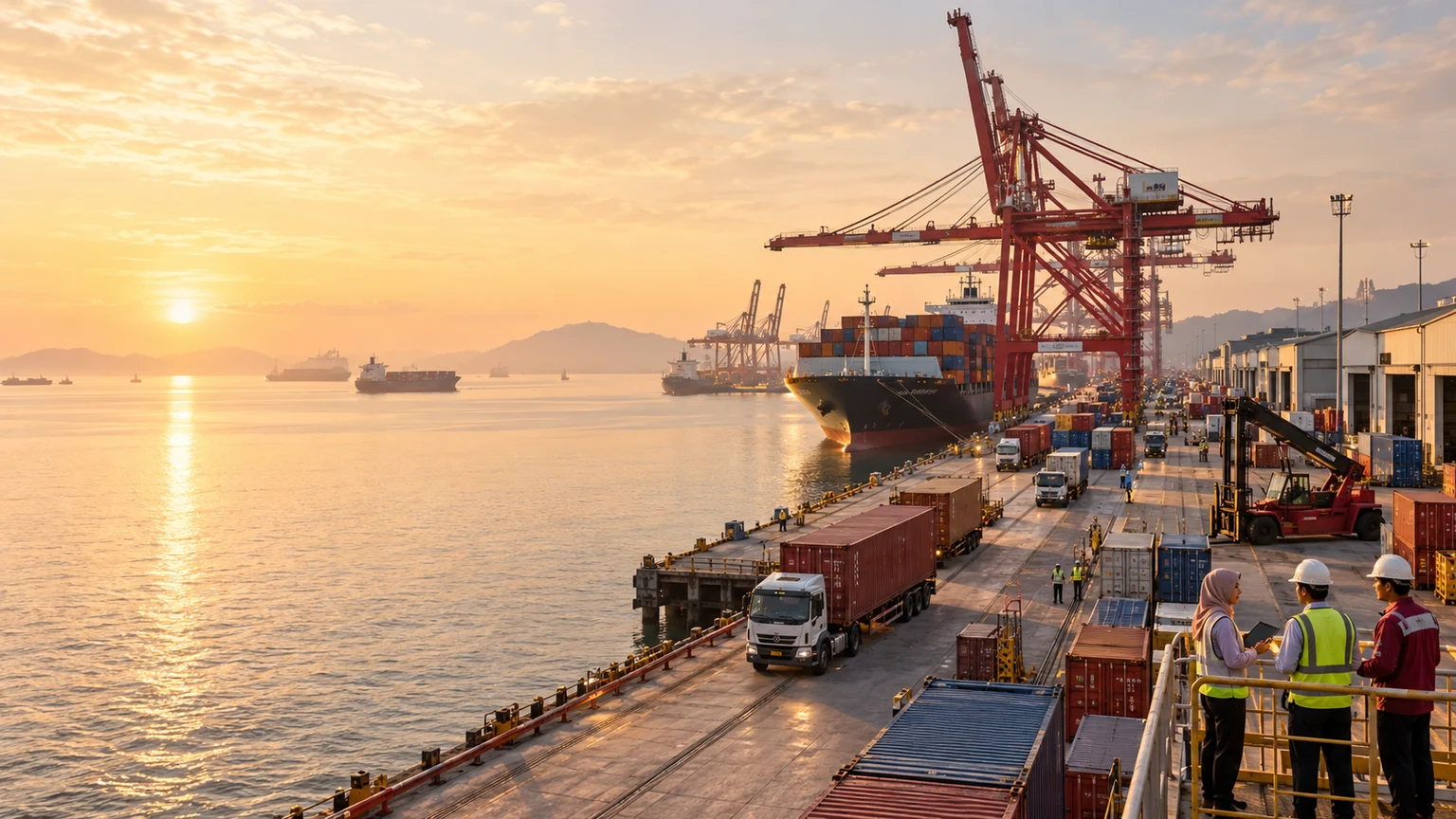
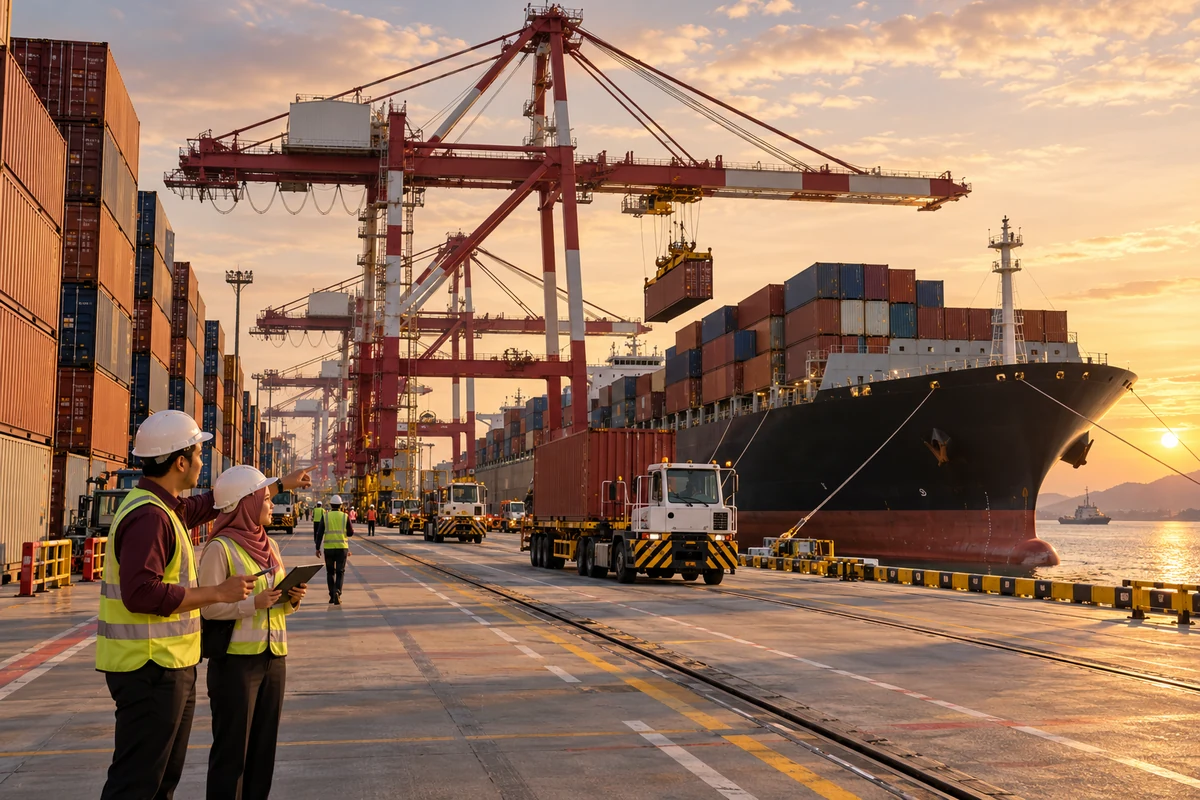
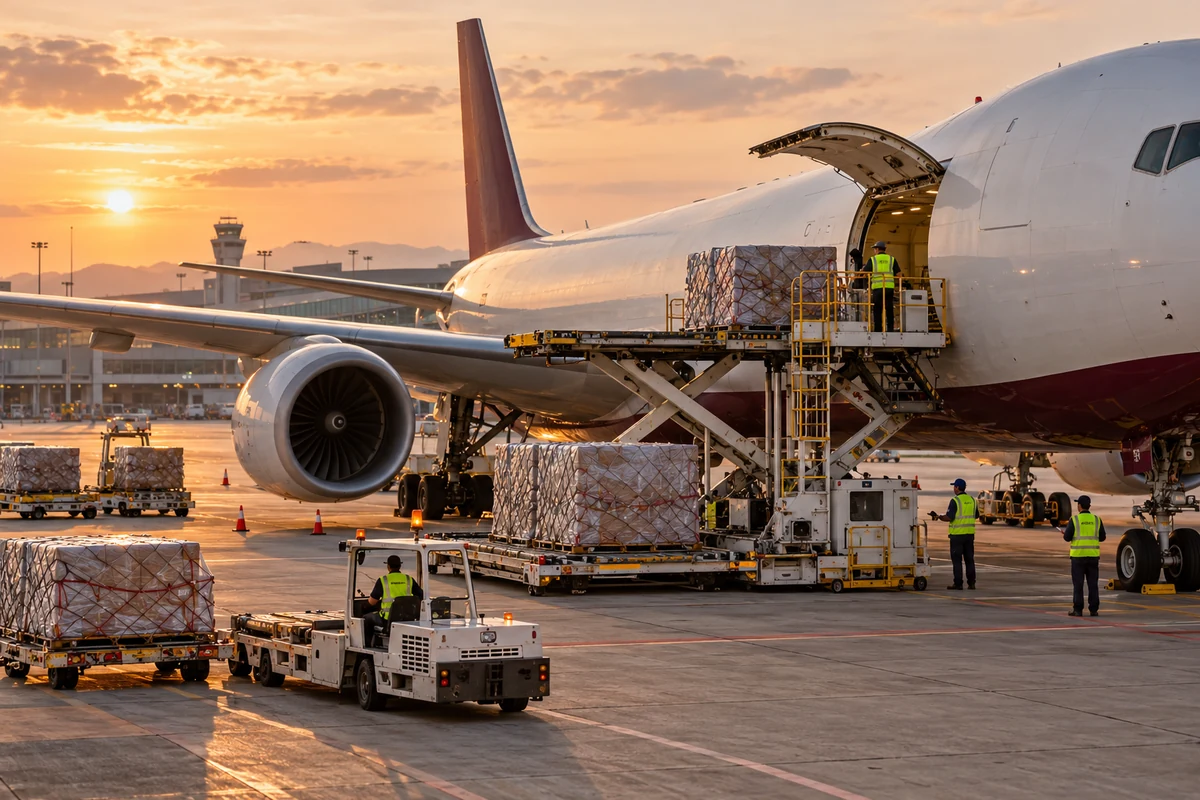
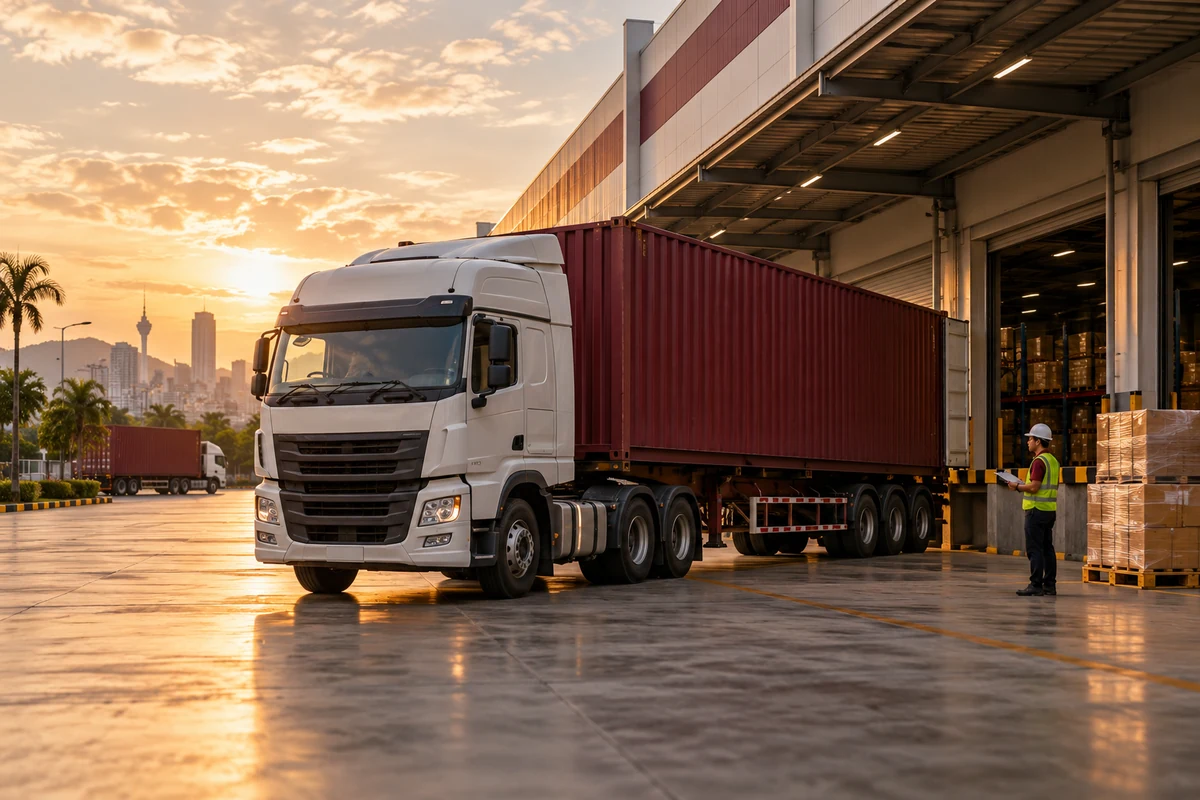
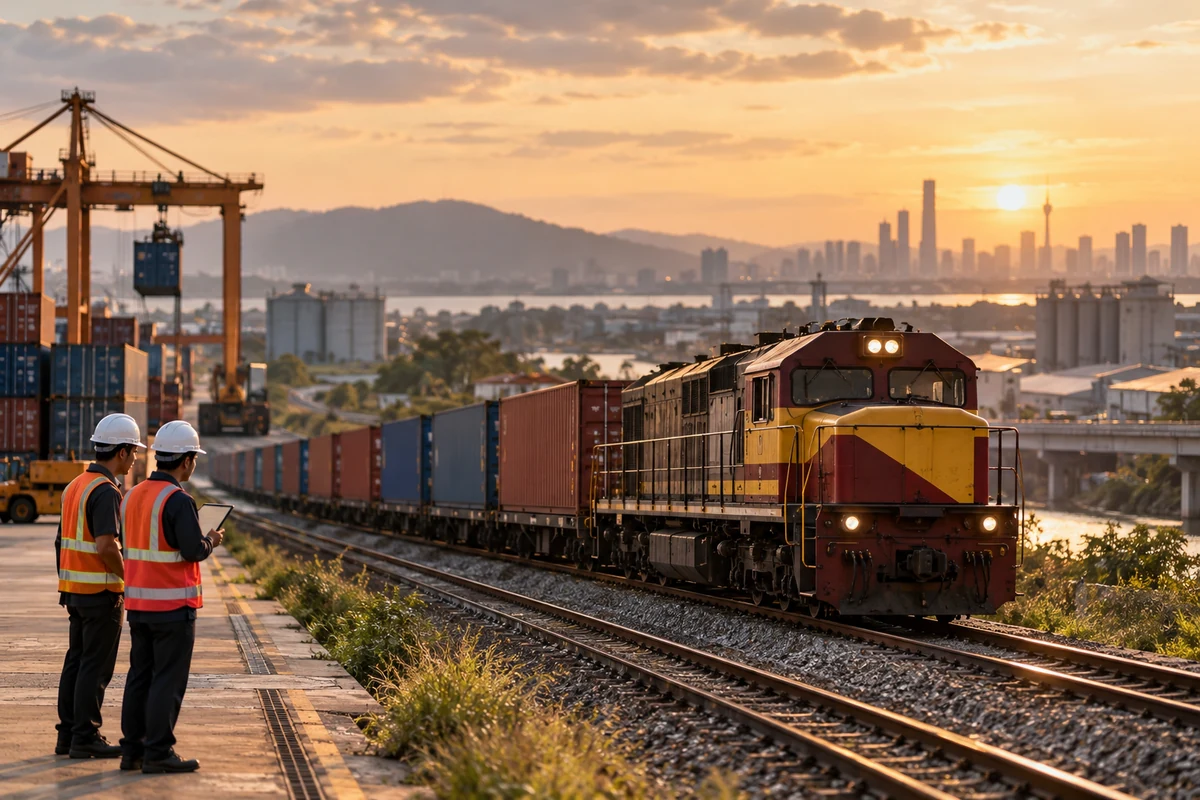
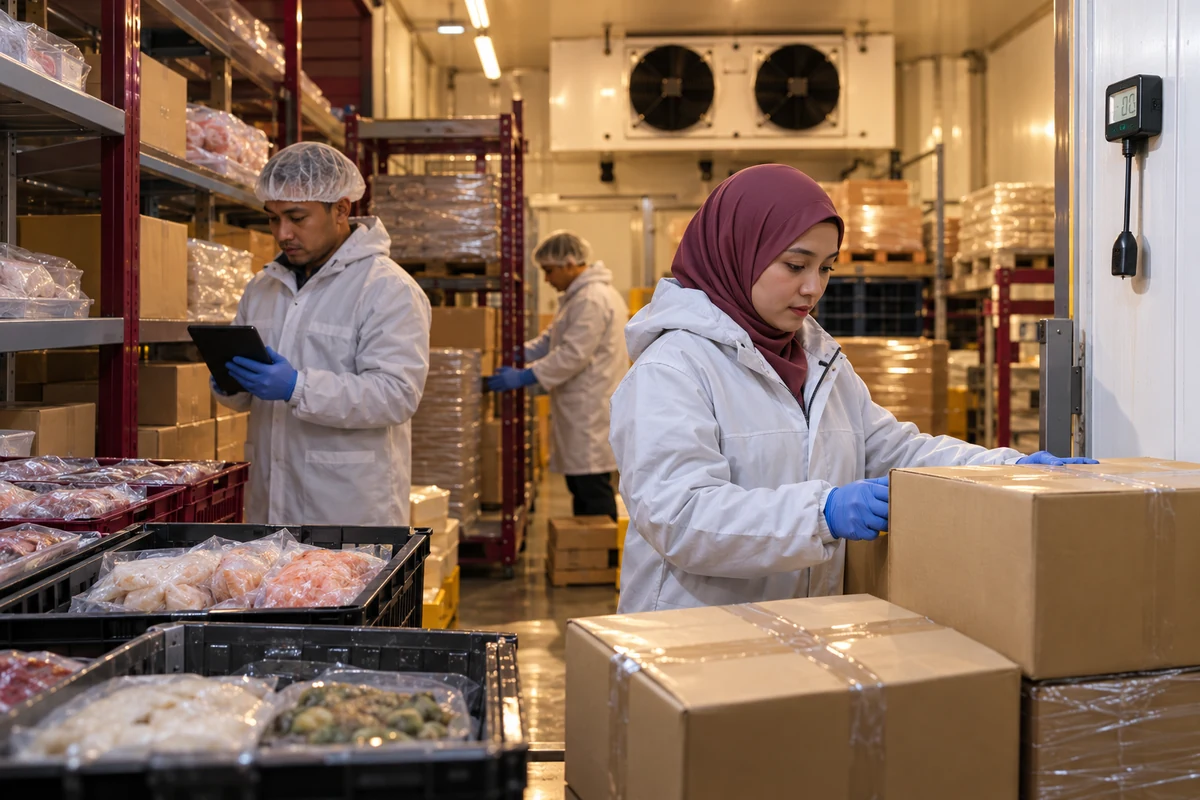
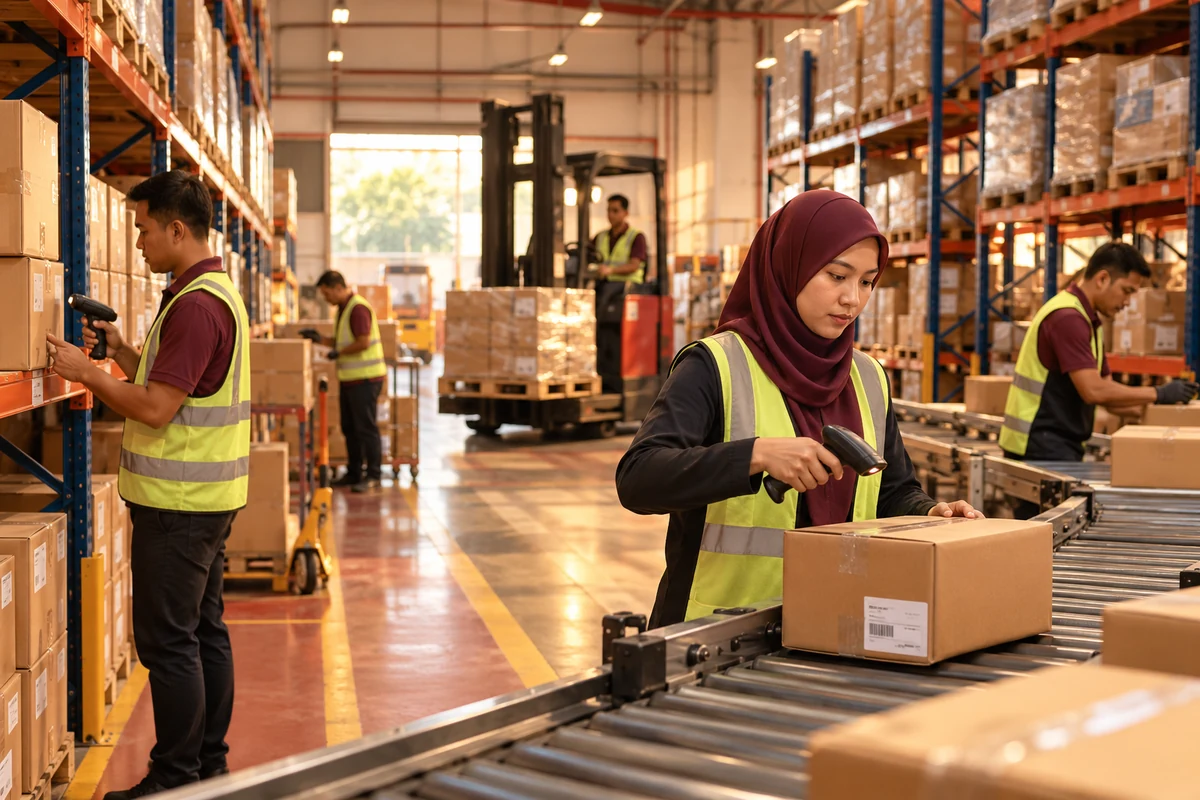
All twelve images on this page are editorial illustrations. None is a photograph of a named port, terminal, branded facility or actual event.
Checked 2026-10-14