
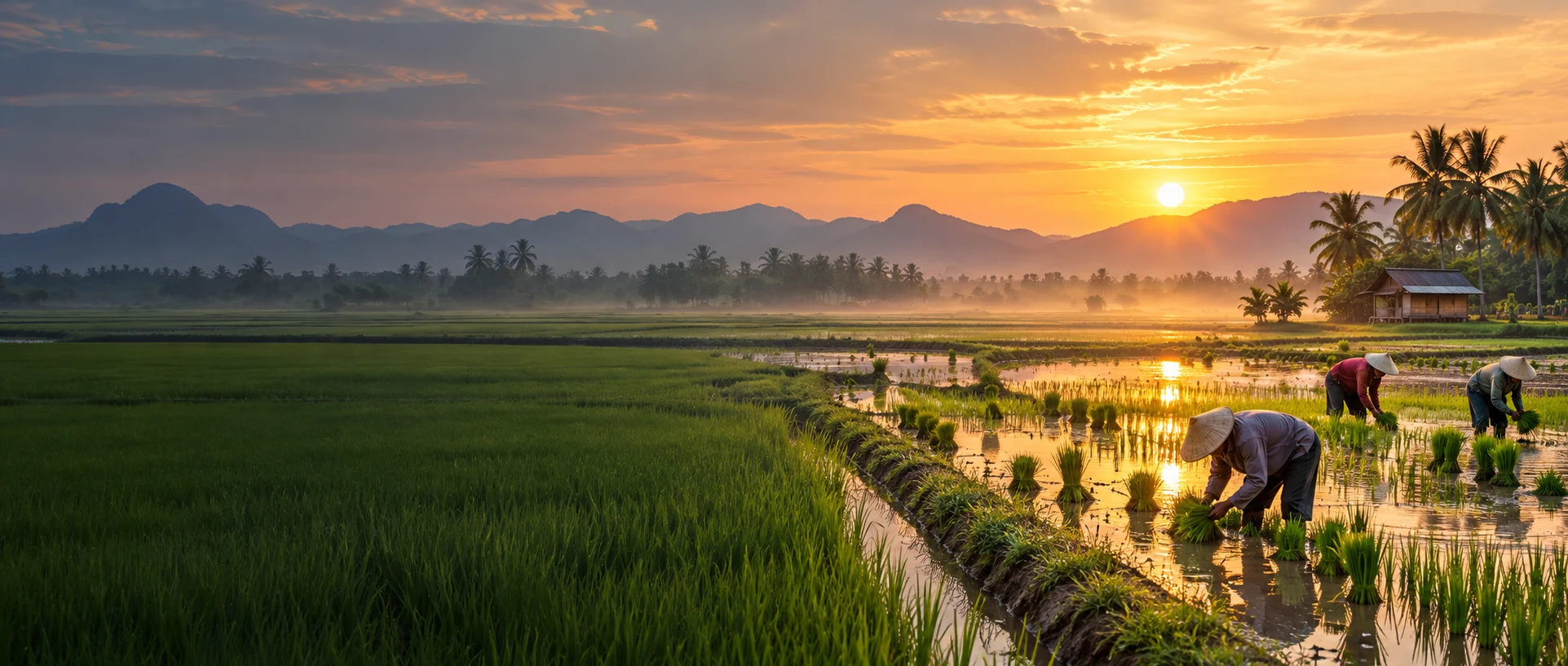
BUSINESS • MALAYSIA
Agriculture & Agritech
From tropical crops and essential food supply to precision farming, processing and global markets. Explore what Malaysia grows, makes and trades—and where your business can enter the value chain.
The True Malaysia is an independent information platform. Directory entries do not imply partnership, endorsement or approval.
Start Here
A connected agriculture economy
Malaysia combines plantation commodities, domestic food production, fisheries and downstream manufacturing. Farms supply mills, processors, ingredient makers, exporters and retailers; equipment, finance, research and logistics connect the stages. Choose a business model first, then test supply, buyers, permits and operating costs.
Stage 1
Grow & harvest
Crops, livestock, aquaculture and responsible capture fisheries.
Stage 2
Collect & move
Aggregation, grading, cold rooms and dependable delivery.
Stage 3
Process & add value
Milling, ingredients, safe food production and packaging.
Stage 4
Trade & innovate
Buyer specifications, export access, research and farm technology.
RM166.70 billion
Agriculture GDP
2025 · RM billion, current prices
Primary agriculture sector; excludes downstream food manufacturing and distribution.
8.2%
Share of total GDP
2025 · Percent, current prices
Calculated from agriculture RM166,704.156m ÷ total GDP RM2,025,379.140m ×100; same dataset revision.
2.2%
Real agriculture growth
2025 · Annual percent change
Constant2015-price series; real agriculture GDP RM106.35b, not comparable directly to current-price GDP.
1.735 million people
People engaged in agriculture
2023 reference year; Agriculture Census 2024 · Unique persons
780,329 active owners/partners +887,274 paid employees +67,866 unpaid family workers. Historical census stock; not new jobs created.
RM6.1 billion
Approved food-processing investment
2024 · RM billion approved
MIDA food-processing panel; manufacturing, not farming GDP.
5,839 potential jobs
Food-processing project opportunities
2024 · Potential job opportunities
Associated with approved projects; not confirmed realised employment.
How the share is derived. RM166.7 billion against RM2,025.4 billion gives 8.2%. 2025 current prices, DOSM annual nominal GDP series (p1 agriculture over p0 total). Real growth of 2.2% and real GDP of RM106.4 billion come from the constant 2015-price series and are separate measures — the three are never mixed or added.
What Malaysia Grows and Makes
Sector catalogue
14 sectors across plantation commodities, agrofood, livestock, fisheries and the inputs and services around them. Each card names where a business can enter and what to verify first.
Showing 14 of 14 sectors.
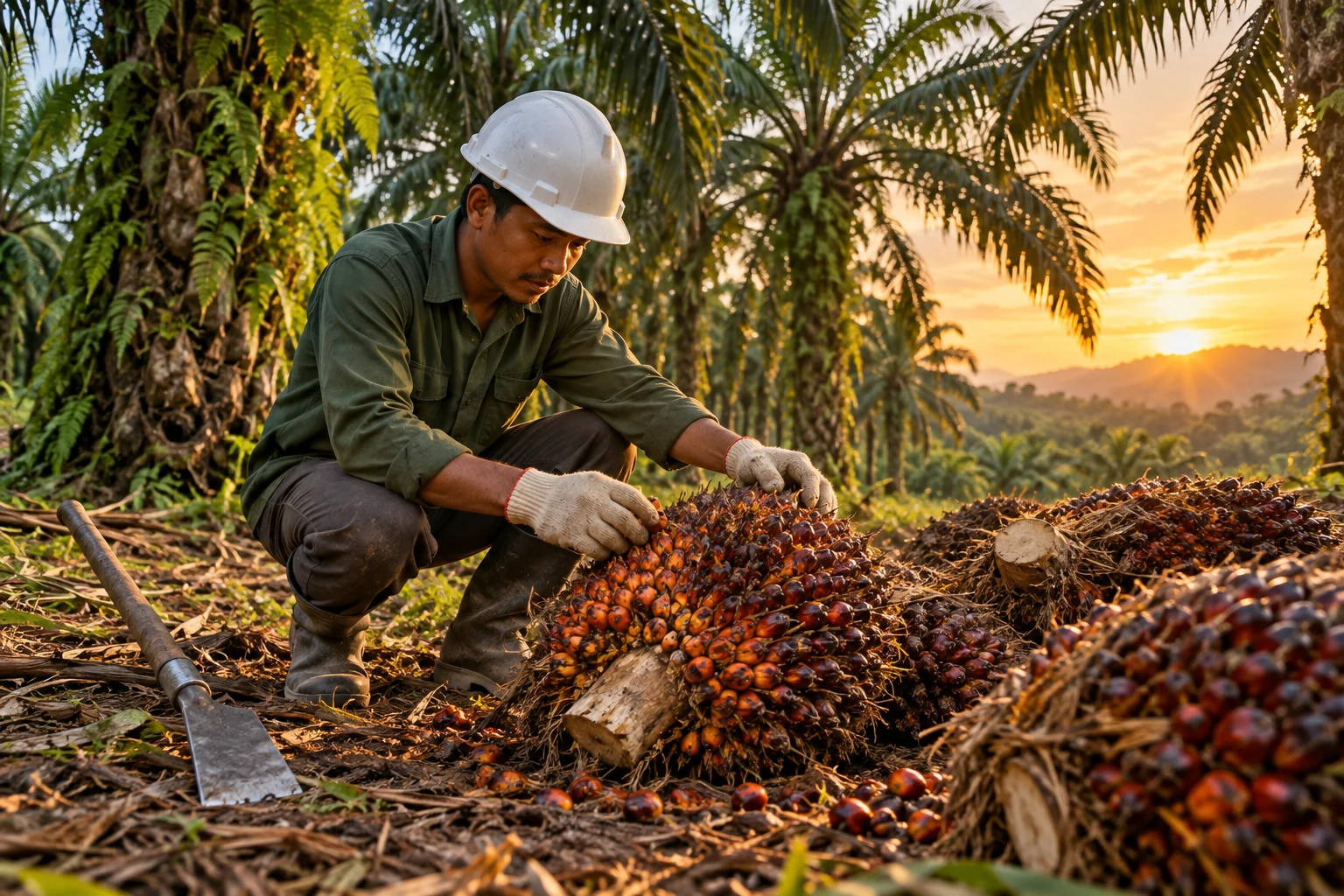
Oil palm & palm-based products
Plantation commodities
Fresh fruit bunches move through mills and refineries into oils, fats and industrial ingredients.
Where a business can enter: Mill equipment, traceable sourcing, maintenance and value-added ingredients.
Due diligence before you commit
Verify MPOB requirements, MSPO scope and buyer sustainability specifications.
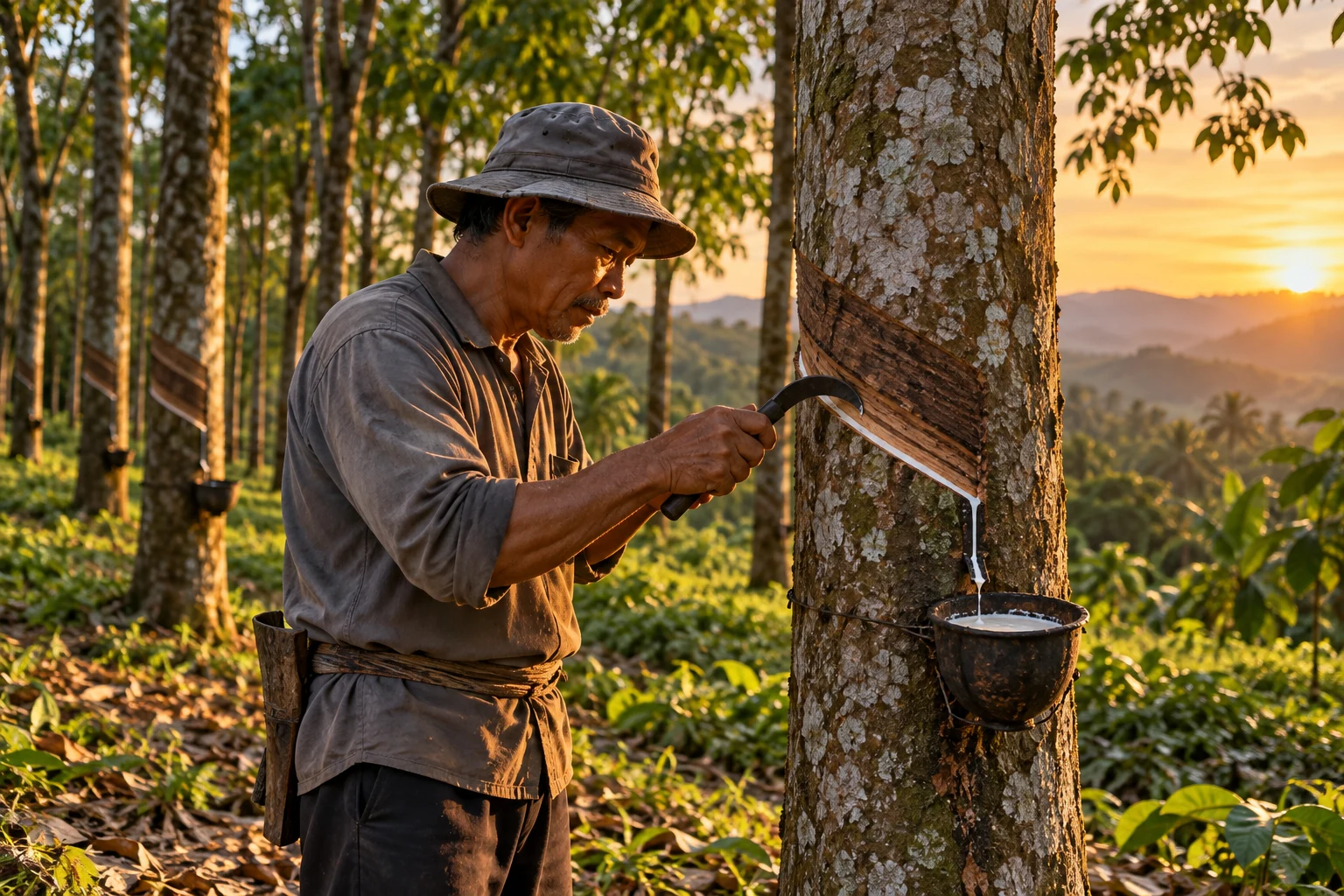
Rubber & downstream materials
Plantation commodities
Rubber cultivation connects to processing and material supply for industrial manufacturing.
Where a business can enter: Smallholder aggregation, quality control, processing equipment and specialist materials.
Due diligence before you commit
Natural rubber output, imported inputs and manufactured rubber goods are different markets.
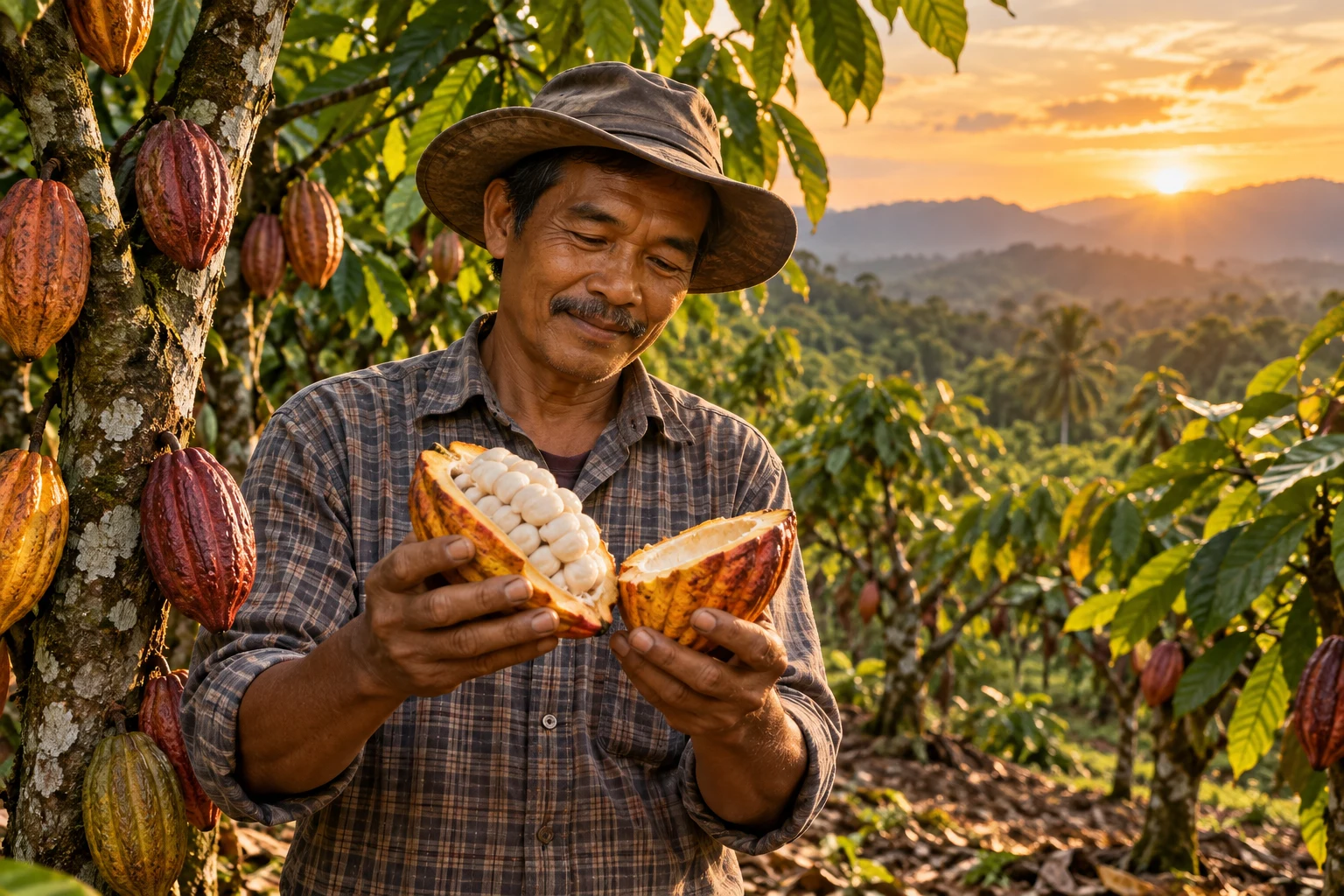
Cocoa & chocolate ingredients
Plantation commodities
Cocoa farming and post-harvest handling connect with grinding, ingredients and chocolate production.
Where a business can enter: Fermentation, drying, quality testing and specialty ingredients.
Due diligence before you commit
Processing capability does not establish that every bean is Malaysian-grown.
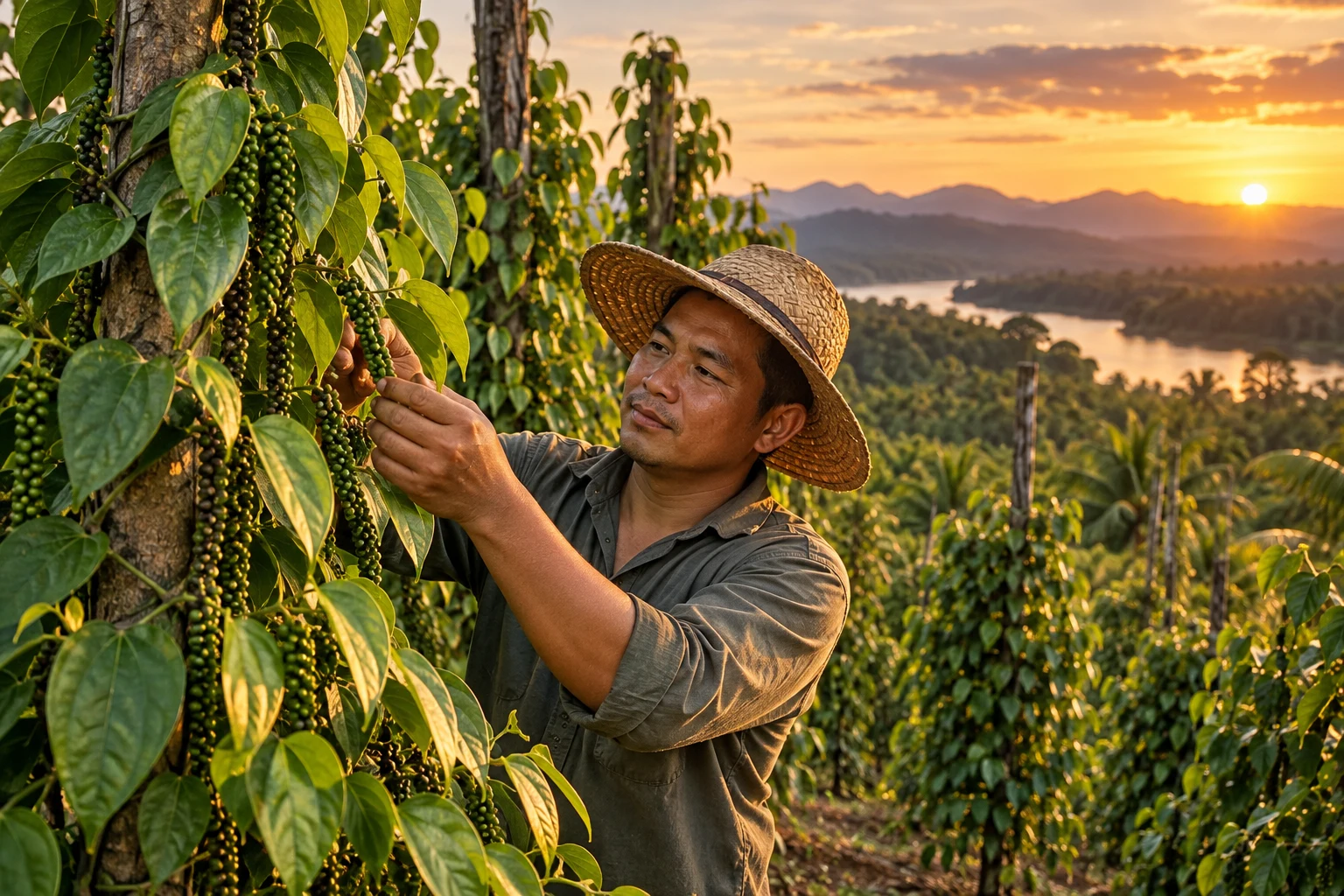
Pepper & specialty spices
Plantation commodities
Pepper supports a specialty-spice value chain with research, grading and market development.
Where a business can enter: Quality consistency, drying, traceability and packaged ingredients.
Due diligence before you commit
Match grade, contaminants, food safety and destination requirements.
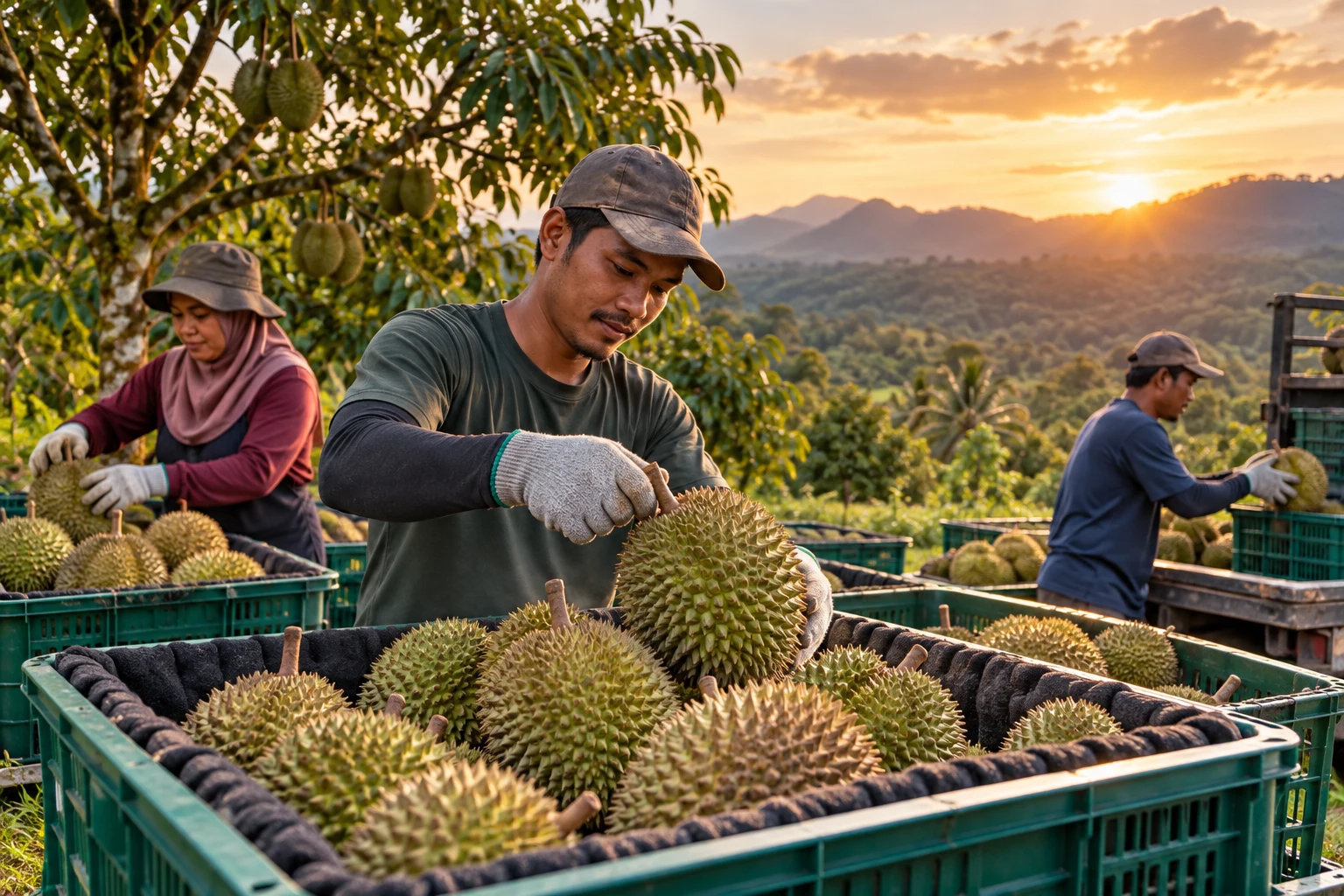
Durian & tropical fruit
Agrofood
Orchards supply fresh-fruit markets and processing businesses.
Where a business can enter: Orchard services, post-harvest handling, packing and processed fruit.
Due diligence before you commit
Fresh durian access to China is protocol-specific; verify approved orchard and packing routes.
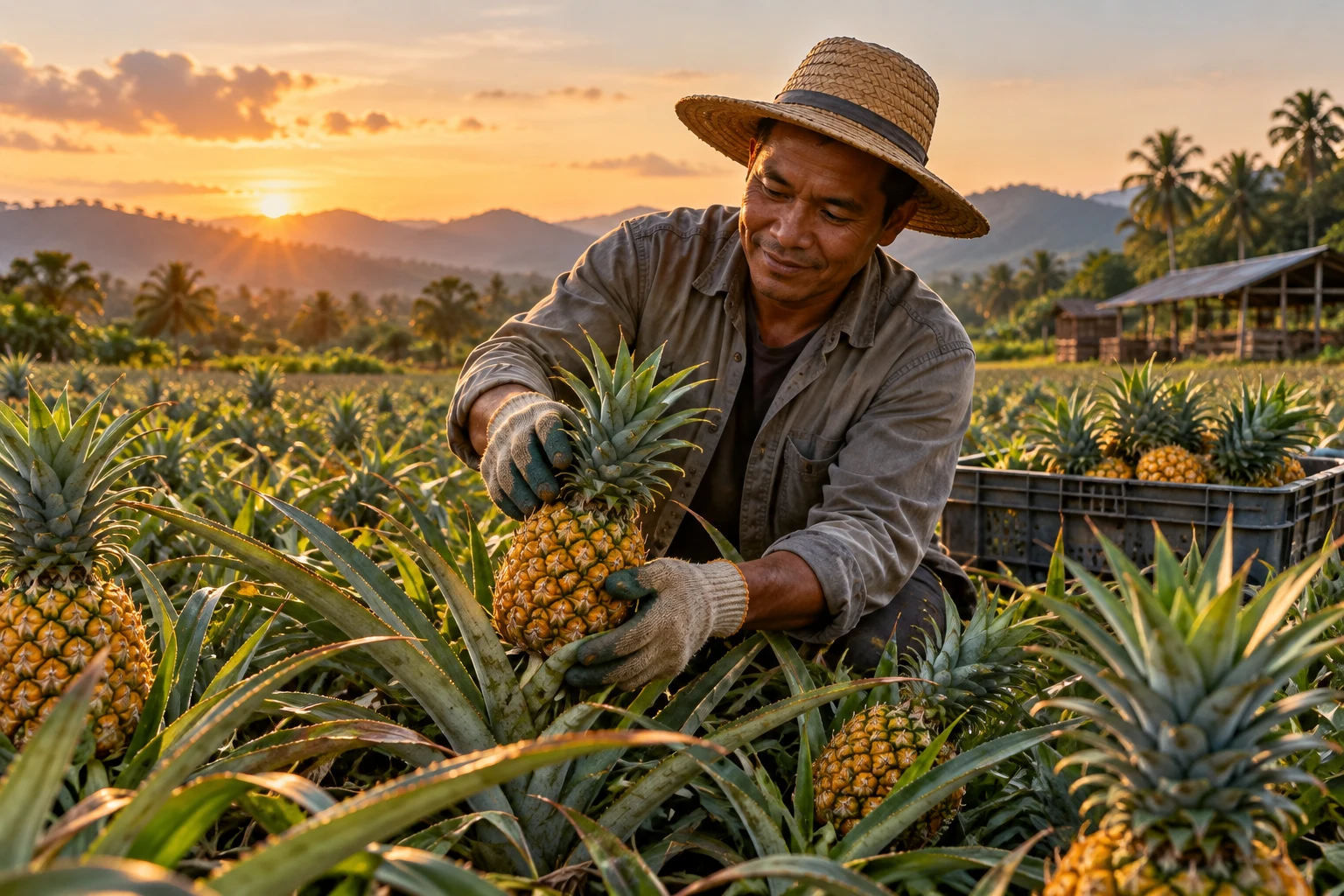
Pineapple
Agrofood
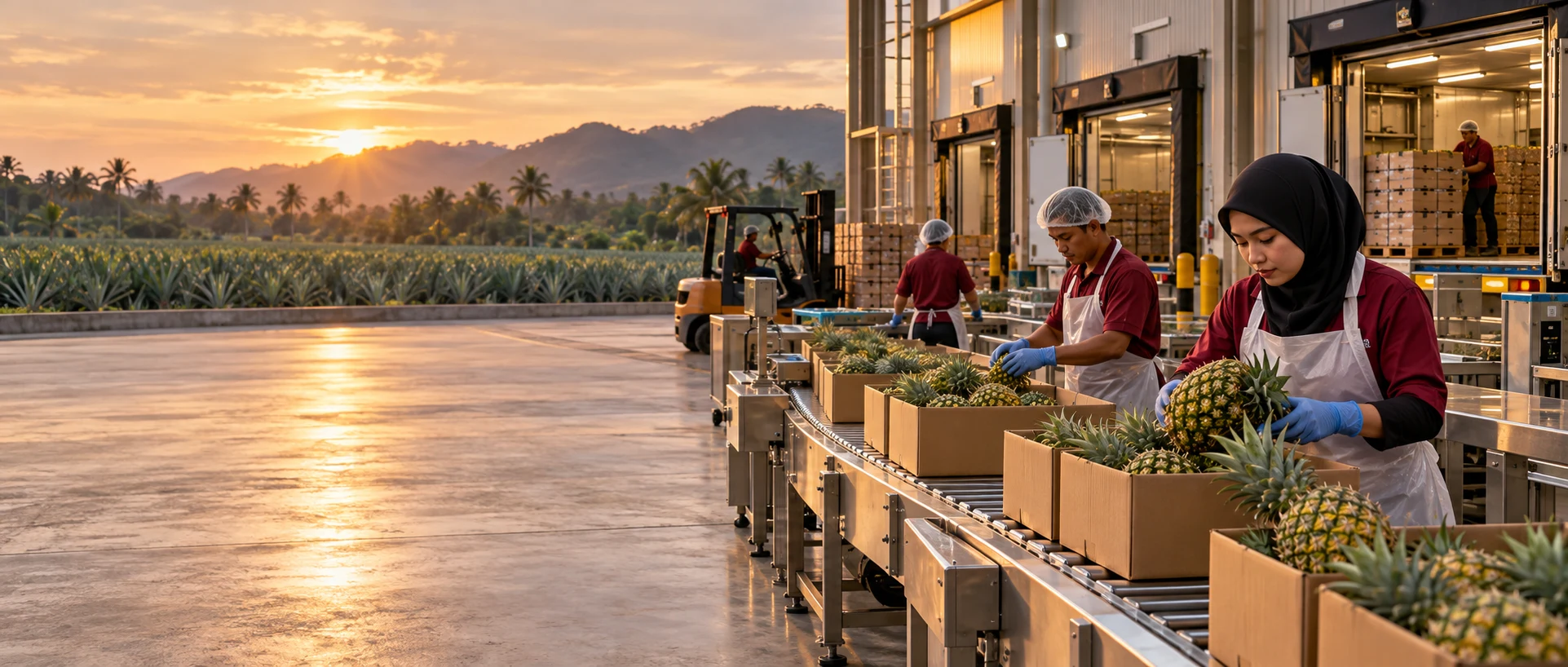
Fresh fruit and processed pineapple connect farms to packers, manufacturers and buyers.
Where a business can enter: Planting material, grading, packing, cold chain and food ingredients.
Due diligence before you commit
Work with MPIB on relevant technical and licensing requirements.
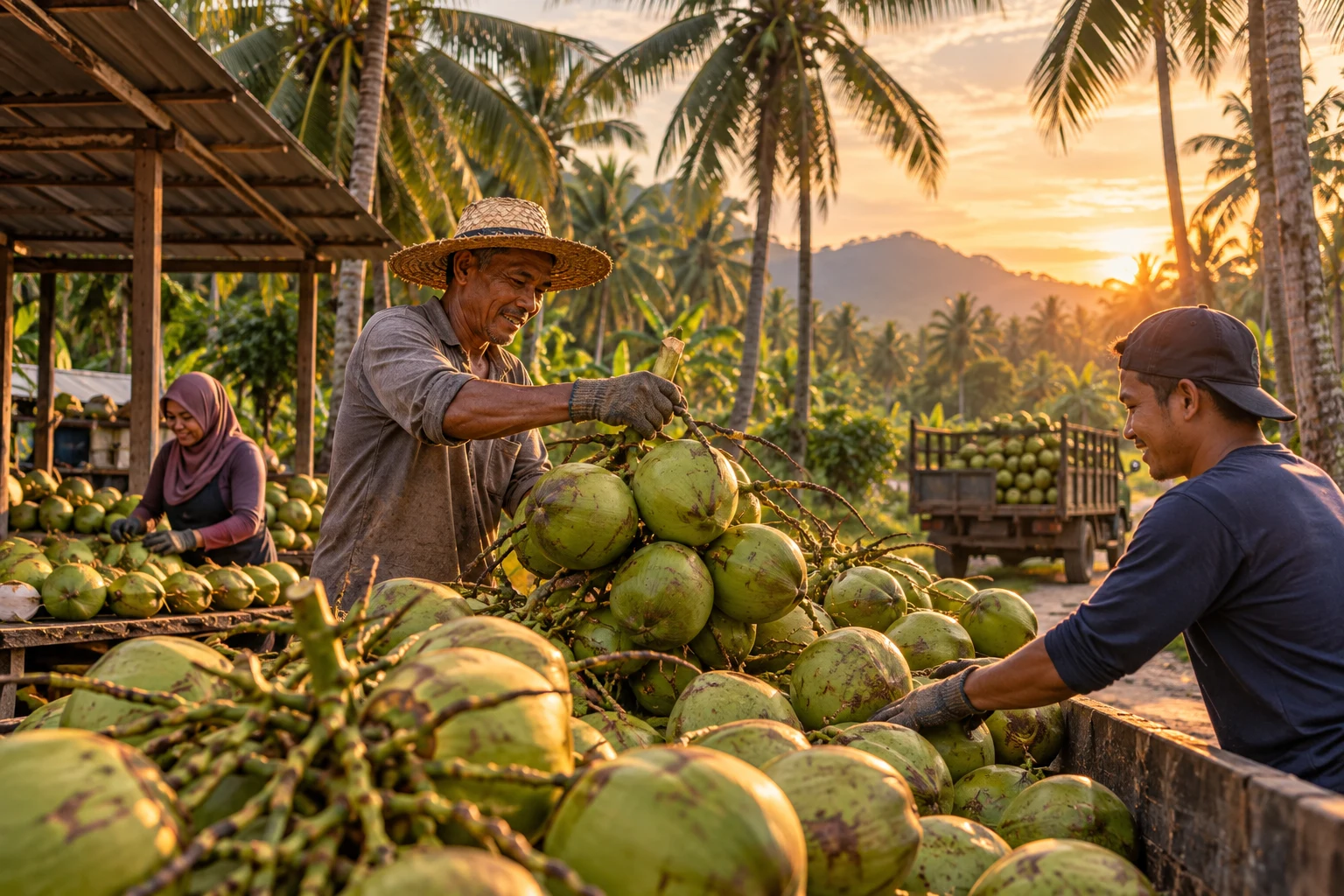
Coconut
Agrofood
Domestic coconut production and imports support fresh and processed uses.
Where a business can enter: Quality planting material, aggregation, processing and dependable supply.
Due diligence before you commit
Do not assume import substitution is commercially viable without cost and demand testing.
Vegetables & protected cultivation
Agrofood
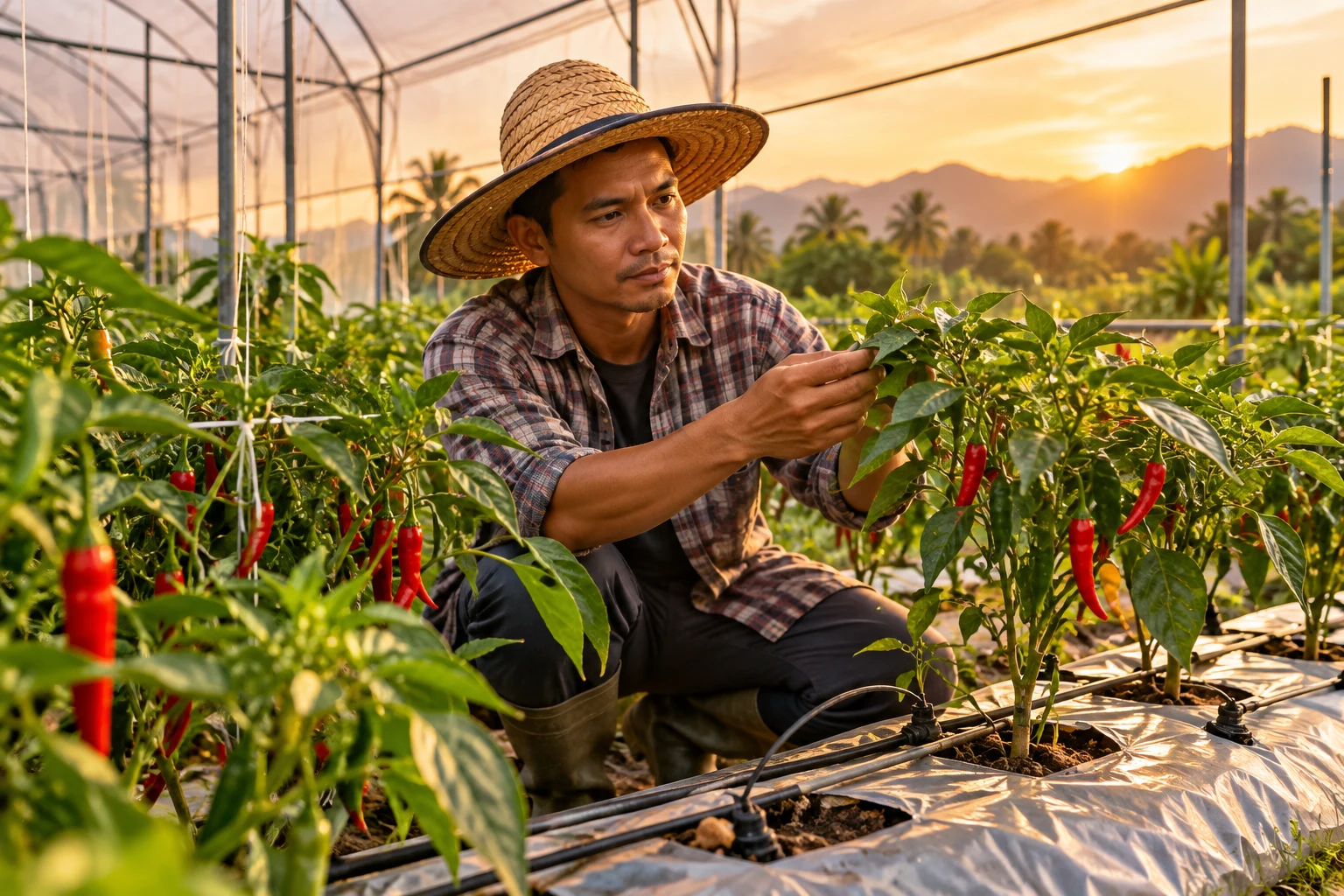
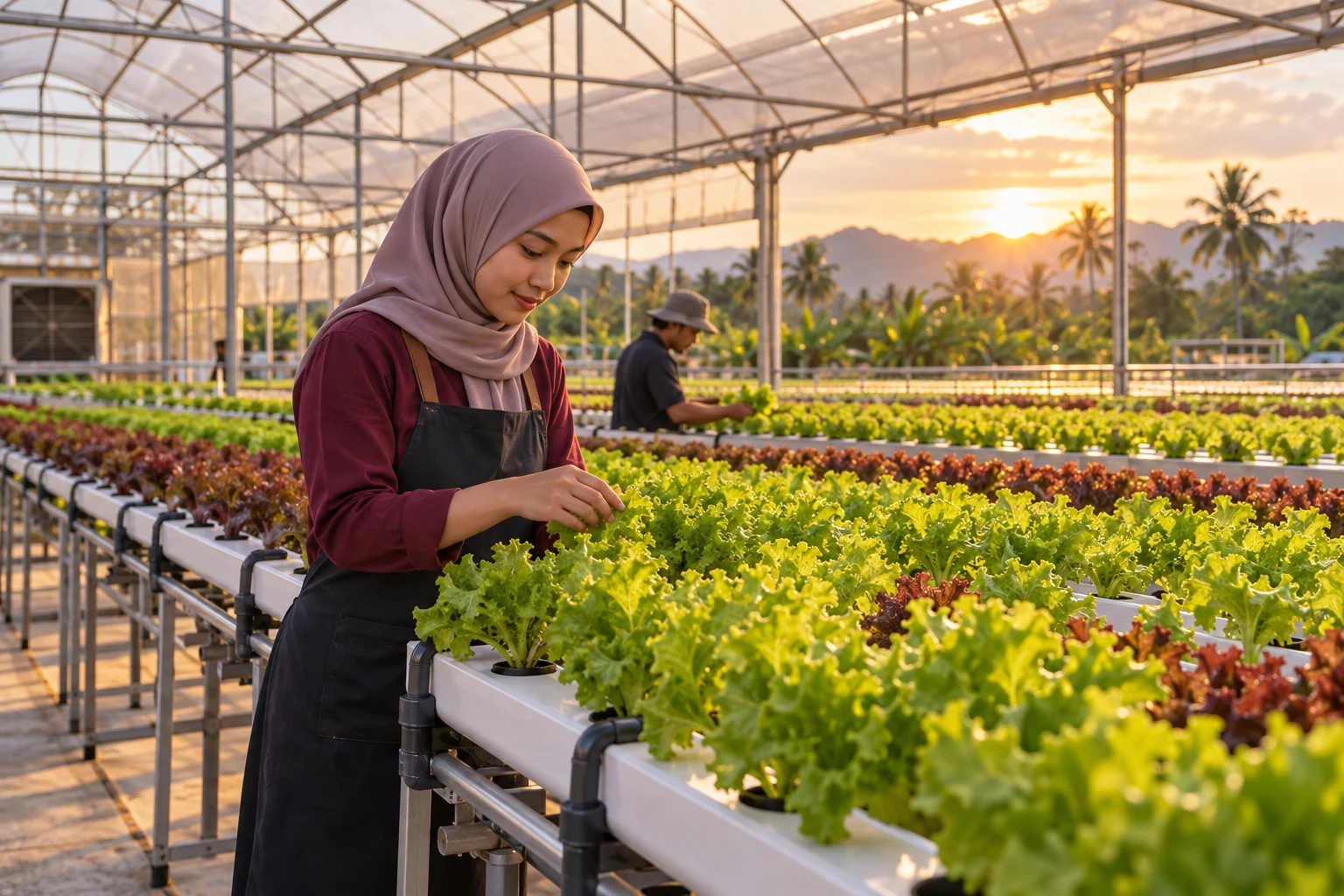
Vegetables require consistent crop planning, pest management and rapid delivery.
Where a business can enter: Fertigation, protected structures, grower networks and institutional supply.
Due diligence before you commit
Check water, heat, pest pressure and buyer specifications before choosing technology.
Paddy & rice
Agrofood
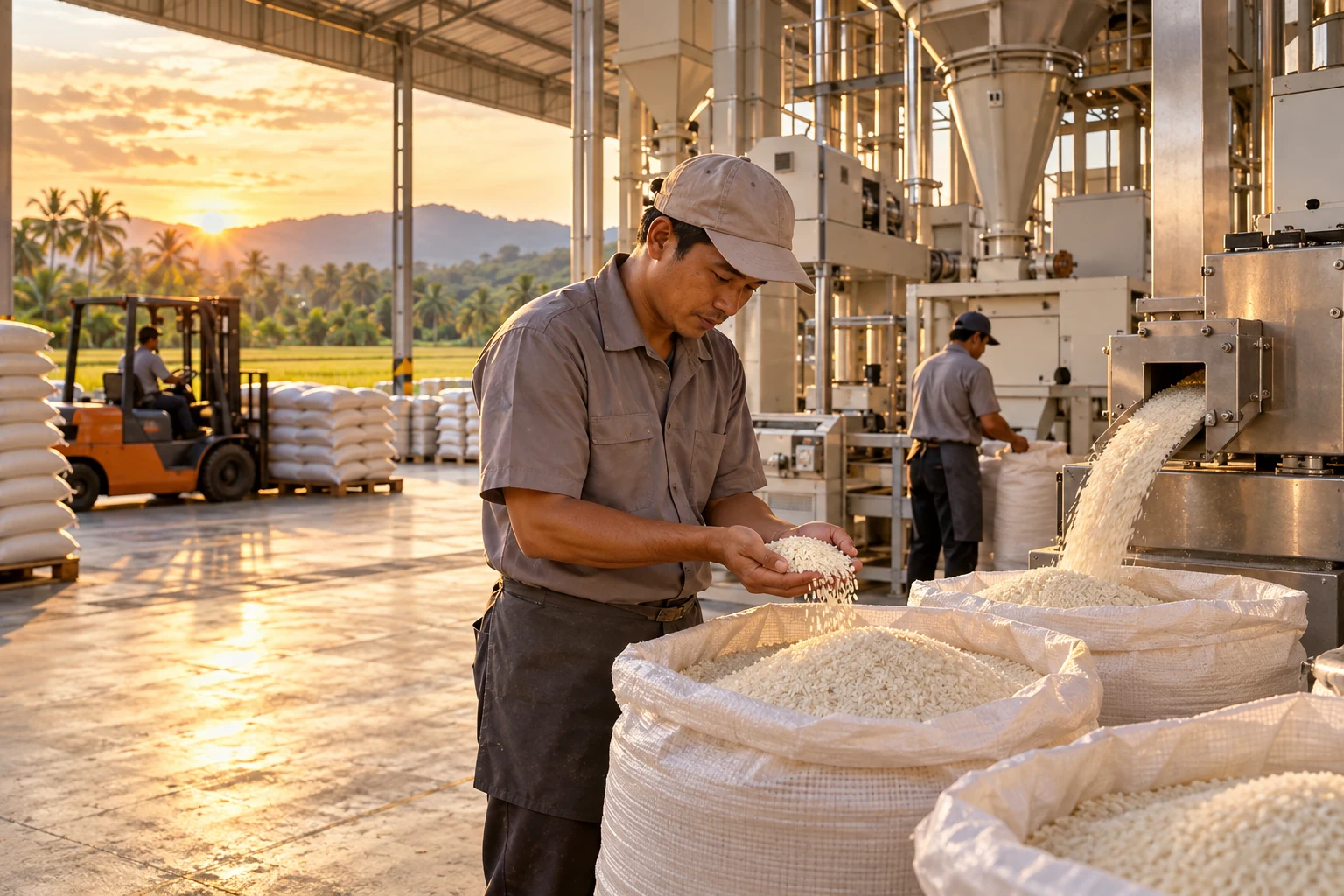
Paddy production connects irrigation, harvesting, drying, milling and rice distribution.
Where a business can enter: Mechanisation, drying efficiency, storage, mill maintenance and precision water management.
Due diligence before you commit
Paddy and milled rice are different quantities; rice import rules require separate verification.
Poultry & eggs
Livestock
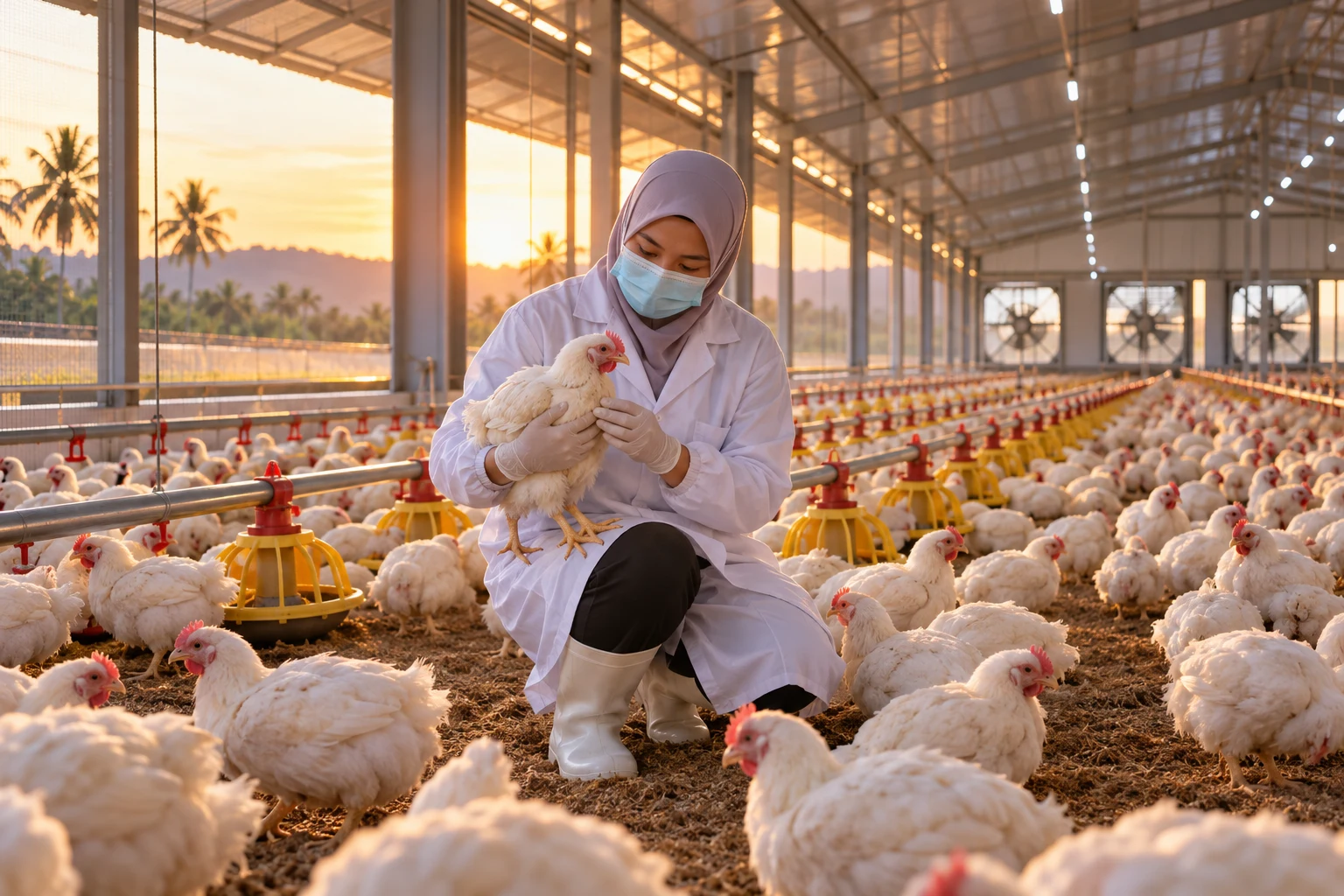
Farms, feed suppliers, veterinary services and processors form an integrated food chain.
Where a business can enter: Biosecurity, housing efficiency, feed management and safe processing.
Due diligence before you commit
Confirm veterinary controls and product-specific halal status where required.
Dairy & ruminants
Livestock
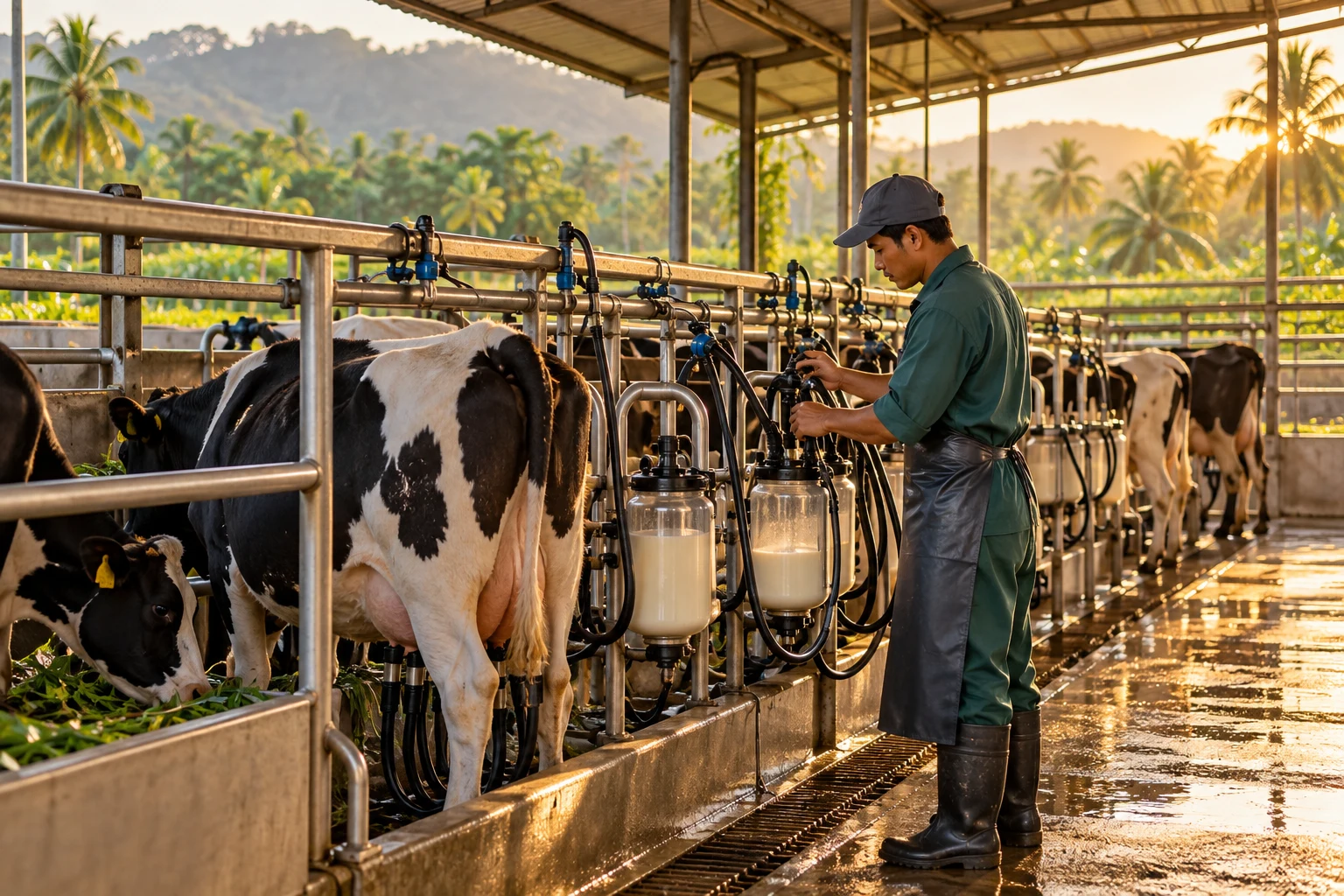
Milk and ruminant production connect breeding, animal health, feed, chilling and processing.
Where a business can enter: Milk collection, feed efficiency, herd services and cold-chain support.
Due diligence before you commit
Animal imports, welfare, disease controls and processing approvals are separate checks.
Aquaculture
Fisheries
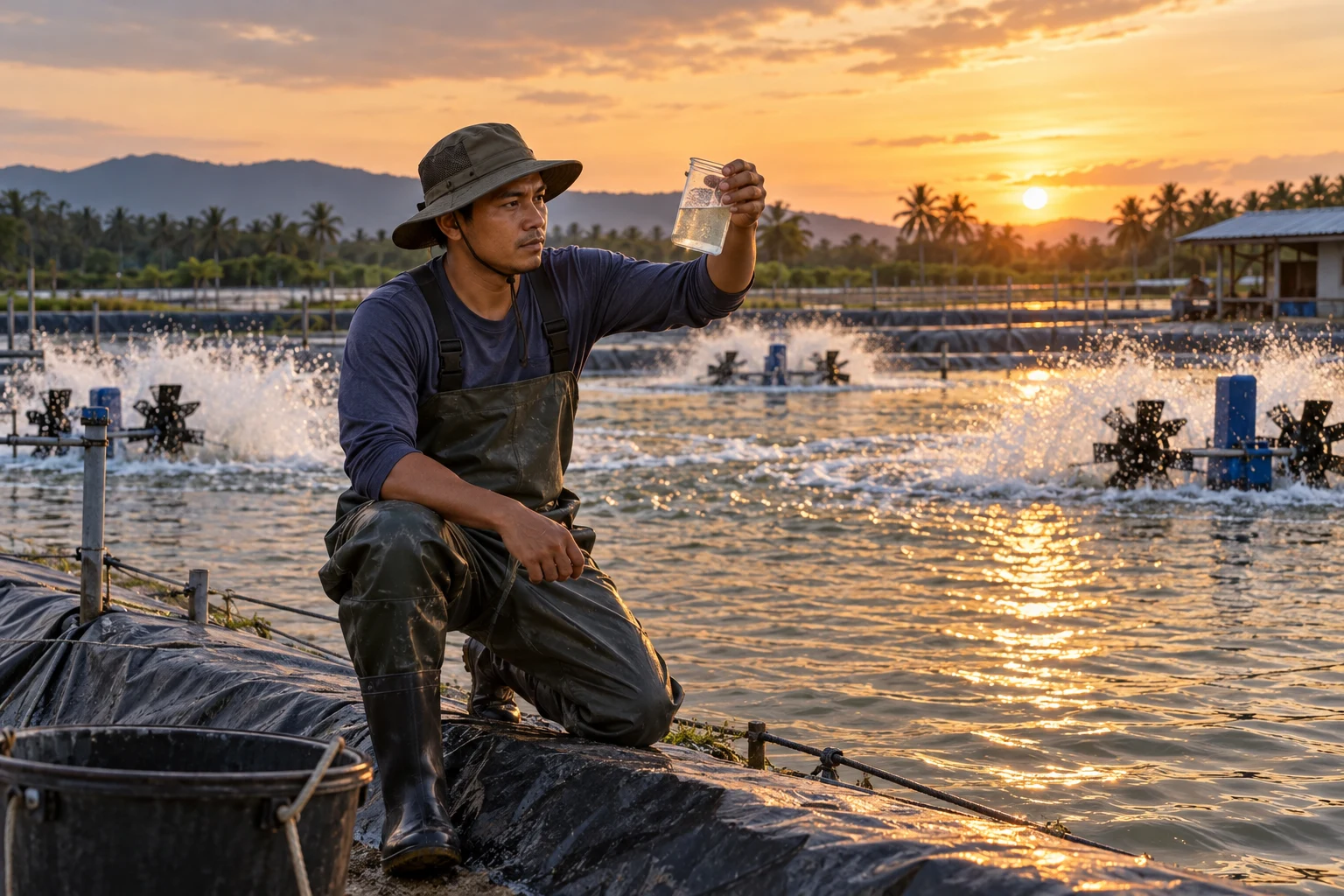
Aquaculture needs suitable sites, healthy stock, feed and reliable water management.
Where a business can enter: Hatchery systems, sensors, feed efficiency and chilled seafood distribution.
Due diligence before you commit
Check fisheries, state site approvals and water-quality requirements before investment.
Fisheries & seafood
Fisheries
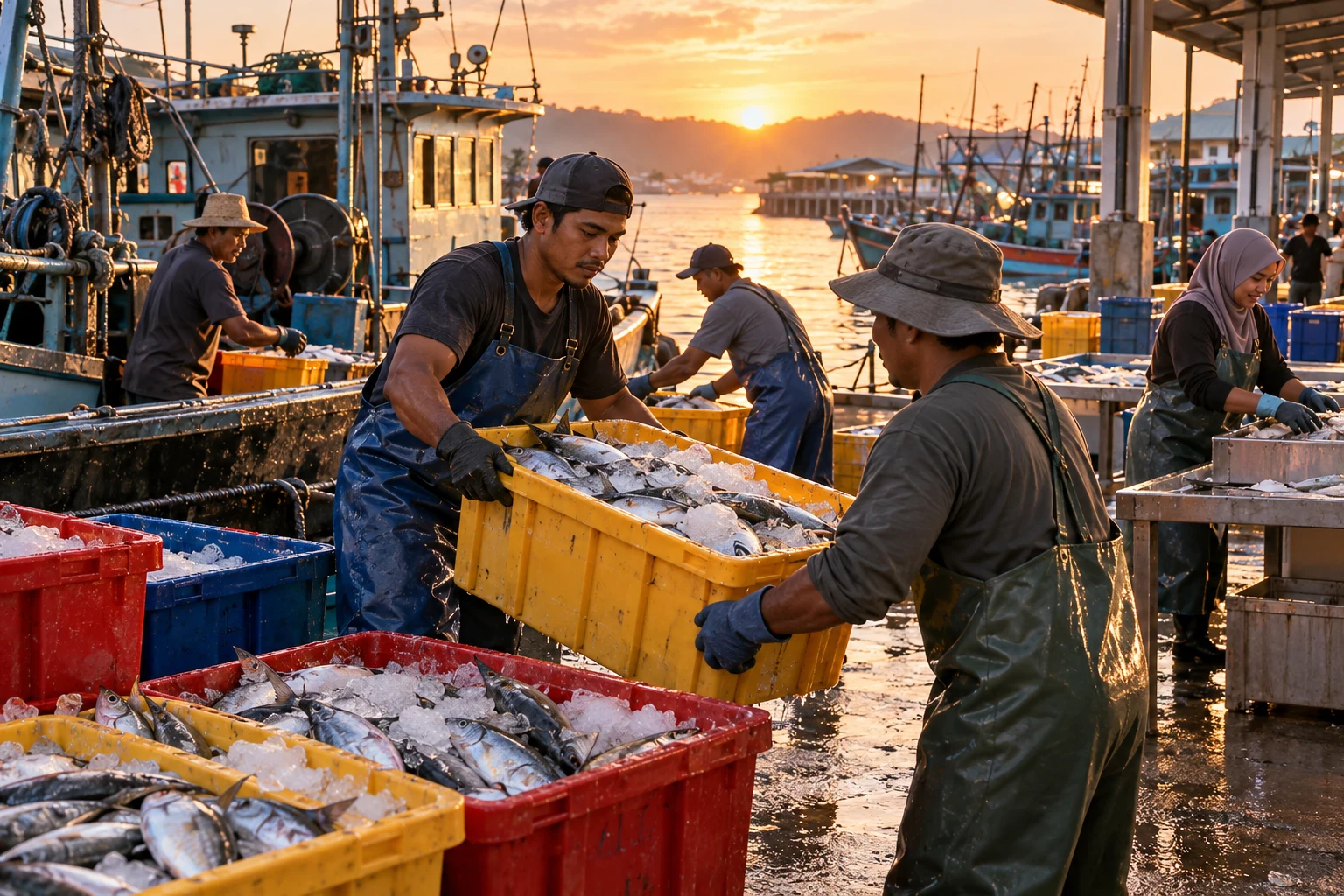
Capture fisheries connect landing, ice, handling, distribution and seafood processing.
Where a business can enter: Cold chain, grading, traceability and processing yields.
Due diligence before you commit
Development support is distinct from fishing and vessel permissions.
Feed & agricultural inputs
Inputs & services
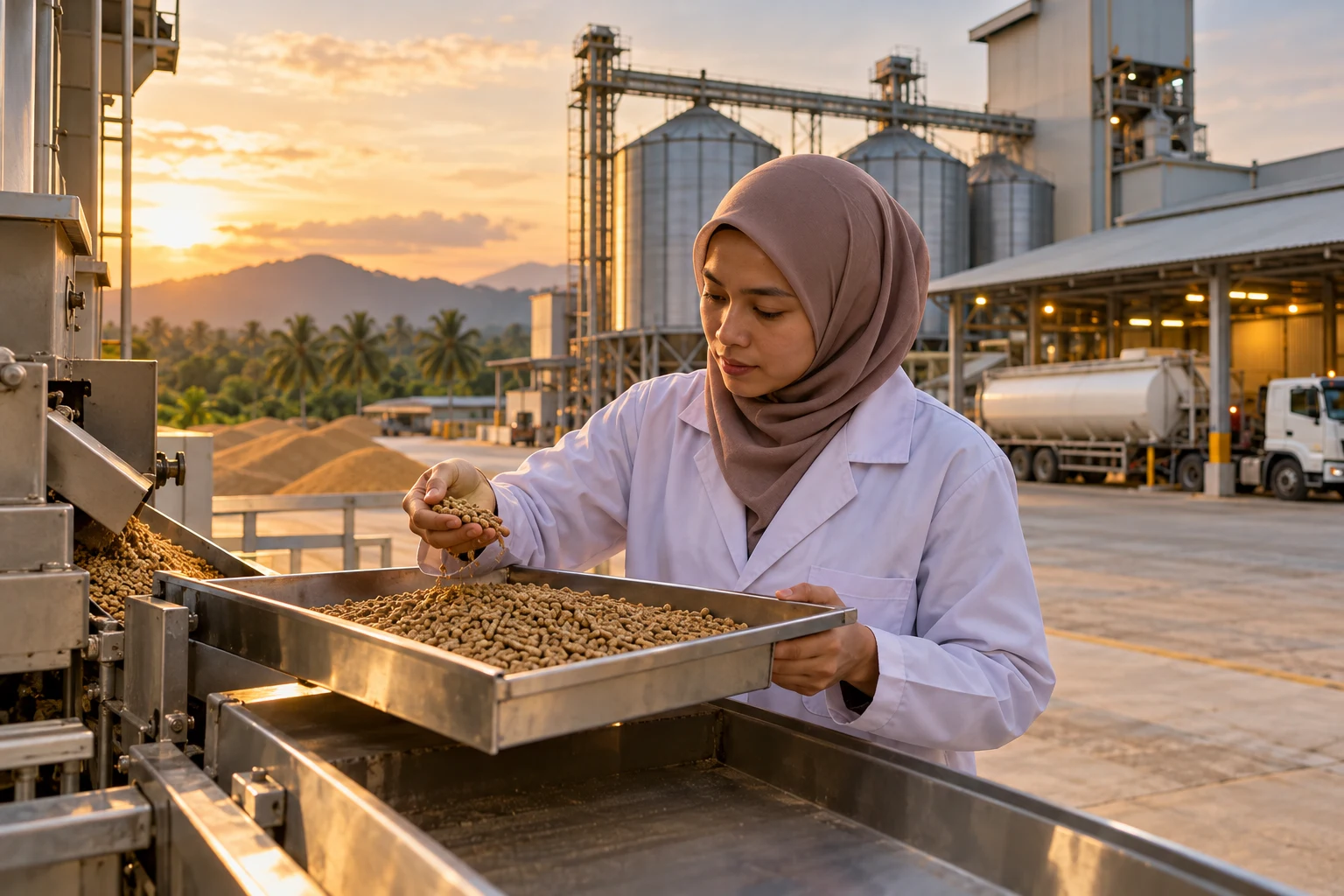
Feed milling and imported ingredients underpin livestock production.
Where a business can enter: Formulation, storage, raw-material risk management and quality testing.
Due diligence before you commit
Soya oilcake imports are not all feed; validate input standards and classification.














Trade
Export intelligence: start with the product
Trade figures answer different questions. Use the correct product scope, year and unit; physical shipments and export earnings cannot be combined into one total. Then check the destination’s access rules, specifications and landed costs.
20.28 million tonnes
Crude palm oil production
2025 · tonnes
15.27 million tonnes
Palm oil exports
2025 · million tonnes, rounded as published
RM84.2 billion
Palm oil and palm-oil-based agricultural product exports
2025 · RM billion
Selected palm export destinations by value
| Destination | RM billion | Relative size |
|---|---|---|
| India | 11.8 | |
| China | 6.2 | |
| Kenya | 5.3 | |
| Netherlands | 4.7 | |
| Türkiye | 4.1 |
Selected 2025 export destinations by value for the MITI product category; not rankings by tonnage. Source T4.
Selected physical commodities, 2025
| Product | Year | Production (t) | Imports (t) | Exports (t) | Source |
|---|---|---|---|---|---|
| Durian | 2025 | 600,319 | 11,847 | 35,316 | T1 — DOSM supply and utilization accounts 2025 (opens in a new tab) |
| Pineapple | 2025 | 556,187 | 810 | 10,712 | T1 — DOSM supply and utilization accounts 2025 (opens in a new tab) |
| Coconut | 2025 | 702,199 | 271,285 | 9,259 | T1 — DOSM supply and utilization accounts 2025 (opens in a new tab) |
| Chilli | 2025 | 40,979 | 77,893 | 4,087 | T1 — DOSM supply and utilization accounts 2025 (opens in a new tab) |
| Round cabbage | 2025 | 126,004 | 175,369 | 4,351 | T1 — DOSM supply and utilization accounts 2025 (opens in a new tab) |
| Tomato | 2025 | 308,669 | 9,775 | 36,365 | T1 — DOSM supply and utilization accounts 2025 (opens in a new tab) |
| Papaya | 2025 | 57,617 | 608 | 14,685 | T1 — DOSM supply and utilization accounts 2025 (opens in a new tab) |
| Rice (provisional) | 2025 | 1,433,800 | 1,355,000 | Not reported in selected table | T1 — DOSM supply and utilization accounts 2025 (opens in a new tab) |
2025 SUA quantities in tonnes. Rice is milled rice; its figures are provisional. A missing rice export value is null, not zero. This selected table is not the whole agriculture trade balance.
Working through an export
- 1.Define the exact product and destination.
- 2.Verify HS classification and tariff treatment with Customs and the applicable MITI agreement resource.
- 3.Check MAQIS, DOA, DVS or DOF requirements and destination sanitary or phytosanitary conditions.
- 4.Validate buyer specifications, packaging, shelf life, handling and commercial documents.
- 5.Cost the shipment including testing, permits, cold chain, insurance and payment terms.
T1 — DOSM supply and utilization accounts 2025 (opens in a new tab)T3 — MPOB overview 2025 (opens in a new tab)T4 — MITI Trade and Economic Information Q4 2025 (opens in a new tab)MAQ — MAQIS permits (opens in a new tab)PHY — DOA phytosanitary information (opens in a new tab)FTA — MITI FTA portal (opens in a new tab)CUS — Royal Malaysian Customs (opens in a new tab)
Supply Gaps
Import dependence and business opportunities
Domestic supply gaps can support sourcing, production and service opportunities. They also expose businesses to feed prices, exchange rates, disease and logistics disruption. Test the local cost base and buyer demand before selecting an import-substitution model.
| Product | Self-sufficiency ratio | Year | Source |
|---|---|---|---|
| Rice | 54.3% | 2025 | |
| Chilli | 35.7% | 2025 | |
| Coconut | 72.8% | 2025 | |
| Beef | 18.4% | 2025 | |
| Fresh milk | 81.8% | 2025 | |
| Chicken eggs | 108.6% | 2025 |
Reading a self-sufficiency ratio. Self-sufficiency ratio measures domestic production relative to domestic availability. It is not an import share. A ratio above100% can coexist with imports. Do not calculate import dependence as 100 minus SSR.
Two selected imported inputs
Wheat and meslin
HS 1001 · HS1988/92 H0 · 2024
- Import value
- USD 531m
- Quantity
- 1,687,830 t
Selected partners by value
- AustraliaUSD 255.4m
- CanadaUSD 119.6m
- UkraineUSD 63.5m
Soybean oilcake and other solid residues
HS 230400 · HS1988/92 H0 · 2024
- Import value
- USD 672.7m
- Quantity
- 1,386,650 t
Selected partners by value
- ArgentinaUSD 626.8m
- United StatesUSD 25.1m
- ChinaUSD 13.1m
Gross imports reported through WITS/UN Comtrade. USD values converted from thousands of USD; tonnes from kg. Selected inputs, not the total food import bill; historical HS codes are not today’s full Malaysian declaration codes.
Where a supply gap could become a business
- Protected vegetable cultivation with verified operating economics.
- Dependable coconut and dairy supply, collection and processing.
- Feed efficiency, ingredient storage and procurement diversification.
- Cold rooms, packhouses and transport that reduce rejection and spoilage.
These are editorial observations drawn from the ratios and import rows above, not forecasts, and not guaranteed outcomes.
Where to Look
Choose a location around the operating model
These are planning lenses, not an official ranking or exhaustive production map. Confirm district-level crop supply, land status, water, labour and access with the relevant state and technical agencies.
Kedah & Perlis
Muda-area paddy and irrigation services; assess machinery, drying and mill-support opportunities.
Kelantan
Kemubu-area paddy support and irrigation; use KADA as the regional starting point.
Johor
Explore pineapple supply and processing through MPIB’s industry network; validate the actual district and suppliers.
Selangor & Port Klang
Food processing, specialty ingredients and bulk distribution link factories with trade logistics.
Sarawak
Investigate pepper-related supply chains and agricultural services; check state plant biosecurity separately.
Sabah
Agricultural research and training through UMS; evaluate each crop or livestock project against state entry and site rules.
These are planning lenses, not a production map. Each card points at the agency or company whose published material prompted it. They are examples of where to start looking; they are not official geographic production shares and no precise regional split is claimed.
Technology
Agritech: a separate chapter
Technology earns its place when it improves yield quality, consistency, water use, labour productivity or post-harvest performance. Begin with a measured baseline and a small field pilot; expansion should follow evidence.
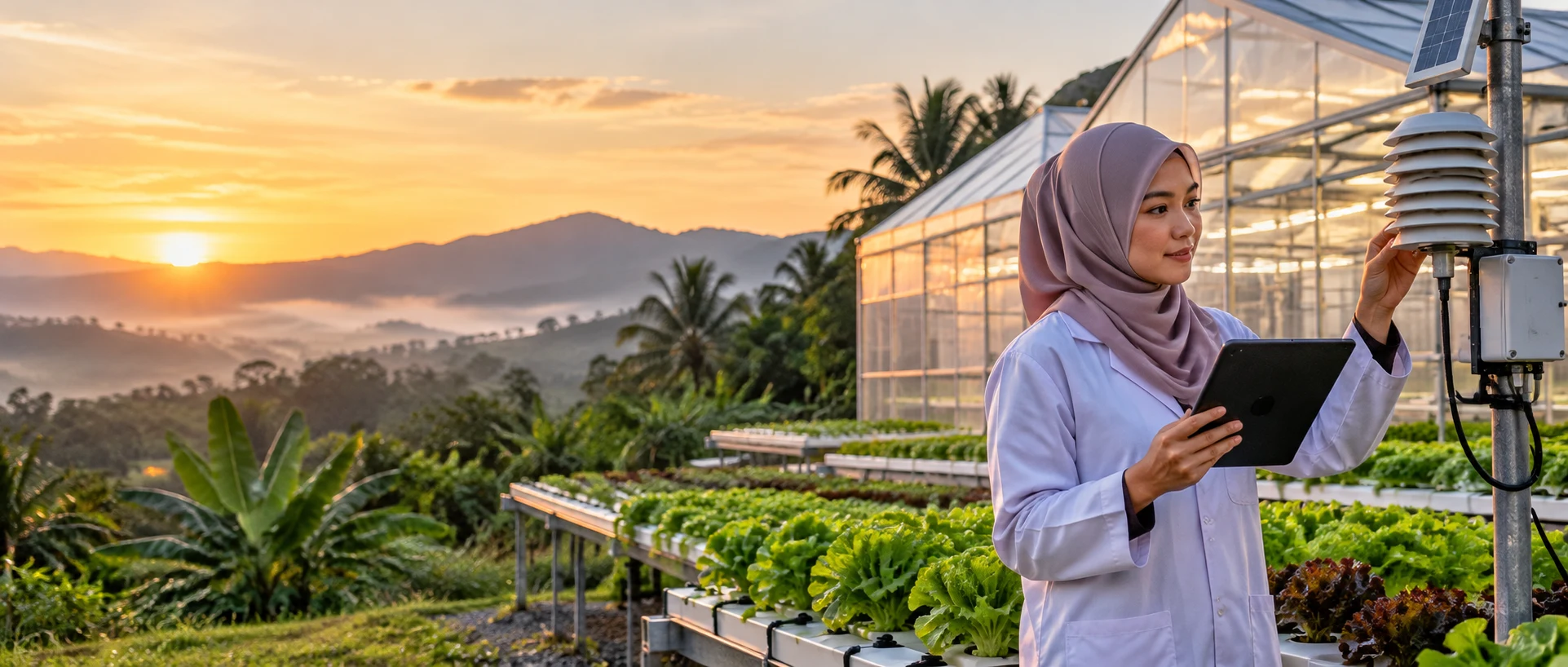
Protected cultivation
Design around heat, humidity, crop selection and water quality; budget maintenance and energy before scaling.
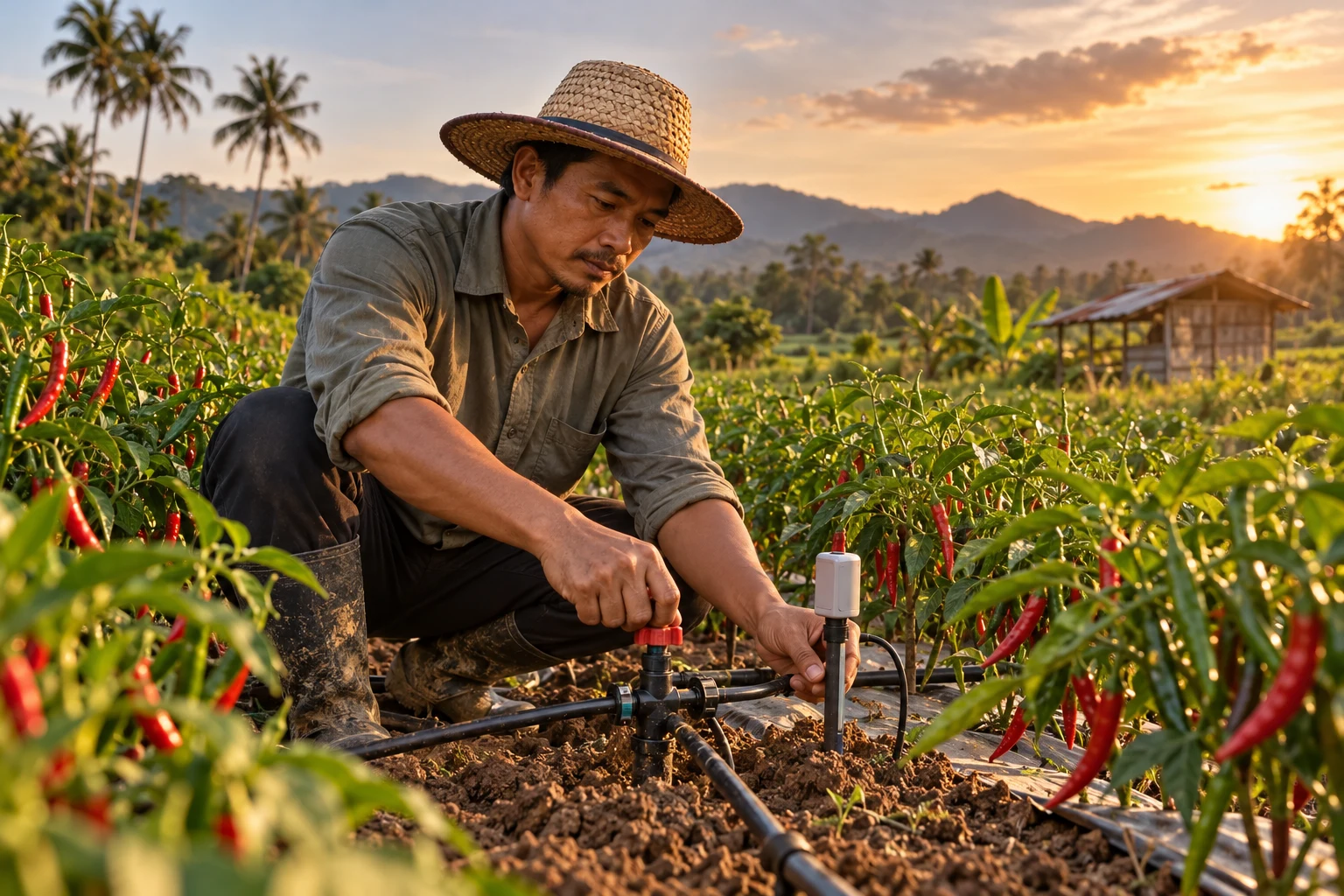
Sensors & irrigation
Monitor moisture and water use, then connect measurements to a practical irrigation decision.
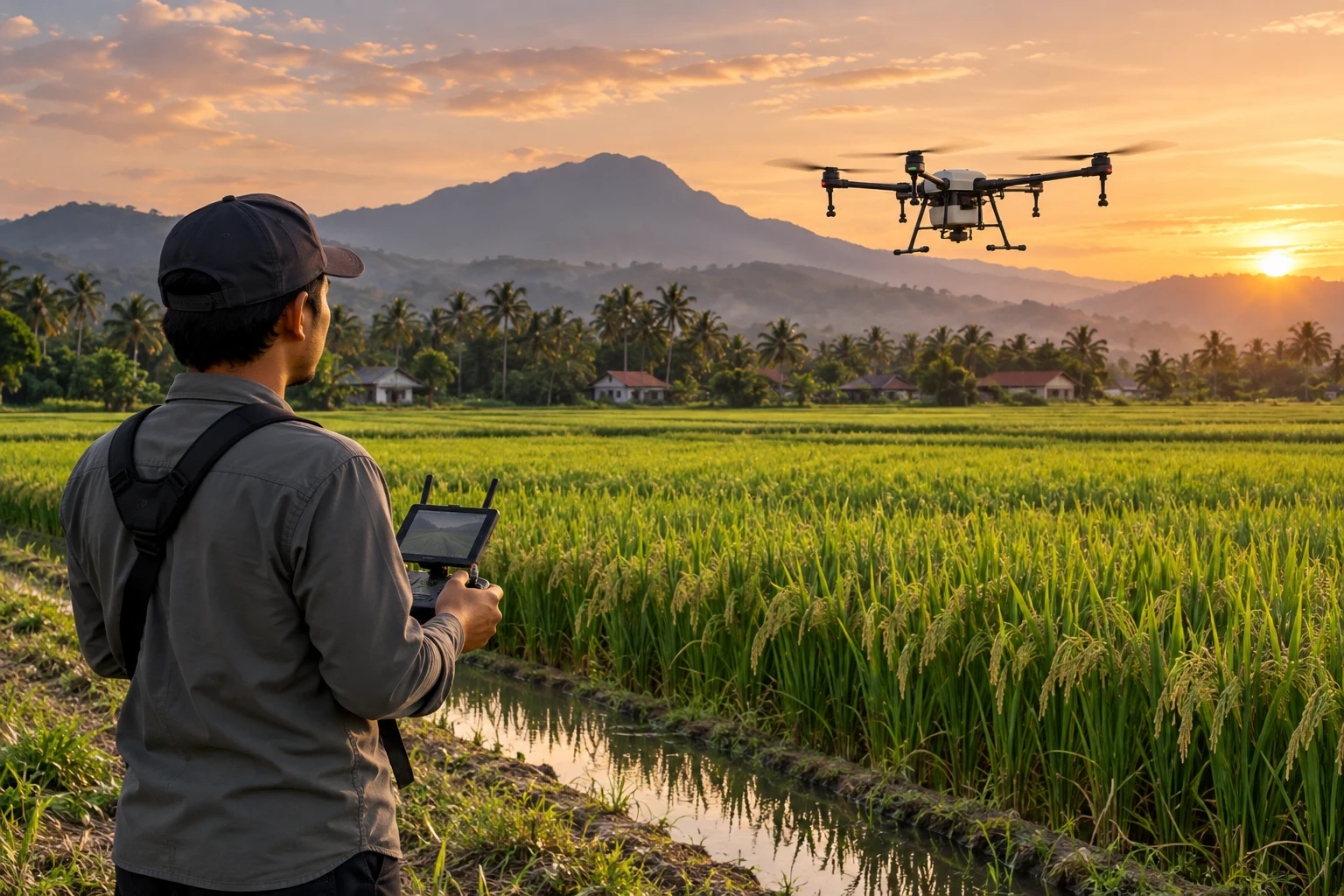
Drones & field services
Contract for outcomes and competent operators. Agricultural UAS operations need the applicable CAAM permissions.
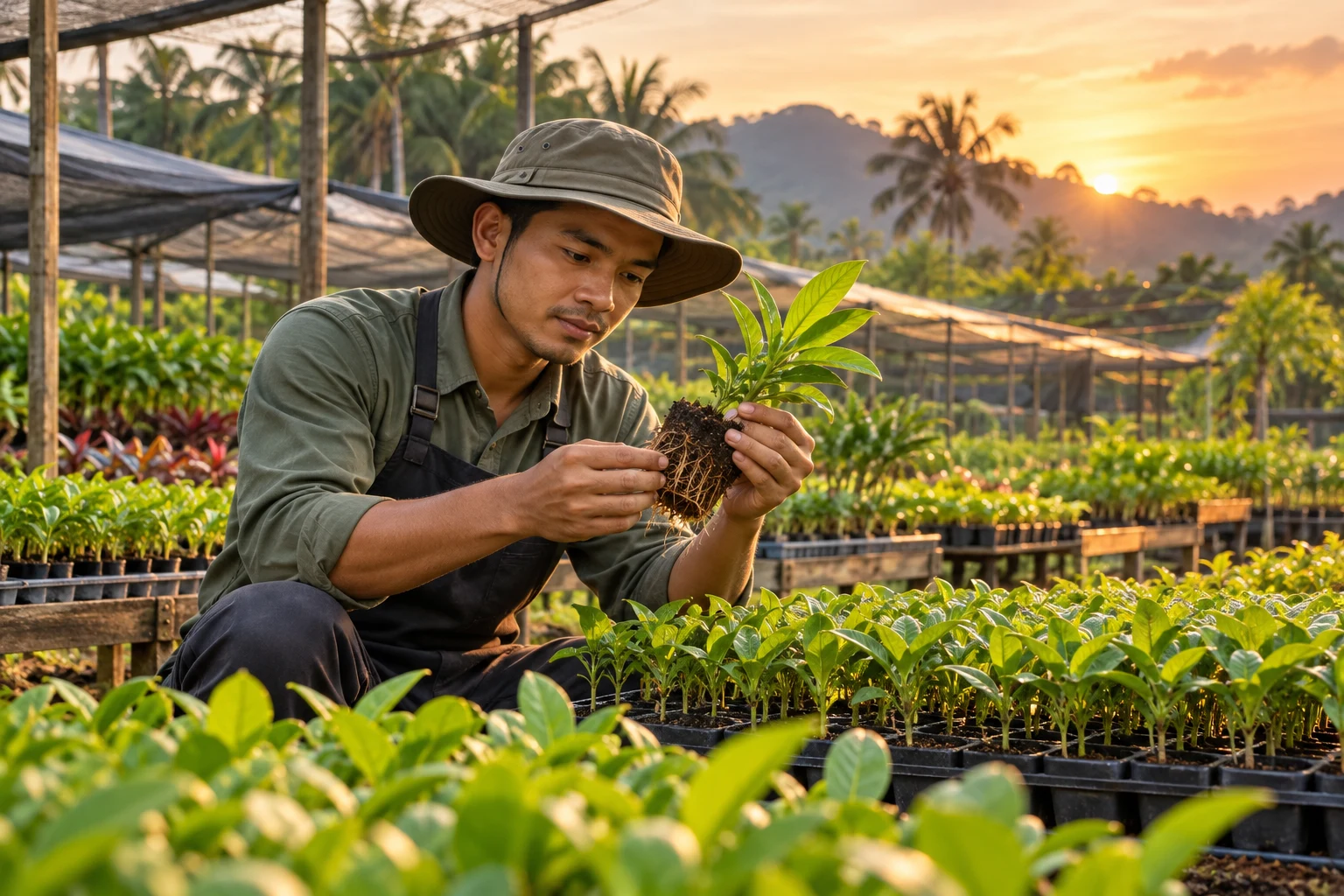
Seeds & planting material
Trace material, varietal suitability and plant-health requirements; strong genetics need sound agronomy.
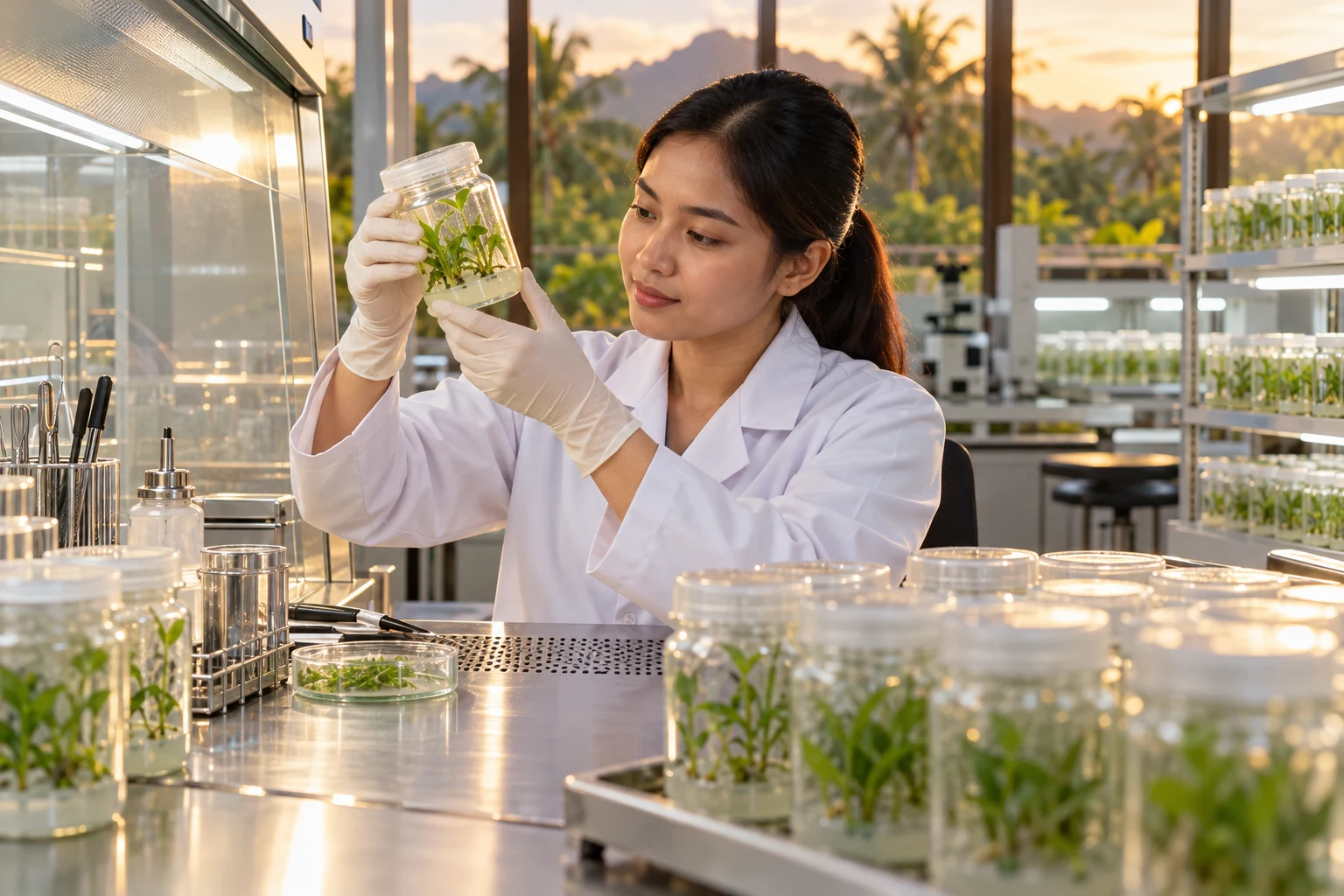
Biotechnology & diagnostics
Use research and laboratory partners to develop tests, propagation and evidence for the intended application.
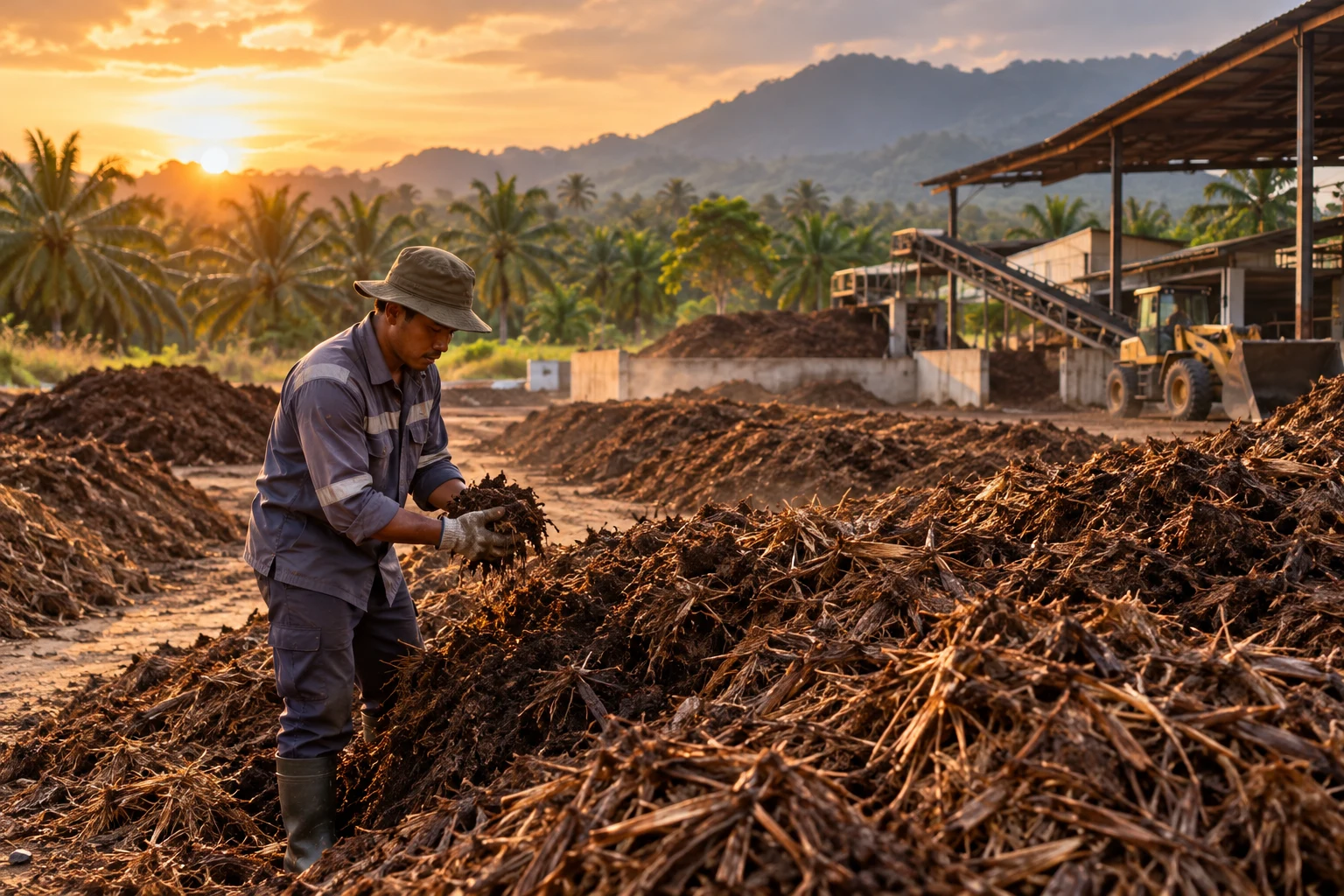
Circular agriculture
Assess biomass, by-products, composting and effluent opportunities with mass balance, safety and environmental controls.
A measured pilot sequence
- 1.Define one operational problem and baseline.
- 2.Select a site, crop, responsible operator and comparison method.
- 3.Measure costs, uptime, labour, water, quality and marketable output.
- 4.Review results over a suitable crop or operating cycle.
- 5.Scale only after service support, economics and approvals are understood.
Agricultural drones. Buying a drone does not authorise flying one. Operating requirements, permits and operator conditions are set by the Civil Aviation Authority of Malaysia, and an agricultural use case does not exempt an operator from them. Check CAAM’s unmanned aircraft guidance before committing to equipment.
Downstream
Value added beyond the farm
Manufacturing and support services can participate without owning a farm. Consistent supply, food safety, quality and reliable offtake matter as much as the machinery.
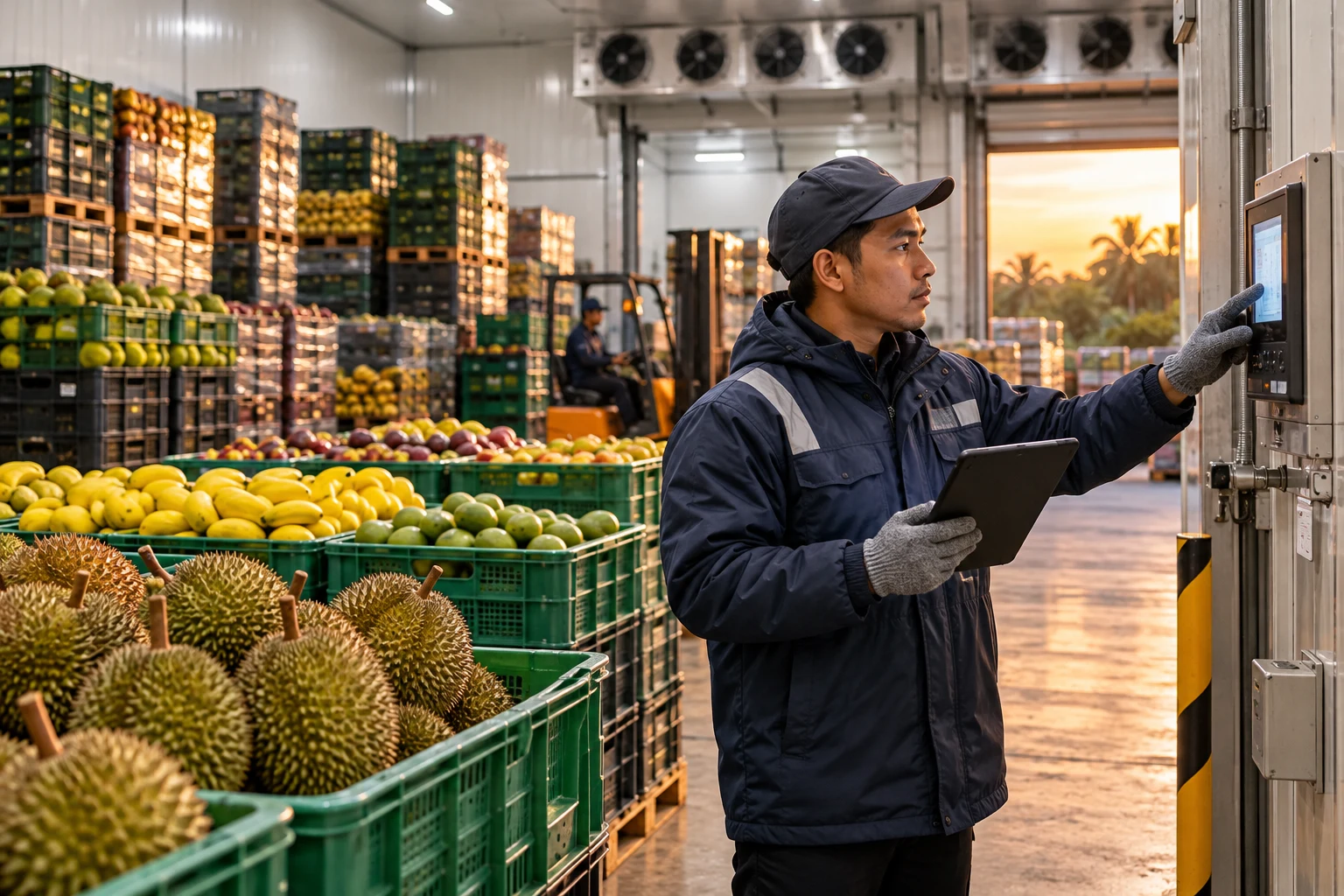
Cold chain & logistics
Design the handling route around temperature, shelf life and delivery reliability.
Grading & export packing
Translate buyer specifications into measurable sorting, packing and traceability controls.
Food & ingredient manufacturing
Milling, extraction, specialty fats and packaged foods create different investment and compliance needs.
Testing, skills & services
Laboratories, agronomists, technicians and training partners support safer and more reliable production.
Smallholder & grower partnerships
Agree crop plans, quality criteria, pricing, payment and collection before asking growers to expand.
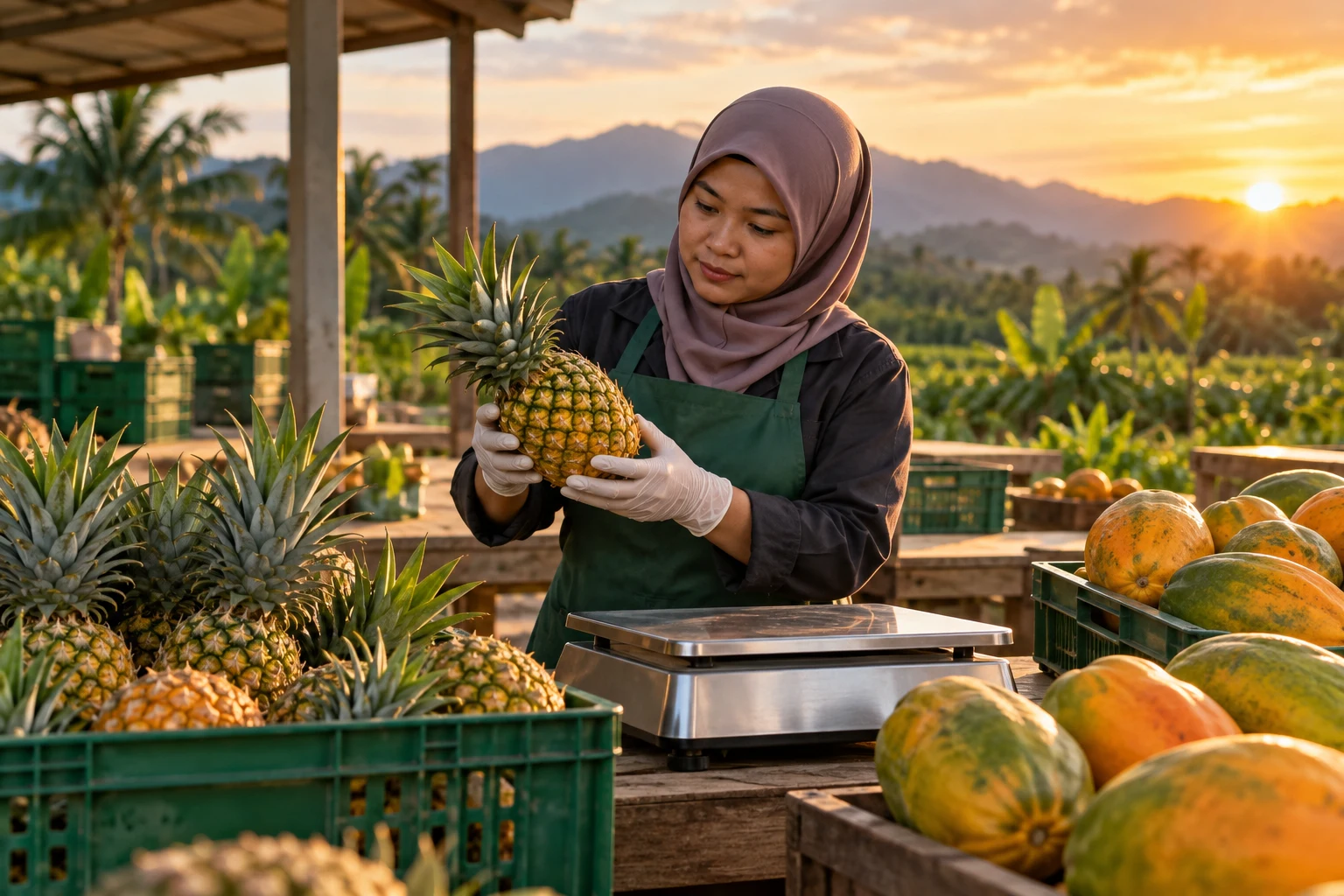
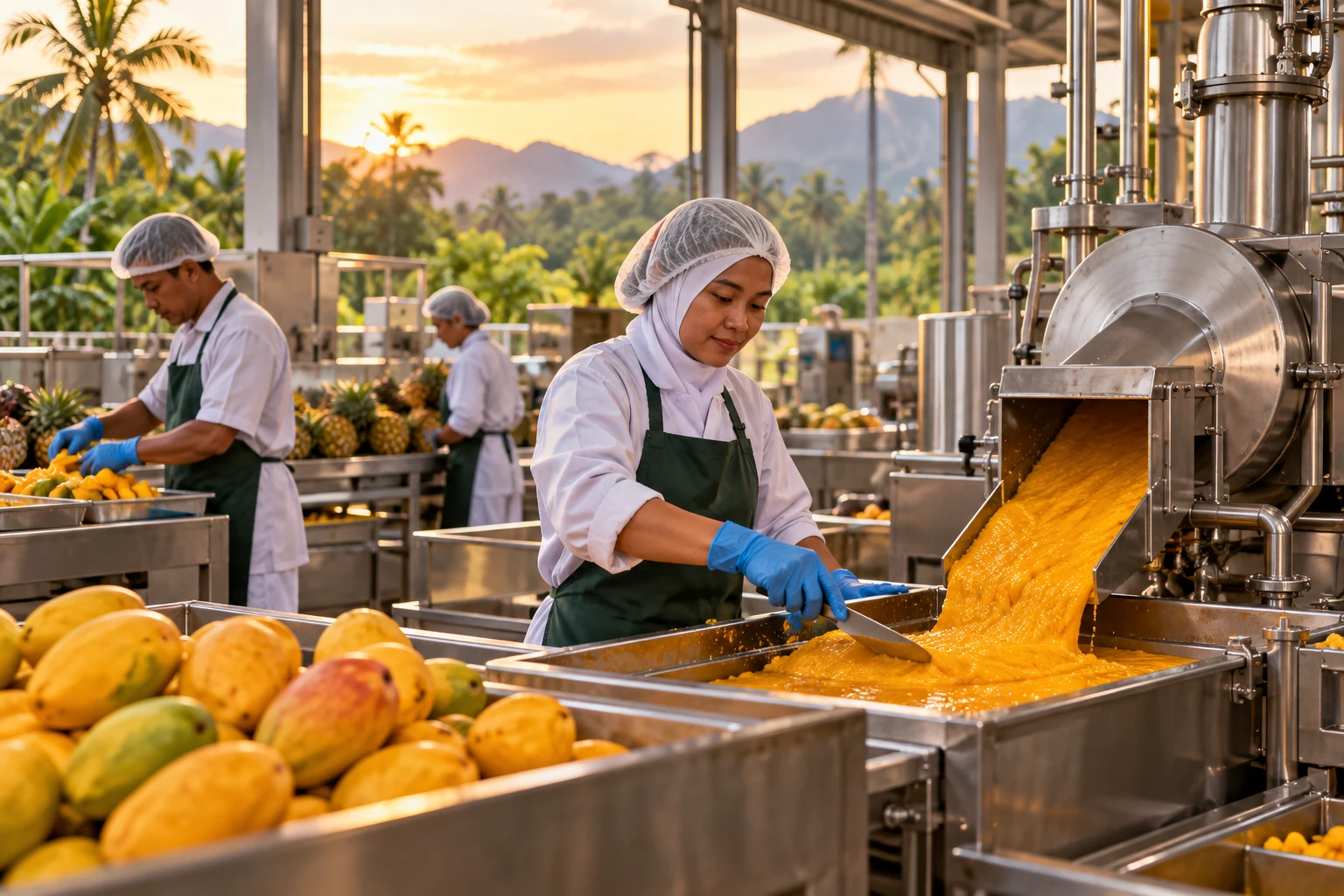
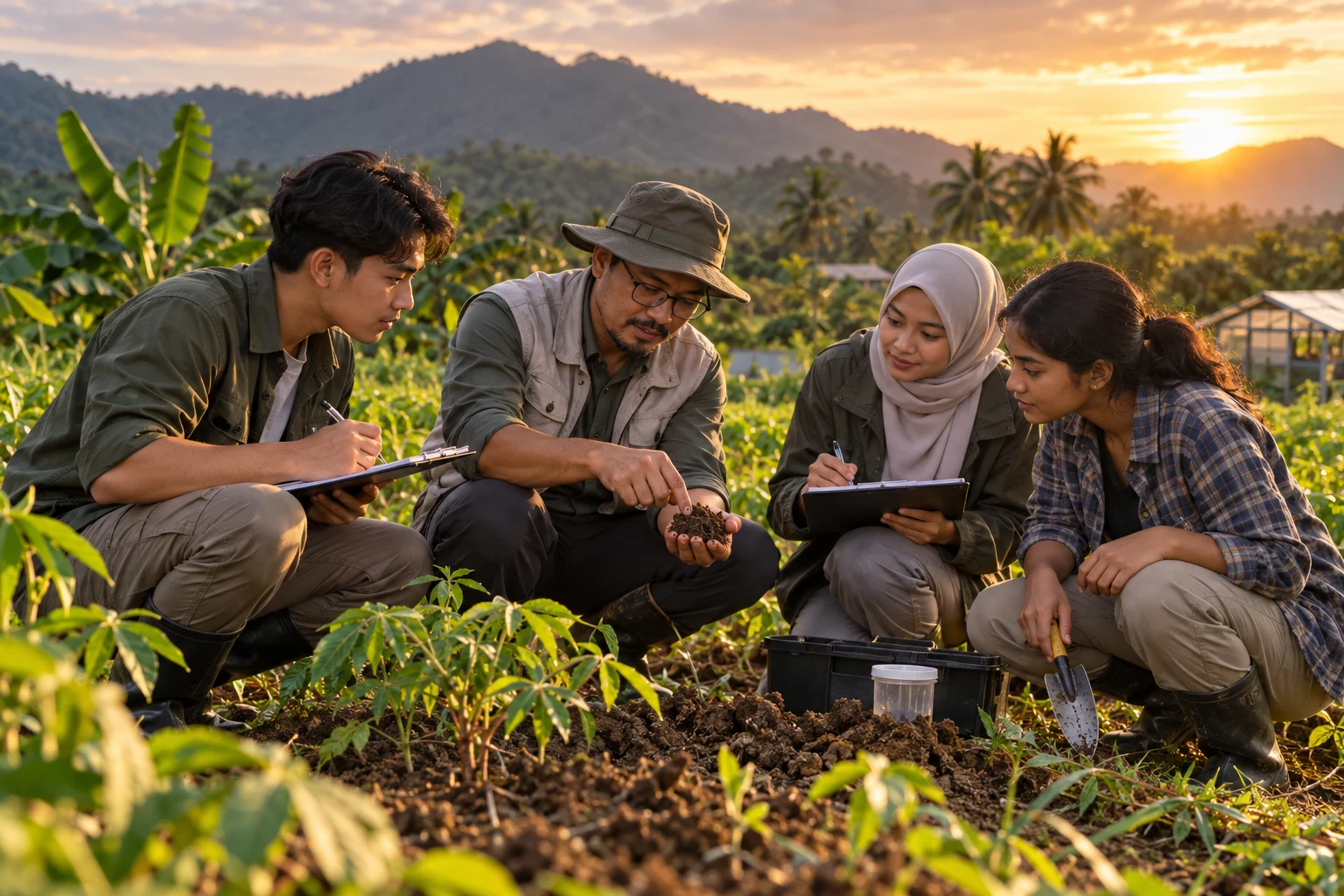
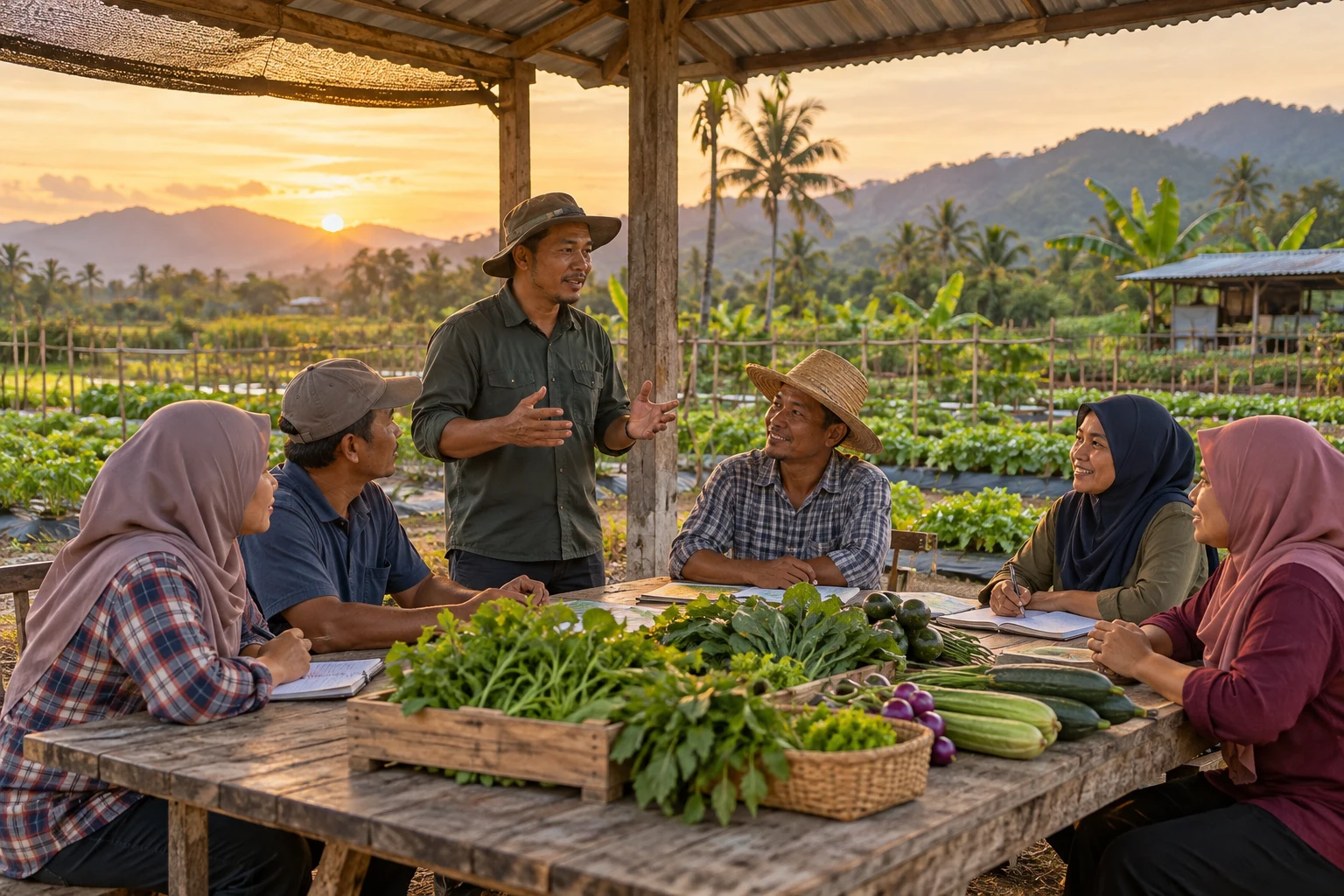
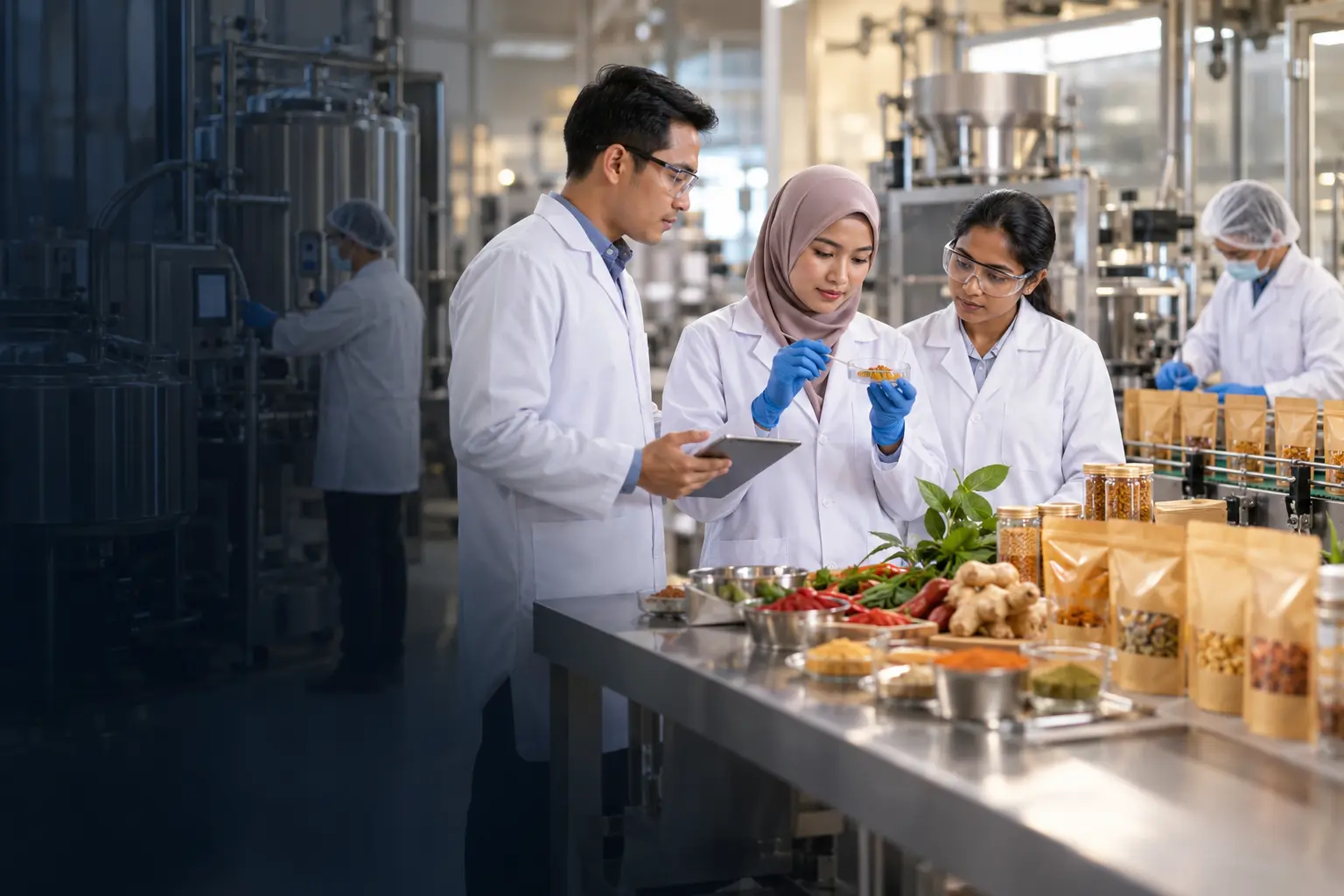
Halal is a certification, not a status. Halal is an additional product and supply-chain requirement where relevant. Confirm the actual certificate holder, product scope and validity through the official Malaysian halal system; do not infer certification from company identity or an image. Food & Halal in Malaysia.
Who Decides What
Who does what
Use the right organisation for the question. A chamber cannot issue a permit, a certification scheme cannot grant land rights, and a research institute cannot guarantee financing. Official resource links are included; sites with limited retrieval are flagged in the source register for build-time rechecking.
Showing 26 of 26 institutions.
KPKM
GovernmentAgrofood policy and food-security direction.
Official website / public contact route
Ministry of Plantation and Commodities
GovernmentAgricommodity policy and commodity-board framework.
Official website / public contact route
Department of Agriculture
Technical authorityCrops, extension, myGAP/myOrganic and plant certification.
Official website / public contact route
Department of Veterinary Services
Technical authorityLivestock and animal-health enquiries.
Official website / public contact route
Department of Fisheries
Technical authorityAquaculture and fisheries technical requirements.
Official website / public contact route
MAQIS
Border controlsProduct permits and agricultural quarantine enquiries.
Official website / public contact route
MARDI
ResearchTechnology, trials, testing and agricultural R&D.
Official website / public contact route
Malaysian Palm Oil Board
Commodity bodyPalm oil statistics and sector requirements.
Official website / public contact route
Malaysian Rubber Board
Commodity bodyRubber industry and research starting resource.
Official website / public contact route
Malaysian Cocoa Board
Commodity bodyCocoa technical, quality and industry development.
Official website / public contact route
Malaysian Pepper Board
Commodity bodyPepper technical and market-development resource.
Official website / public contact route
Malaysian Pineapple Industry Board
Commodity bodyPineapple extension, technology and licensing.
Official website / public contact route
FAMA
Market developmentAgrofood marketing and market-development enquiries.
Official website / public contact route
Farmers Organisation Authority
Grower organisationsFarmers organisation networks and public directory.
Official website / public contact route
Fisheries Development Authority
Market developmentFishery-community and market-development enquiries.
Official website / public contact route
KADA
RegionalKemubu-area paddy and irrigation support.
Official website / public contact route
Agrobank
FinanceExplore finance subject to current product and credit conditions.
Official website / public contact route
MIDA
InvestmentProcessing investment, manufacturing feasibility and approvals.
Official website / public contact route
MATRADE
Trade developmentTrade promotion and buyer-matching starting resource.
Official website / public contact route
MOH Food Safety and Quality
Food safetyFood premises, product and processing requirements.
Official website / public contact route
CAAM
AviationAgricultural drone permissions and competency requirements.
Official website / public contact route
Royal Malaysian Customs
CustomsClassification, duties and customs declarations.
Official website / public contact route
MSPO
Certification schemeOil-palm sustainability scheme information; not a government regulator.
Official website / public contact route
Sarawak Department of Agriculture
State authorityPlant biosecurity and movement requirements.
Official website / public contact route
Sabah agriculture/veterinary agencies
State authorityConfirm current state controls before importing plants or animals.
Official website / public contact route
Muda Agricultural Development Authority
RegionalMuda-area paddy development and irrigation; Kedah and Perlis.
Official website root, confirmed live 2026-10-12. The Kedah/Perlis jurisdiction statement rests on KADA's own FAQ, not on this card.
Published contact routes
Only contacts an organisation publishes itself are listed. No individual officer’s name, direct line or personal address appears here, and a contact route is not a commitment to respond or a promise of approval.
| Organisation | Phone | Official page | |
|---|---|---|---|
| MIDA | +60 3 2267 3633 | Not published | Open MIDA official page (opens in a new tab) |
| CAAM agricultural UAS | Not published | drone.agr@caam.gov.my | Open CAAM agricultural UAS official page (opens in a new tab) |
| KADA | +60 9 744 7088 | Not published | Open KADA official page (opens in a new tab) |
| Cargill Malaysia | +60 3 7941 1311 | Not published | Open Cargill Malaysia official page (opens in a new tab) |
| BERNAS | +60 3 5565 7777 | information@bernas.com.my | Open BERNAS official page (opens in a new tab) |
Who Operates Here
Selected companies across the value chain
A selected directory for orientation, not a ranking or endorsement. Descriptions follow each company’s own published activities; confirm the legal entity, site, capacity, certifications and commercial terms directly.
Kuala Lumpur Kepong
Oil palm & palm-based products
Plantations and downstream palm-based manufacturing.
IOI Group
Oil palm & palm-based products
Plantation and resource-based manufacturing activities.
FGV Holdings
processing
Agricultural group linking commodities and downstream businesses.
BERNAS
Paddy & rice
Paddy farm management, rice distribution and stockpile-management businesses.
Farm Fresh
Dairy & ruminants
Dairy production and consumer dairy products.
QL Resources
Poultry & eggs
Livestock, marine products and palm oil activities.
PPB / FFM
Feed & agricultural inputs
Flour milling and grain-based food supply.
Aonic
drone
Agricultural drones, automation and training services.
Cargill Malaysia
processing
Specialty fats, oil processing, grain distribution and food application services.
A directory, not an endorsement. Use neutral sector photographs as thematic context. Do not depict generated scenes as named company facilities or manufacture logos. Listing a company here is not a recommendation, a partnership or a statement about its current standing, and no company logo is reproduced on this page.
Industry Bodies
Industry associations & bilateral chambers
Associations offer sector context; bilateral chambers connect business communities. Membership, introductions and event access depend on each organisation. Listing does not imply a relationship with The True Malaysia.


Malaysian Palm Oil Association
Industry / market development
Malaysian Palm Oil Council
Industry / market development
Federation of Livestock Farmers Associations Malaysia
Industry / market development
Malaysian German Chamber of Commerce and Industry
Bilateral / international business chamber
British Malaysian Chamber of Commerce
Bilateral / international business chamber
American Malaysian Chamber of Commerce
Bilateral / international business chamber
EUROCHAM Malaysia
Bilateral / international business chamber
Japanese Chamber of Trade and Industry Malaysia
Bilateral / international business chamber
A chamber connection is not a permit. Chambers and associations open conversations, introductions and market knowledge. They do not issue licences, quarantine clearances, land approvals or certification, and membership of one carries no weight with the regulators listed above.
Capability
Research, academia & workforce
Agriculture needs agronomists, farm managers, veterinary and fisheries expertise, food technologists, maintenance teams and data skills. Explore applied research or training with a defined problem, budget, trial site and intended result. Research capability does not guarantee a commercial outcome.
Universiti Putra Malaysia
Agriculture, food and veterinary education and research.
UKM INBIOSIS
Plant biotechnology, genomics and analytical services.
UMS Faculty of Sustainable Agriculture
Sustainable agriculture education and research in Sabah.
MARDI objectives and functions
Agricultural technology, technical services and applied research.
Evidence of capability
Palm oil production scale
2025 crude palm oil output reached 20.28 million tonnes. This is production volume, not GDP or export earnings.
Food-processing investment
MIDA’s 2024 panel records RM6.1 billion in approved food-processing investments and 5,839 potential job opportunities.
Product-specific export access
DOA publishes the fresh-durian export protocol for China. Market access is conditional; businesses still need the correct compliance route.
Agritech and laboratory capability
MARDI, UKM and commercial suppliers provide starting points for agricultural research, diagnostics and field technology.
Policy, finance & market access
DAN2.0 and the National Agricommodity Policy 2021–2030 provide separate agrofood and commodity policy contexts. Ask the relevant agency about the current scheme, eligible activity and application window. Financing, tax treatment, grants and import-duty exemptions require their own written eligibility checks.
- Which entity and activity are eligible?
- Is the instrument financing, a grant, a tax incentive or an exemption?
- What approvals must precede spending?
- What are the local ownership, location and reporting conditions?
- What must be repaid or maintained if the project changes?
P1 — KPKM National Agrofood Policy (opens in a new tab)P2 — KPK policy and acts (opens in a new tab)AGROB — Agrobank headquarters (opens in a new tab)MIDA — MIDA contact (opens in a new tab)FTA — MITI FTA portal (opens in a new tab)
These are questions to put to the responsible body, not eligibility criteria and not an indication that any scheme applies to a given project.
Getting Started
From interest to a practical business plan
Choose a pathway, then assemble a brief for the relevant organisation. Incorporation through SSM is one step; land access, site permissions, technical requirements and sector-specific licences must be checked separately.
Start or expand production
Prepare: Crop, livestock or aquaculture model; intended buyer; location; scale; water and technical plan.
Likely sequence: State land/site authority → DOA/DVS/DOF → supplier and buyer validation.
Process food or ingredients
Prepare: Product specification, supply plan, process flow, premises and food-safety system.
Likely sequence: MIDA feasibility → local premises approvals → MOH requirements → buyer qualification.
Import agricultural goods
Prepare: Exact product, origin, HS classification, importer entity and shipment route.
Likely sequence: Customs → applicable MAQIS/technical/state controls → commercial logistics plan.
Export produce or ingredients
Prepare: Destination, buyer terms, access protocol, registered facilities where required and transport plan.
Likely sequence: DOA/DVS/DOF and MAQIS as applicable → Customs/origin checks → buyer and shipment validation.
Supply farm technology
Prepare: Problem baseline, pilot site, operator, maintenance model and measured return.
Likely sequence: Technical partner → relevant approvals including CAAM for drones → monitored pilot.
Partner with growers
Prepare: Crop plan, grower selection, grading, price formula, payment timing and collection capacity.
Likely sequence: Grower organisation/FAMA starting point → written commercial terms → trial supply.
Research or skills partnership
Prepare: Defined problem, trial design, IP/confidentiality terms, budget and success measures.
Likely sequence: MARDI/UPM/UKM/UMS → agreed scope → evidence-based development plan.
Nine practical preparation steps
- 1.Define the product, operating model and target customer.
- 2.Validate demand and supply with independent quotations or trial orders.
- 3.Select a site and confirm land, water, utilities and local requirements.
- 4.Check entity structure through SSM and applicable sector rules.
- 5.Map technical, food-safety, border and state permissions.
- 6.Prepare operating costs, working capital and financing assumptions.
- 7.Agree partner, buyer, quality and payment terms in writing.
- 8.Pilot, measure and resolve failures before scaling.
- 9.Review ongoing reporting, renewals and traceability obligations.
SSM — SSM starting a company (opens in a new tab)DOA — Department of Agriculture (opens in a new tab)DVS — Department of Veterinary Services (opens in a new tab)DOF — Department of Fisheries (opens in a new tab)MAQ — MAQIS permits (opens in a new tab)MOH — MOH Food Safety and Quality Programme (opens in a new tab)CAAM — CAAM unmanned aircraft systems (opens in a new tab)MIDA — MIDA contact (opens in a new tab)CUS — Royal Malaysian Customs (opens in a new tab)SAR — Sarawak plant biosecurity (opens in a new tab)SAB — CAAM AIP entry controls (opens in a new tab)
Build your agriculture business brief
Create a summary you can copy or download before approaching an agency, supplier or potential partner. This tool does not submit an application or transmit your details.
Nothing is submitted. This tool runs entirely in your browser. It does not send your brief anywhere, does not register a business, does not apply for a permit and does not create any relationship with an agency or company. It asks for no name, email, phone number or identity document.
Trade Calendar
Events & business connections
Use events to compare suppliers, learn buyer requirements and meet technical partners. Confirm the organiser’s next edition and participation terms before making plans.
MAHA 2026
Completed edition28 August–6 September 2026
MAEPS, Serdang
INSP MIHAS 2026
Completed business-matching edition23–26 September 2026
MITEC, Kuala Lumpur
Next-edition dates were not verified as of11 October 2026. Do not advertise these past dates as upcoming.
Show Your Working
Sources & methodology
Reviewed11 October 2026. Each figure carries its own year, unit and scope. Annual GDP is sourced from the downloaded DOSM revision; trade volumes, trade values and census workforce counts measure different things. This page uses selected indicators and an illustrative business directory, not a complete national industry census. Recheck policy eligibility, current permits, contact details and shipment requirements before acting.
Images. New photographs are AI-generated editorial illustrations, not records of named premises, people or successful projects. Supplied assets retain their filenames and provenance notes.
Review. Keep full source URLs, period labels and verification flags available in the source drawer/register. Limited-fetch links require a live check before page indexing. Last reviewed 2026-10-11.
Not every link was read directly. 4 of 60 sources could not be fetched from the research environment and are listed with that limitation in their own words (MPB, MRB, LPP, AGROB). They are official, indexed resources and are published here as starting points, not as pages whose content was confirmed live.
Full source register — 60 records
| ID | Source | Period | Scope | Verification |
|---|---|---|---|---|
| G1 | DOSM annual GDP, current prices (opens in a new tab) | 2025; downloaded 2026-10-11 | RM million, current prices; p0 total, p1 agriculture; share derived from same dataset | Primary source read |
| G2 | DOSM annual GDP, constant prices (opens in a new tab) | 2025; downloaded 2026-10-11 | RM million, constant 2015 prices; agriculture growth | Primary source read |
| L1 | DOSM Agriculture Census labour (opens in a new tab) | Census 2024; reference year 2023 | Unique persons including owners, paid employees and unpaid family workers; printed table 89/PDF107 | Primary source read |
| T1 | DOSM supply and utilization accounts 2025 (opens in a new tab) | 2025; published 29 September 2026 | Physical commodity production/import/export and SSR; fruit table PDF36, vegetables PDF39–40, rice PDF44; provisional flags preserved | Primary source read |
| T2 | DOSM SUA 2025 release (opens in a new tab) | 2025; published 29 September 2026 | SSR and import dependency indicators; these are different ratios | Primary source read |
| T3 | MPOB overview 2025 (opens in a new tab) | 2025 | Crude palm oil production, palm oil export volume; not all palm-related products | Primary source read |
| T4 | MITI Trade and Economic Information Q4 2025 (opens in a new tab) | 2025 | Palm oil and palm-oil-based agricultural products export value and partners, printed pp18/37; differs from all palm products | Primary source read |
| T5 | WITS/UN Comtrade wheat imports (opens in a new tab) | 2024 | Gross imports; HS1988/92 H0 1001; values originally 1000 USD, quantities kg | Primary source read |
| T6 | WITS/UN Comtrade soybean oilcake imports (opens in a new tab) | 2024 | Gross imports; HS1988/92 H0 230400; values originally 1000 USD, quantities kg | Primary source read |
| M1 | MIDA agriculture and food processing (opens in a new tab) | 2024 published panel | Approved food-processing investment and potential jobs; not farm GDP or realised new jobs | Primary source read |
| P1 | KPKM National Agrofood Policy (opens in a new tab) | Current resource; checked 2026-10-11 | DAN2.0 2021–2030 policy title and direction only | Official source. URL re-confirmed live 2026-10-12: indexed under its exact official title, "National Agrofood Policy - Ministry of Agriculture and Food Security". Page body not readable from this environment. |
| P2 | KPK policy and acts (opens in a new tab) | Current resource; checked 2026-10-11 | National Agricommodity Policy 2021–2030 and commodity board statutory framework | Primary source read |
| DOA | Department of Agriculture (opens in a new tab) | Current resource; checked 2026-10-11 | Crop extension; myGAP/myOrganic and planting-material certification information | Primary source read |
| DUR | DOA China durian export protocol (opens in a new tab) | Current resource; checked 2026-10-11 | Product-specific orchard, packing and phytosanitary procedures | Primary source read |
| PHY | DOA phytosanitary information (opens in a new tab) | Current resource; checked 2026-10-11 | Plant export certification; importing-country requirements | Primary source read |
| MAQ | MAQIS permits (opens in a new tab) | Current resource; checked 2026-10-11 | Agricultural quarantine and permits | Official permit service. URL re-confirmed live 2026-10-12: indexed as "Permohonan Permit - MAQIS". Page body not readable from this environment. |
| DVS | Department of Veterinary Services (opens in a new tab) | Current resource; checked 2026-10-11 | Animal health, livestock and veterinary requirements | Primary source read |
| DOF | Department of Fisheries (opens in a new tab) | Current resource; checked 2026-10-11 | Fisheries and aquaculture technical and regulatory resource | Primary source read |
| MARDI | MARDI objectives and functions (opens in a new tab) | Current resource; checked 2026-10-11 | Agricultural research, technology, consultancy and technical services | Primary source read |
| MCB | Malaysian Cocoa Board (opens in a new tab) | Current resource; checked 2026-10-11 | Cocoa R&D, industry development, quality and regulatory functions | Primary source read |
| MPB | Malaysian Pepper Board (opens in a new tab) | Current resource; checked 2026-10-11 | Pepper development and industry resource | Official indexed source; direct fetch failed |
| MPIB | Malaysian Pineapple Industry Board (opens in a new tab) | Current resource; checked 2026-10-11 | Pineapple industry technology, extension and licensing resources | Primary source read |
| MRB | Malaysian Rubber Board (opens in a new tab) | Current resource; checked 2026-10-11 | Rubber industry resource; statutory board verified via KPK; homepage body unavailable | Official resource; content fetch limited |
| FAMA | FAMA corporate functions (opens in a new tab) | Current resource; checked 2026-10-11 | Agrofood marketing and market-development role; historical brochure, no current grant claims | Primary source read |
| LPP | Farmers Organisation Authority (opens in a new tab) | Current resource; checked 2026-10-11 | Farmers organisation structure and official directory | Official indexed source; direct fetch failed |
| LKIM | Fisheries Development Authority (opens in a new tab) | Current resource; checked 2026-10-11 | Fishery marketing and community development resources | Primary source read |
| KADA | KADA official FAQ (opens in a new tab) | Current resource; checked 2026-10-11 | Kemubu paddy support; KADA Kelantan and MADA Kedah/Perlis distinction | Primary source read |
| AGROB | Agrobank headquarters (opens in a new tab) | Current resource; checked 2026-10-11 | Agricultural finance contact; no guaranteed credit eligibility | Official indexed source; direct fetch failed |
| MIDA | MIDA contact (opens in a new tab) | Current resource; checked 2026-10-11 | Investment enquiries, manufacturing feasibility and applicable approvals | Primary source read |
| MAT | MATRADE INSP MIHAS 2026 (opens in a new tab) | Current resource; checked 2026-10-11 | MATRADE business matching, 23–26 September 2026 past edition | Primary source read |
| MOH | MOH Food Safety and Quality Programme (opens in a new tab) | Current resource; checked 2026-10-11 | Food Act 1983, Food Regulations 1985, Food Hygiene Regulations 2009 and food-safety role | Primary source read |
| CAAM | CAAM unmanned aircraft systems (opens in a new tab) | Current resource; checked 2026-10-11 | Agricultural UAS category, UAWC and applicable CAD 6011 procedures | Primary source read |
| MSPO | MSPO standards (opens in a new tab) | Current resource; checked 2026-10-11 | MS2530:2022 certification scheme; not a public regulator | Primary source read |
| SAR | Sarawak plant biosecurity (opens in a new tab) | Current resource; checked 2026-10-11 | Sarawak plant movement/import controls | Primary source read |
| SAB | CAAM AIP entry controls (opens in a new tab) | Current resource; checked 2026-10-11 | Sabah agricultural and veterinary entry controls; consult current state agency rules | Primary source read |
| SSM | SSM starting a company (opens in a new tab) | Current resource; checked 2026-10-11 | Company establishment starting point; company incorporation does not grant land rights | Primary source read |
| FTA | MITI FTA portal (opens in a new tab) | Current resource; checked 2026-10-11 | Product-specific agreement and rules-of-origin starting resource | Primary source read |
| CUS | Royal Malaysian Customs (opens in a new tab) | Current resource; checked 2026-10-11 | Customs official starting point; verify tariff classification and charges | Primary source read |
| UPM | Universiti Putra Malaysia (opens in a new tab) | Current resource; checked 2026-10-11 | Agriculture, food and veterinary education and research resource | Primary source read |
| UKM | UKM INBIOSIS (opens in a new tab) | Current resource; checked 2026-10-11 | Plant biotechnology, genomics and laboratory services | Primary source read |
| UMS | UMS Faculty of Sustainable Agriculture (opens in a new tab) | Current resource; checked 2026-10-11 | Agricultural education and research in Sabah | Primary source read |
| MAHA | MAHA official (opens in a new tab) | Current resource; checked 2026-10-11 | MAHA 2026 28 August–6 September 2026; completed edition | Primary source read |
| MPOA | Malaysian Palm Oil Association (opens in a new tab) | Current resource; checked 2026-10-11 | Plantation industry association | Primary source read |
| MPOC | Malaysian Palm Oil Council (opens in a new tab) | Current resource; checked 2026-10-11 | Palm oil market promotion; not regulator | Primary source read |
| FLFAM | Federation of Livestock Farmers Associations Malaysia (opens in a new tab) | Current resource; checked 2026-10-11 | Poultry and pig farming industry representation; do not describe whole association as halal | Primary source read |
| MGCC | Malaysian German Chamber of Commerce and Industry (opens in a new tab) | Current resource; checked 2026-10-11 | Bilateral business network | Primary source read |
| BMCC | British Malaysian Chamber of Commerce (opens in a new tab) | Current resource; checked 2026-10-11 | Bilateral business network | Primary source read |
| AMCHAM | American Malaysian Chamber of Commerce (opens in a new tab) | Current resource; checked 2026-10-11 | Bilateral business network | Primary source read |
| EURO | EUROCHAM Malaysia (opens in a new tab) | Current resource; checked 2026-10-11 | European business network | Primary source read |
| JACTIM | Japanese Chamber of Trade and Industry Malaysia (opens in a new tab) | Current resource; checked 2026-10-11 | Japanese business network | Primary source read |
| KLK | Kuala Lumpur Kepong (opens in a new tab) | Current resource; checked 2026-10-11 | Plantations and downstream resource-based manufacturing; corporate self-description | Primary source read |
| IOI | IOI Group (opens in a new tab) | Current resource; checked 2026-10-11 | Plantation and downstream palm-based activities; corporate self-description | Primary source read |
| FGV | FGV Holdings (opens in a new tab) | Current resource; checked 2026-10-11 | Agricultural group and downstream activities; corporate self-description | Primary source read |
| FRESH | Farm Fresh (opens in a new tab) | Current resource; checked 2026-10-11 | Dairy and branded consumer products; corporate self-description | Primary source read |
| QL | QL Resources businesses (opens in a new tab) | Current resource; checked 2026-10-11 | Livestock, marine products and palm oil; corporate self-description | Primary source read |
| FFM | PPB/FFM flour milling (opens in a new tab) | Current resource; checked 2026-10-11 | Malaysian flour milling operations; capacity is not actual output | Primary source read |
| AON | Aonic Malaysia (opens in a new tab) | Current resource; checked 2026-10-11 | Agricultural drones, automation and training; corporate self-description | Primary source read |
| CARG | Cargill Malaysia (opens in a new tab) | Current resource; checked 2026-10-11 | Palm oil refining, specialty fats, grain distribution and food application; corporate self-description | Primary source read |
| BER | BERNAS (opens in a new tab) | Current resource; checked 2026-10-11 | Paddy farm management, rice distribution and stockpile-management businesses; avoid stale historic policy claims | Primary source read |
| MADA | Muda Agricultural Development Authority (opens in a new tab) | Current resource; checked2026-10-11 | Official indexed functions; Kedah/Perlis jurisdiction independently confirmed by KADA FAQ | Site confirmed live 2026-10-12. The pack's deep link ?q=2200 could NOT be confirmed and the site now serves ?page_id= URLs, so this points at the official root instead. The host is robots-disallowed, so the page body was not read. |
The True Malaysia is an independent information platform. Directory entries do not imply partnership, endorsement or approval.